
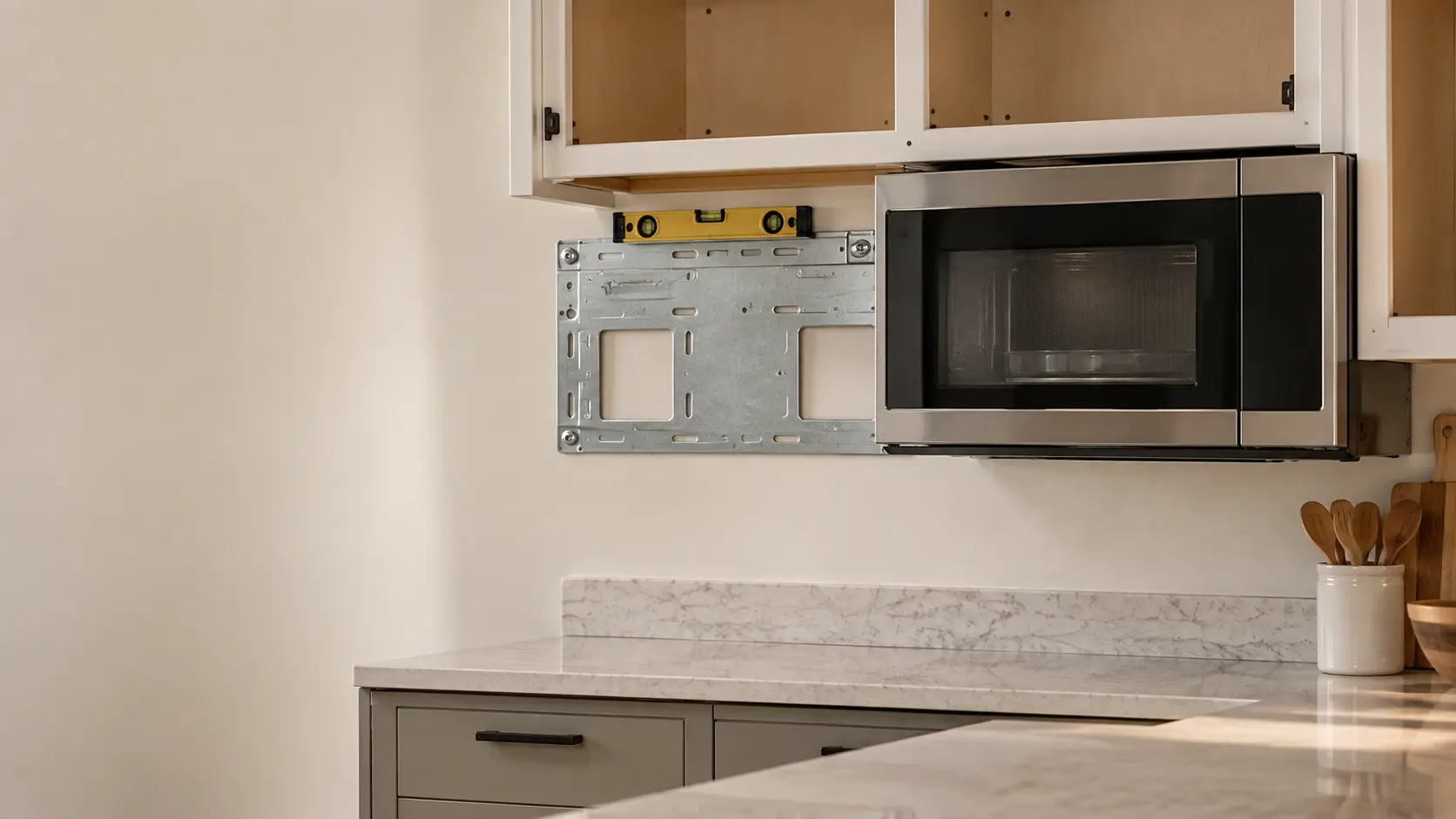

Where it goes, how it vents, what it plugs into
Installation and setup
guides.
Mounting a microwave above the cooking surface, venting it outside or letting it recirculate, the trim kit a built-in needs, and the circuit a microwave should have to itself.
Mon–Sat, 8am–8pm
- Three guides
- Read before you book
- Says where to stop
Book a visit
Three short steps, about a minute.
or call (844) 393-5858
Loading appointment form…
The appointment form couldn’t load. Please try again.
Installation and setup,
guide by guide.
A microwave that sits above the cooking surface, inside a cabinet or under a counter depends on three things the owner rarely sees again after installation day: what holds it up, where its air goes and what feeds it power. These guides cover all three, for anyone choosing a new microwave, replacing an old one or wondering why the one on the wall behaves the way it does.
All 18 guides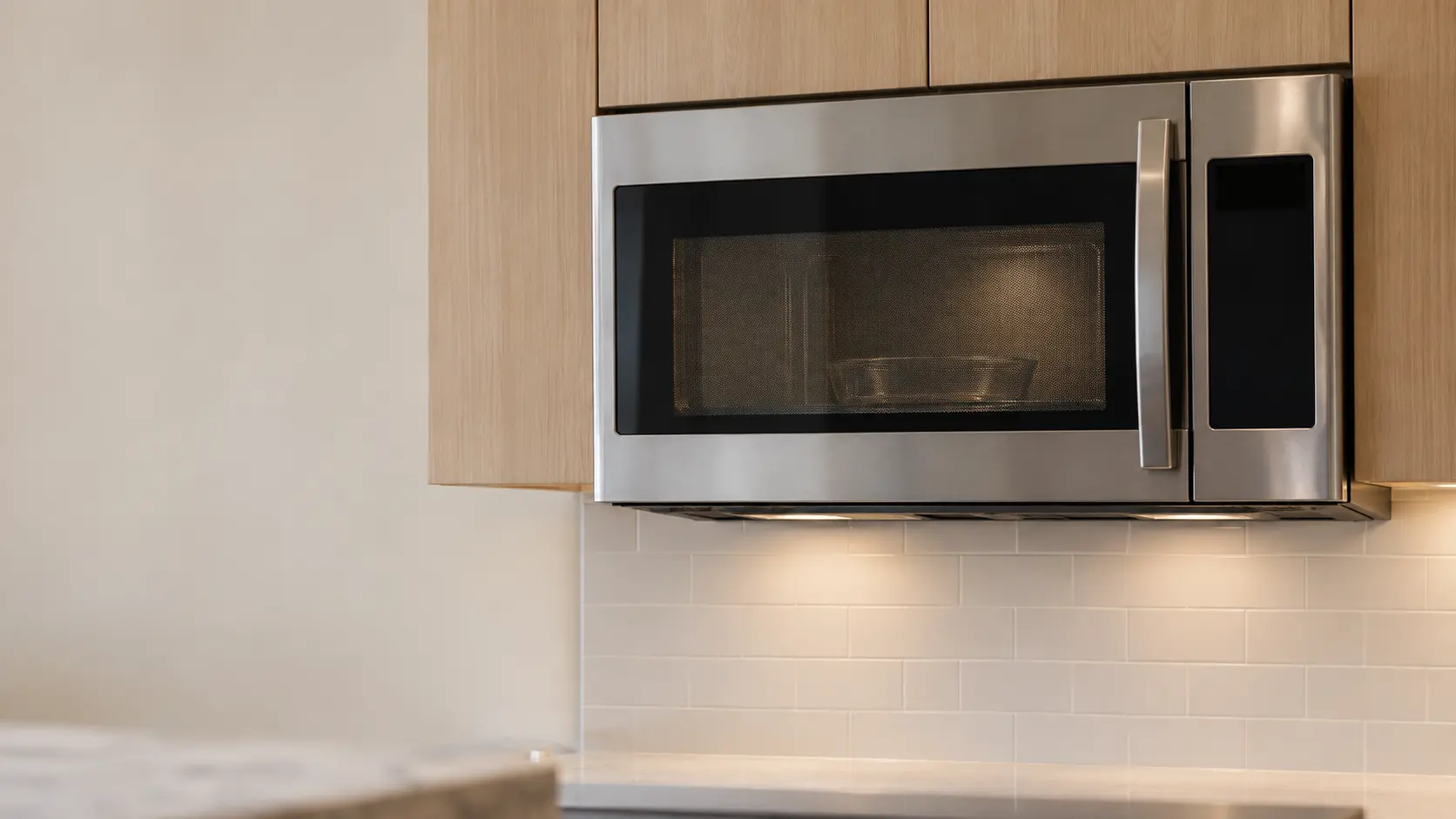
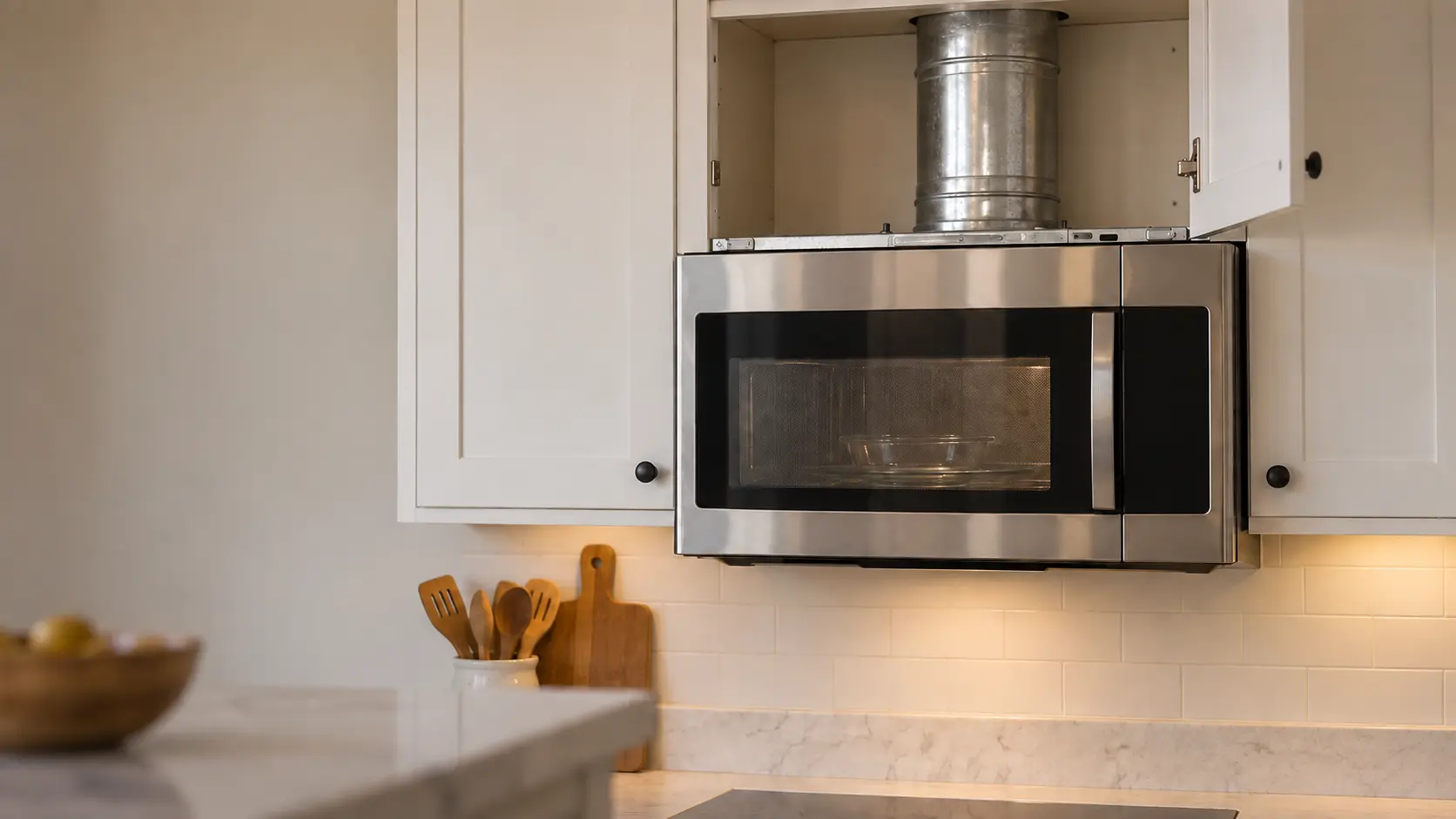

Where it goes, how it vents, what it plugs into.
Mounting comes first because it is the part that can fall. A microwave hood combination hangs from a plate on the wall and from screws into the cabinet above it, and the makers' sheets set the height, the studs and the load the wall has to carry. Venting comes next: the same fan can push air outside through a metal duct or recirculate it through a charcoal filter, and the choice is made before the microwave goes up.
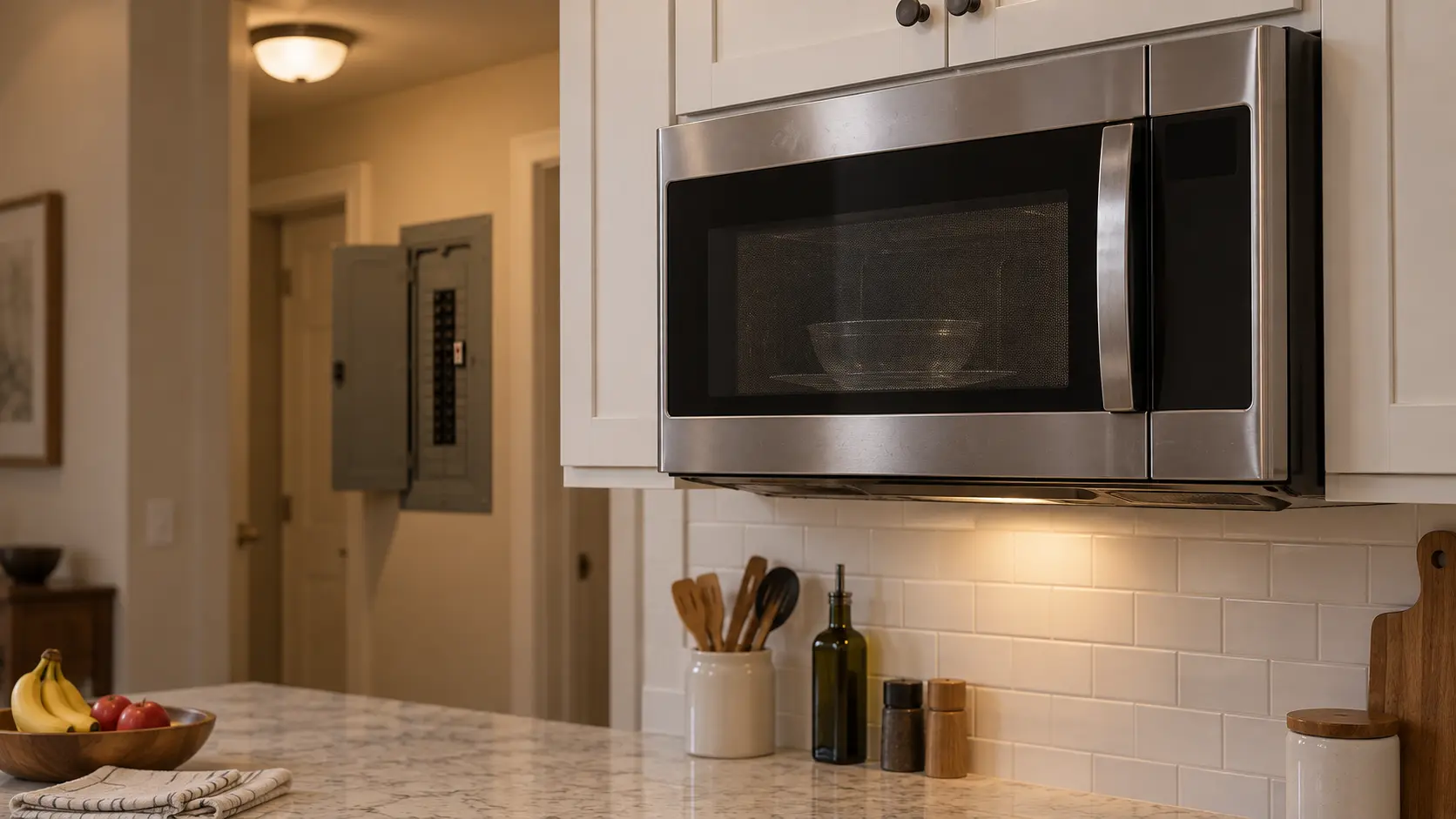
Power is the quiet one. Microwaves draw more from the wall than their cooking power suggests, the built-in kinds usually want a circuit of their own, and none of them belongs on an extension cord. A breaker that trips every morning is often an installation question rather than a broken microwave.
These guides describe what a good installation looks like so you can judge one; they are not a substitute for the installation instructions that came with your model, and the wiring itself is an electrician's job. Every figure is taken from the makers' own installation sheets and support pages, printed under the section it supports.
Not sure where to start?The short answerMounting a Microwave Above the Cooking Surface: Height, Studs and the Wall Plate
Microwave mounting height is set by the installation instructions: in Sharp's, a 30-inch-wide space, at least 30 inches from the cooking surface to the cabinet above, 66 inches or more from the floor and a 2-inch gap above the backsplash.
The short answerVenting a Microwave Outside or Recirculating: Duct, Damper and Charcoal
To vent a microwave outside, the fan is set to blow up or back into a metal duct of 3-1/4 by 10 inches or 6 inches round, with no more than 140 equivalent feet including elbows and caps.
The short answerA Dedicated Circuit for the Microwave: Which Kinds Need One and Why
A dedicated circuit for a microwave means a 120-volt branch circuit serving only that appliance, with a grounded three-prong outlet and a 15- or 20-amp breaker.
When reading
is not enough.
If the checks in these guides did not settle it, the visit picks up from there, stop by stop.
What repairs cost- 01A cup of water, timed
- 02The price before the work
- 03Usual parts on board
- 04Heating again before we leave
The problems
these answer.
Each has a page of its own, with the causes in the order worth checking.
All 17 problems



Questions about
installation and setup.
Can I install a microwave hood combination myself?
Which is better, venting outside or recirculating?
Does a microwave need its own circuit?
What should I check before the installer arrives?
The other
sections.
Split by what you are trying to find out rather than by which part of the appliance it concerns.
All guides

Back to your everyday
Let’s get your microwave working again.
Three short steps online, or one call. Tell us what you are seeing and pick a window that works.