
Habits that keep it heating for years
Maintenance and prevention
guides.
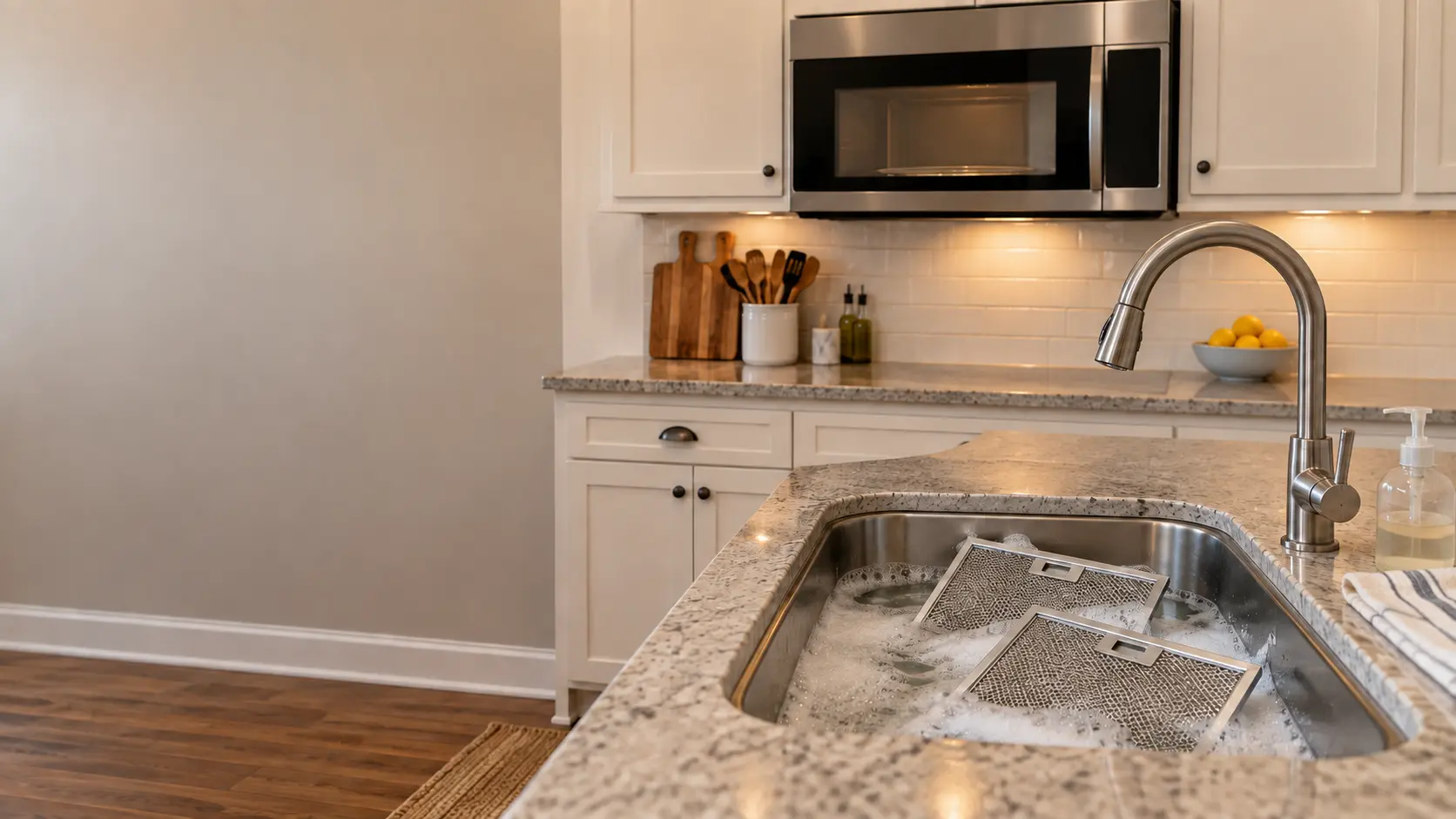
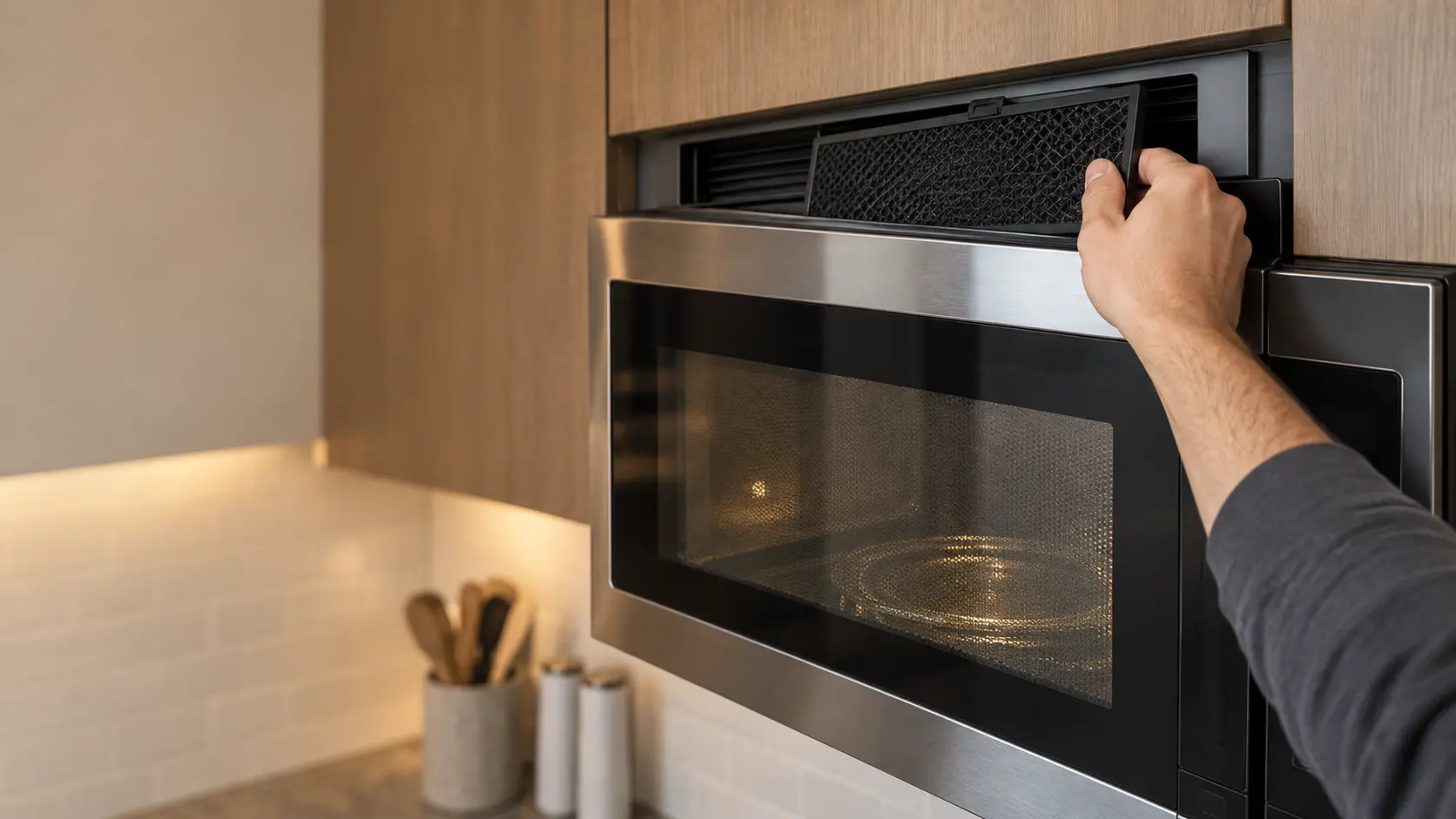
The small routines that keep a microwave off our schedule, from soaking the grease filters and changing the charcoal one to wiping splatter off the waveguide cover and treating the door gently.
Mon–Sat, 8am–8pm
- Three guides
- Read before you book
- Says where to stop
Book a visit
Three short steps, about a minute.
or call (844) 393-5858
Loading appointment form…
The appointment form couldn’t load. Please try again.
Maintenance and prevention,
guide by guide.
These guides are for owners whose microwave works and who want it to keep working. Three habits head off most of the avoidable visits on this site: wiping spatters off the waveguide cover before they char, washing the grease filters under a hood combination and changing its charcoal pad on time, and giving the whole unit one careful look a year.
All 18 guides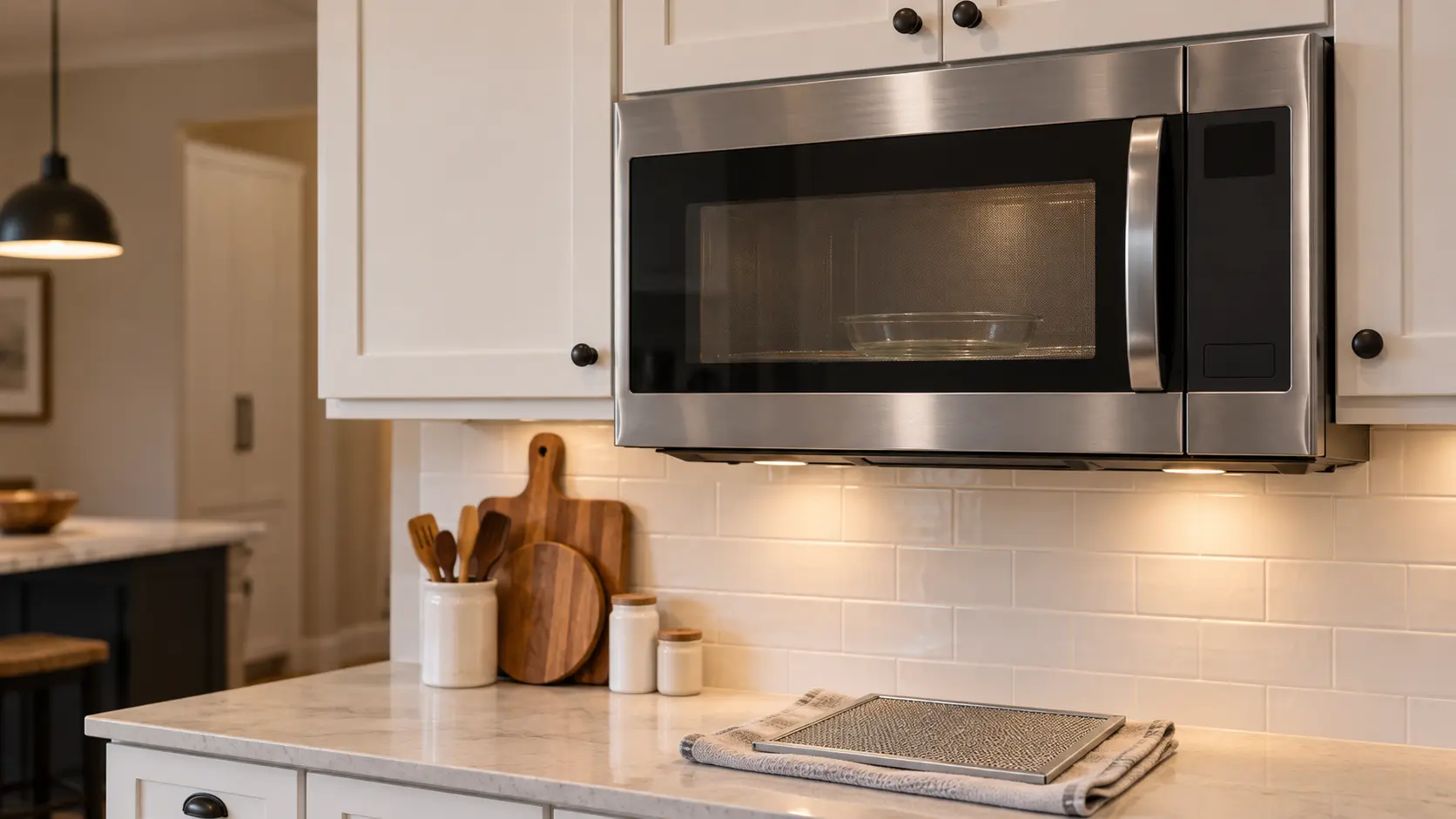
Keeping the cavity and the waveguide cover clean
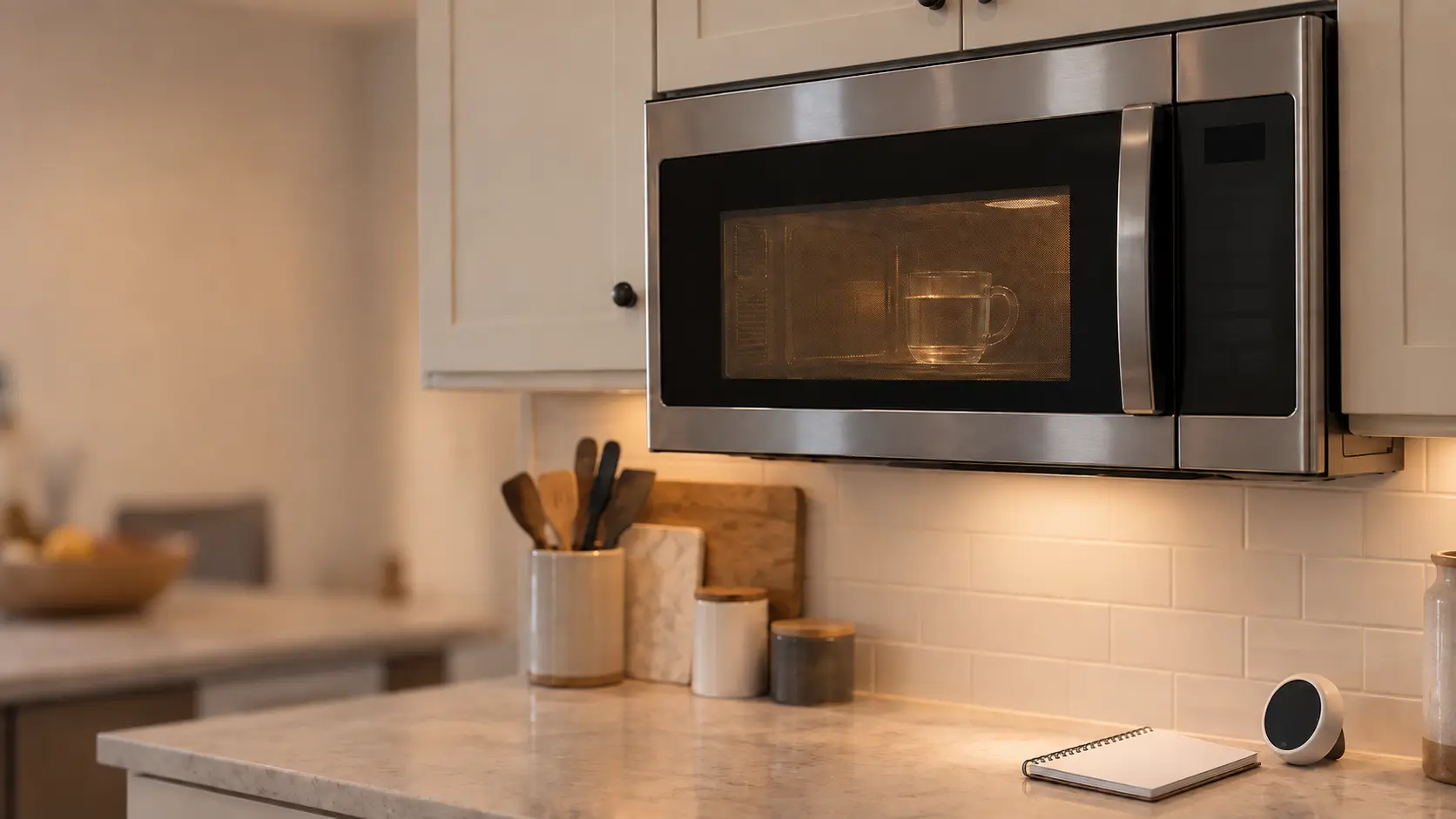
Habits that keep it heating for years.
Each guide shows where the part is on the four installed forms, gives an interval a busy household can keep, and names the cleaners that do harm, such as scouring pads in the cavity or ammonia on the mesh filters. Intervals and cautions that come from a maker's manual or from the FDA are quoted and linked beside the text they support.
The tools are ordinary: a soft cloth, mild dish soap, baking soda, a lemon, a mug and a notebook. Each routine is short on purpose, because a job that takes ten minutes gets done every month, and one that takes an afternoon waits until the microwave has already started to spark or smoke.
Every guide also marks where the owner's part stops. The outer cabinet, which hides a capacitor that can hold a dangerous charge after unplugging, the fan housing behind the grille, the mounting bolts of a hood combination and the drive of a drawer are a technician's work, and each guide says when to put the cloth down and book a visit.
Not sure where to start?The short answerCleaning the grease filters and changing the charcoal filter
A microwave grease filter is the metal mesh under a hood combination that traps grease from the pans below.
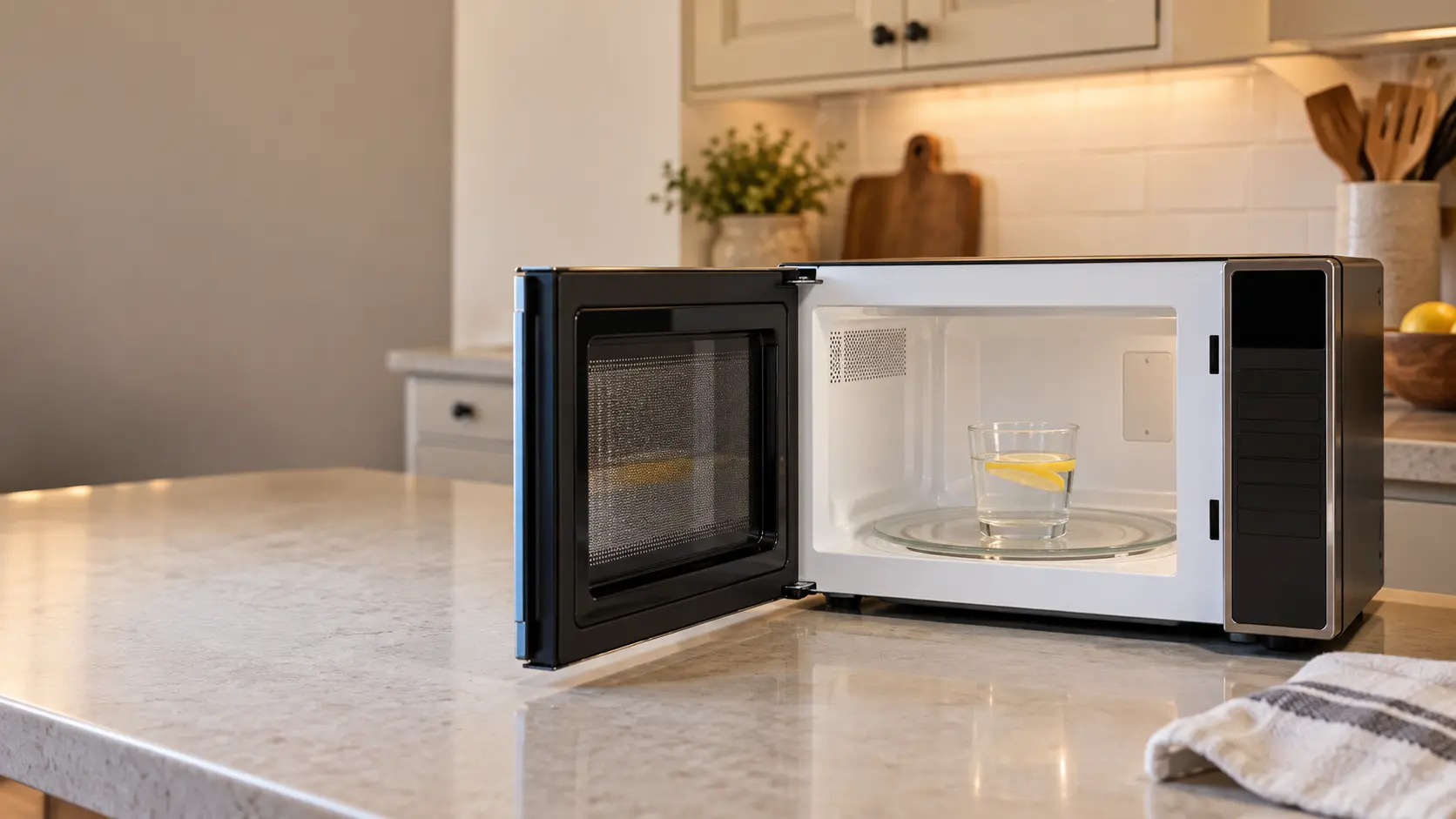
The short answerKeeping the cavity and the waveguide cover clean
The microwave waveguide cover is the panel, often made of mica, that shields the opening where energy from the magnetron enters the cavity.
The short answerA yearly microwave check: door, heating, fan and mounting
A yearly microwave maintenance checklist starts with the door: it must close firmly and be free of bends, warping or damage, and a microwave that runs with the door open is never used again until repaired.
When reading
is not enough.
If the checks in these guides did not settle it, the visit picks up from there, stop by stop.
What repairs cost- 01A cup of water, timed
- 02The price before the work
- 03Usual parts on board
- 04Heating again before we leave
The problems
these answer.
Each has a page of its own, with the causes in the order worth checking.
All 17 problems

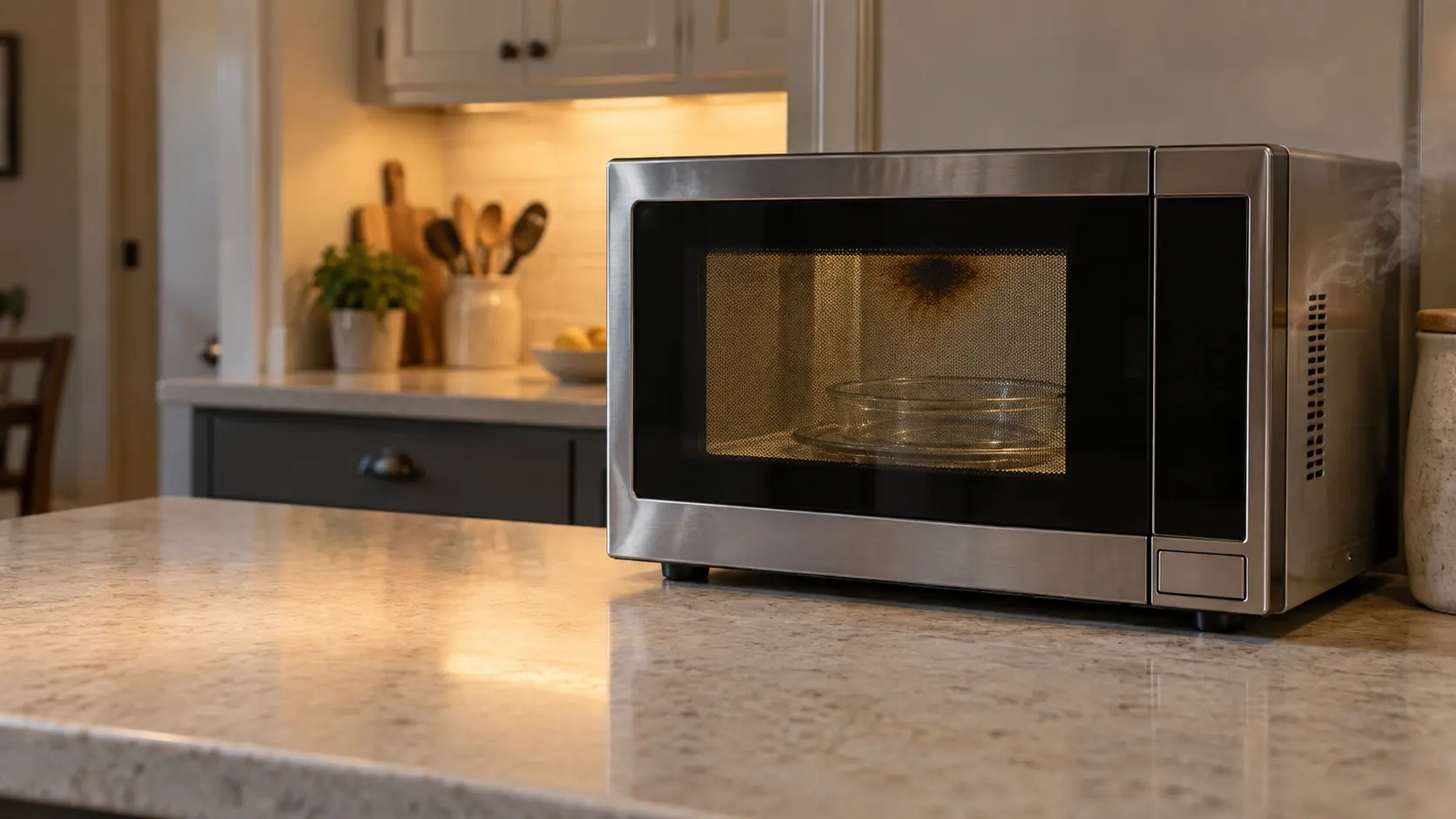
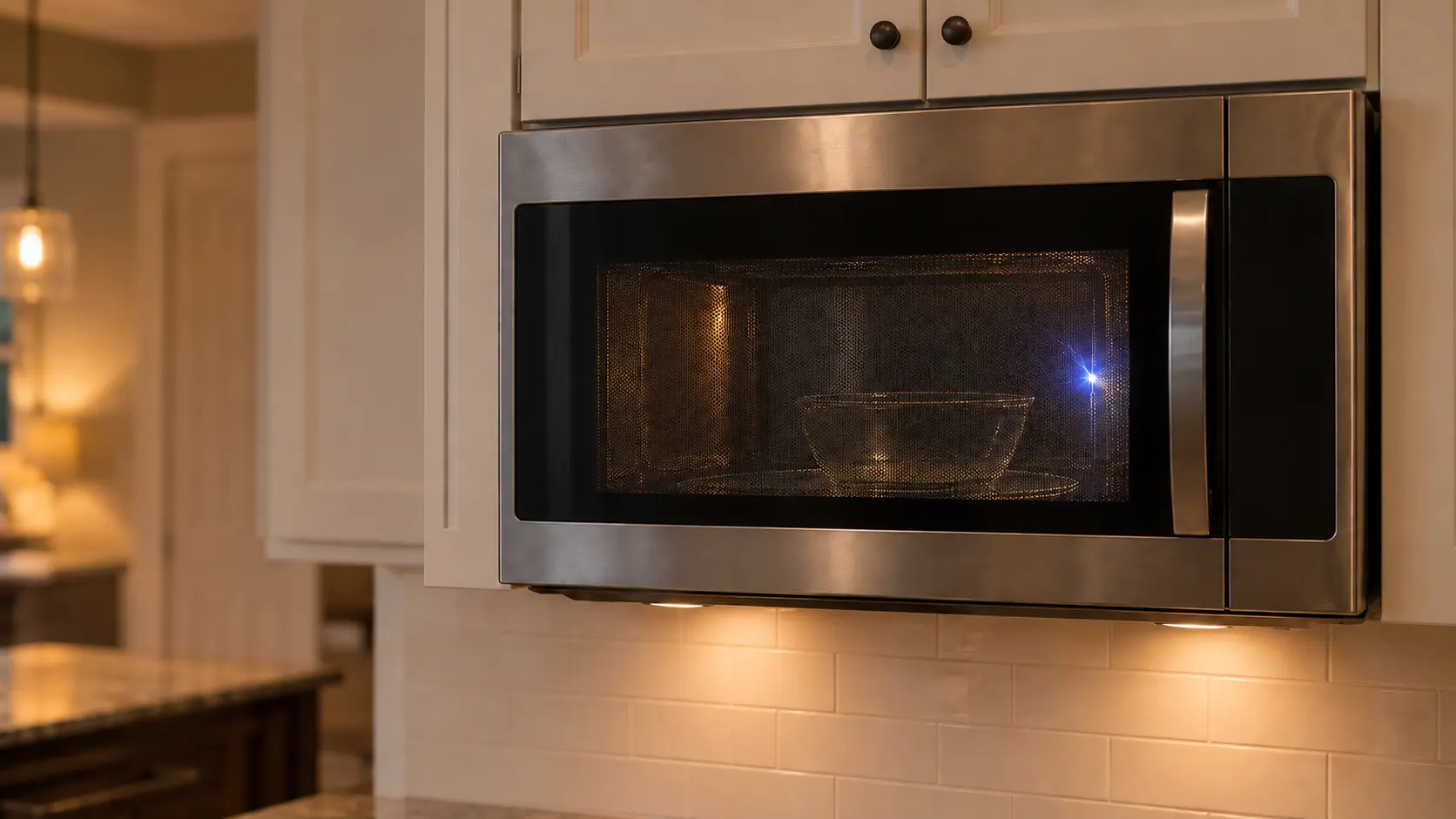

Questions about
maintenance and prevention.
How much upkeep does a microwave really need?
Can regular cleaning prevent sparking inside?
Do built-in and drawer models need different care?
Which jobs should I leave to a technician?
The other
sections.
Split by what you are trying to find out rather than by which part of the appliance it concerns.
All guides


Back to your everyday
Let’s get your microwave working again.
Three short steps online, or one call. Tell us what you are seeing and pick a window that works.