What the waveguide cover is for
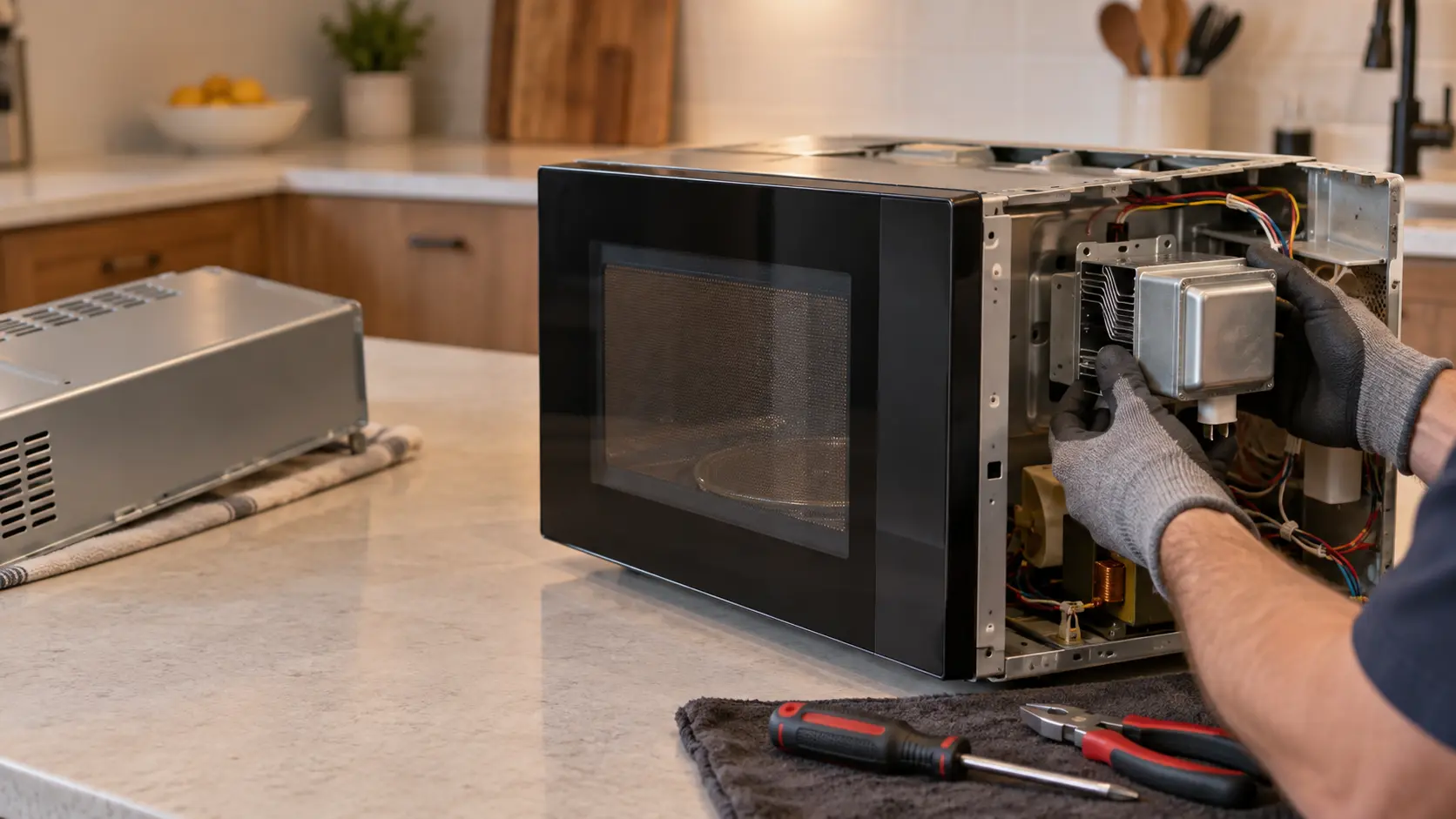
Energy from the magnetron travels through a short metal channel, the waveguide, and enters the cavity through an opening in one wall. Wolf describes the cover over that opening as protecting the gap where the microwaves come in and stopping moisture and food particles from getting into the workings behind it.
Most covers are thin sheets of mica, a mineral that lets microwave energy through, cut to the shape of the opening and held by tabs or a single screw. Look for a rectangle a few inches across that is a slightly different color from the wall around it.
- A fresh brown stain: wipe it with a damp cloth before the next use.
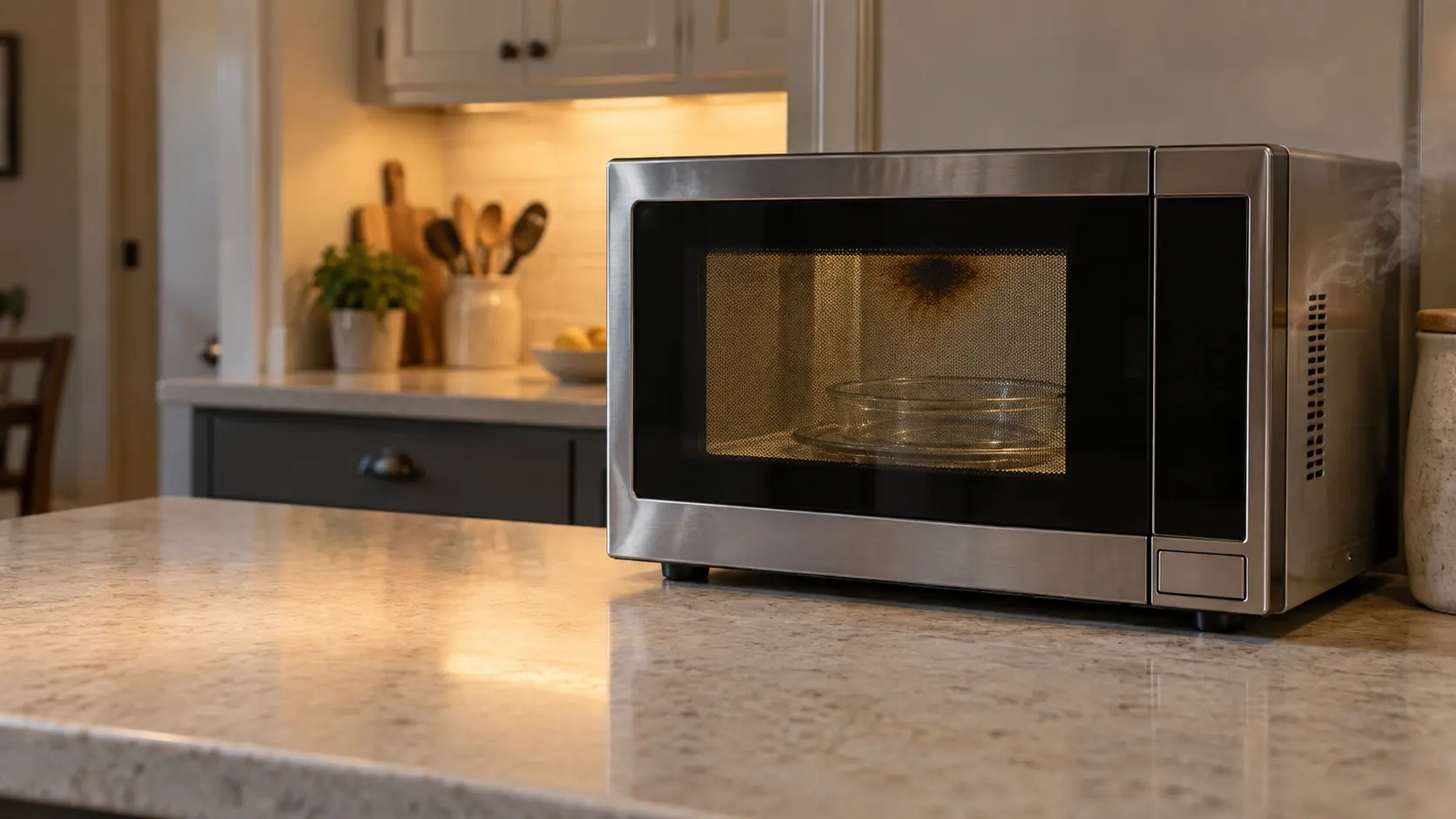
- A dark spot that will not wipe off: the mica has started to char and will likely spark.
- A chip, crack, hole or curled edge: replace the cover before running the microwave.
- A blackened or pitted wall behind the cover: book a visit.
Source: Wolf — Waveguide cover replacement (Sub-Zero Group) — The cover protects the gap where microwaves enter from the magnetron and keeps out moisture and food; replace it if burnt, chipped or cracked, do not operate without it, and the owner can replace it; Wolf — Speed Oven care recommendations (Sub-Zero Group) — On Wolf speed ovens the waveguide cover is on the inside top of the cavity
Why a spatter on the cover turns into sparks
Food on the cover sits right where the energy is strongest. Wolf warns that built-up spatters there may overheat, smoke or catch fire, which is why it asks owners to wipe them away as soon as they happen rather than at the weekly clean.
Once a spot chars, carbon conducts, and a charred spot can arc every time the microwave runs, scorching the mica further. A small brown mark is the early warning; a black pit with a burnt edge means the cover has already been damaged.
A burnt, chipped or cracked cover
Wolf's guidance is to replace the cover if it is burnt, chipped or cracked, and not to run the unit with a damaged cover or with none at all. On some of its models the cover pulls out and pushes in, on others one screw holds it, and Wolf says the owner can do this. If the metal wall behind the old cover is blackened or pitted, the damage has gone past the cover, and that is a visit.
Running it empty to test it
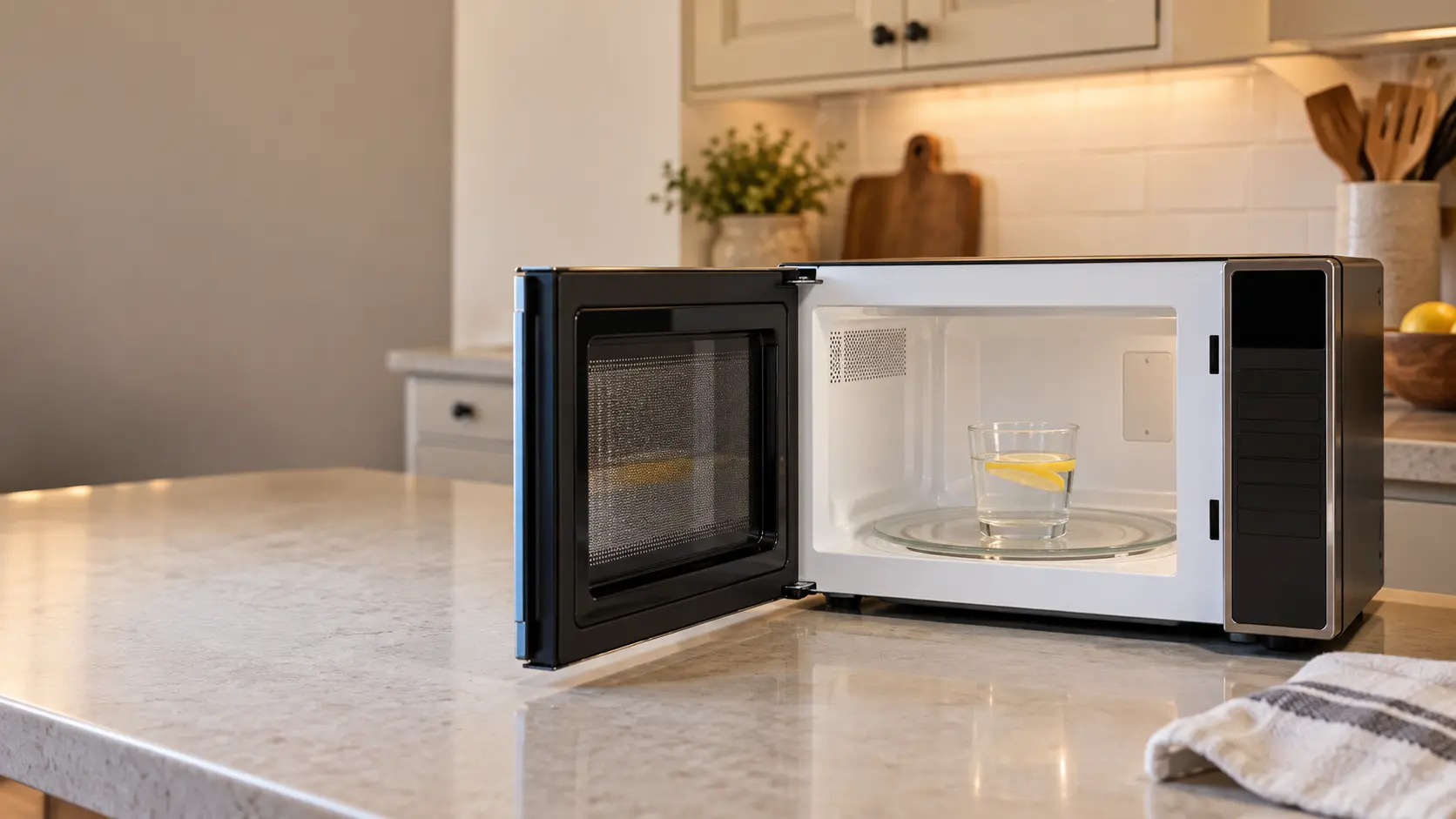
Some microwaves are not meant to operate empty, as the FDA notes, and an empty cavity is the worst test of a scorched cover. If a new cover has gone in, test with a cup of water on the turntable, not with nothing.
Source: Wolf — Microwave cleaning (Sub-Zero Group) — Wipe spatters off the mica waveguide cover right away because built-up spatters may overheat, smoke or catch fire; clean with warm water, baking soda or mild soap and no abrasives or oven cleaners; lemon water removes odors; the turntable motor shaft is not sealed; drawer models clean in place and their guides are kept free of crumbs

A routine for the rest of the cavity
The FDA recommends cleaning the cavity, its outer edge and the door regularly with water and a mild detergent, adds that no special microwave cleaner is needed, and warns against scouring pads, steel wool and other abrasives. Wolf's microwave care page says the same for its models, with baking soda or a mild soap for heavier soil and no chemical oven cleaners.
A plain microwave's walls stay fairly cool, so spills do not bake on the way they do in an oven, and a weekly wipe keeps them from building up. Steam loosens what has dried: Wolf suggests heating a cup of water with lemon juice and peel for a few minutes at full power and leaving it to cool inside, which also clears lingering smells.
- After any splatter: wipe the waveguide cover with a soft damp cloth while it is fresh.
- Weekly: walls, ceiling and floor with warm water and a little dish soap, then a clean rinse cloth.
- Monthly: steam with lemon water, then wipe everything, including the door's inner face.
- Never: scouring pads, steel wool, oven cleaner, or a knife blade on the walls.
Source: Wolf — Microwave cleaning (Sub-Zero Group) — Wipe spatters off the mica waveguide cover right away because built-up spatters may overheat, smoke or catch fire; clean with warm water, baking soda or mild soap and no abrasives or oven cleaners; lemon water removes odors; the turntable motor shaft is not sealed; drawer models clean in place and their guides are kept free of crumbs; FDA — Microwave Ovens (radiation safety) — Clean the cavity, its outer edge and the door with water and mild detergent, no special cleaner needed, no abrasives; some ovens should not be operated empty
The turntable, its support and the shaft
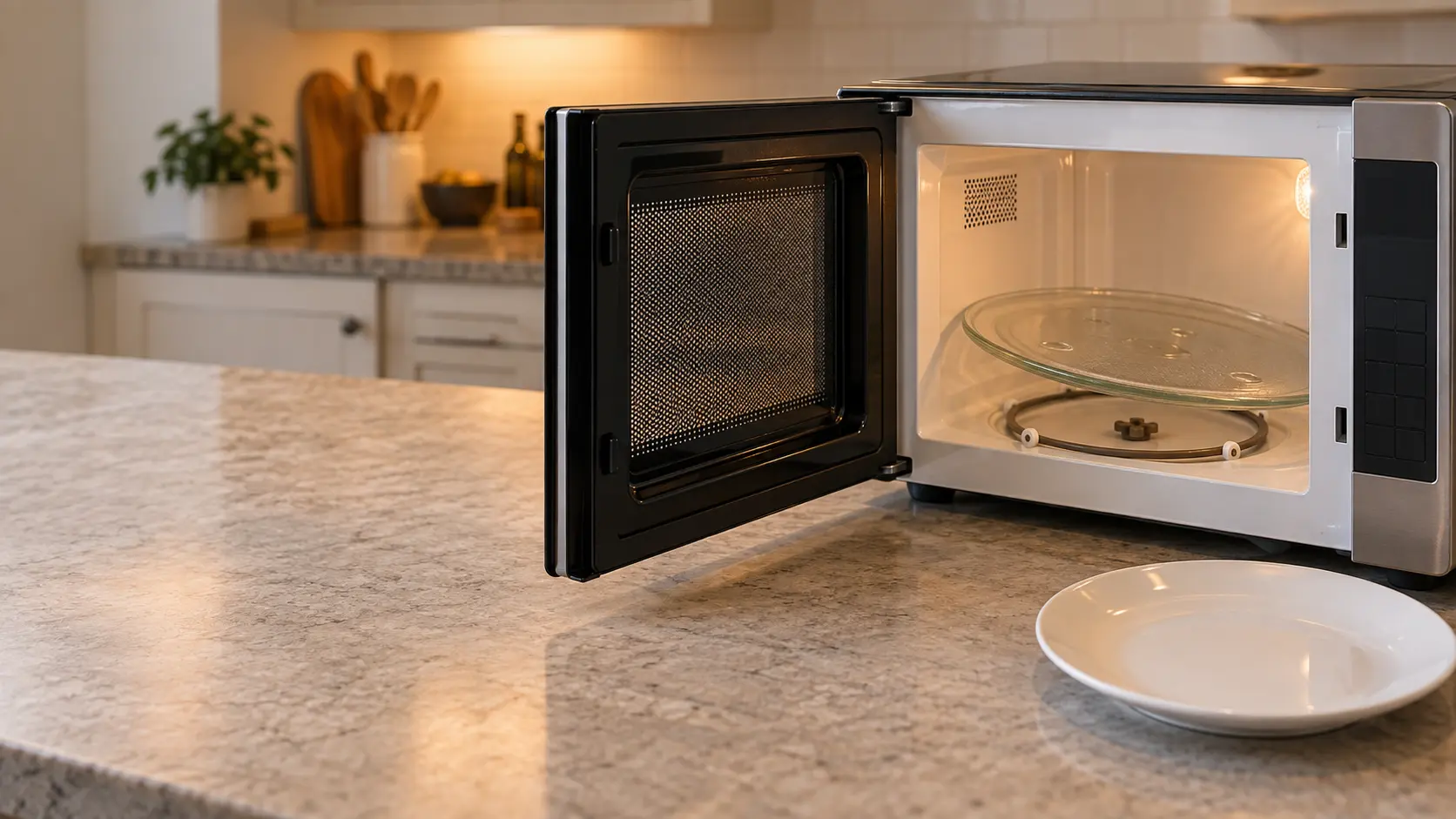
The glass tray and the roller ring or support under it lift out and wash in mild soap and water. Let a hot tray cool before it meets cold water, since a sudden change in temperature can crack it.
Look at the small coupler in the middle of the floor while the tray is out. Wolf points out that the turntable motor shaft is not sealed, so spills and excess water should not be left standing around it; water that seeps down there can reach the motor below.
Cleaning a microwave drawer
A drawer is cleaned in place with the drawer open, since Wolf notes it does not come out fully. Brush crumbs from the guides on each side and wipe them with a soft dry cloth so the drawer keeps running smoothly.
Source: Wolf — Microwave cleaning (Sub-Zero Group) — Wipe spatters off the mica waveguide cover right away because built-up spatters may overheat, smoke or catch fire; clean with warm water, baking soda or mild soap and no abrasives or oven cleaners; lemon water removes odors; the turntable motor shaft is not sealed; drawer models clean in place and their guides are kept free of crumbs
The door edge and the sealing surfaces
The band where the door meets the cavity front matters more than it looks. A GE owner's manual asks owners to keep that area clean with a mild, nonabrasive detergent and a soft cloth, and warns against letting soil or cleaner residue build up on the sealing surfaces or leaving any object between the door and the front of the oven.
Wipe the inner face of the door and the cavity rim, then rinse the cloth and go around once more to lift any soap film. Do not spray cleaner at the vents or into the door gaps; put it on the cloth instead.
Source: GE Appliances — Over the Range Microwave Oven Owner's Manual (LVM1335) — Keep the area where the door seals clean with mild nonabrasive detergent; do not let soil or cleaner residue build up on sealing surfaces or place objects between the door and the oven front