

Microwave
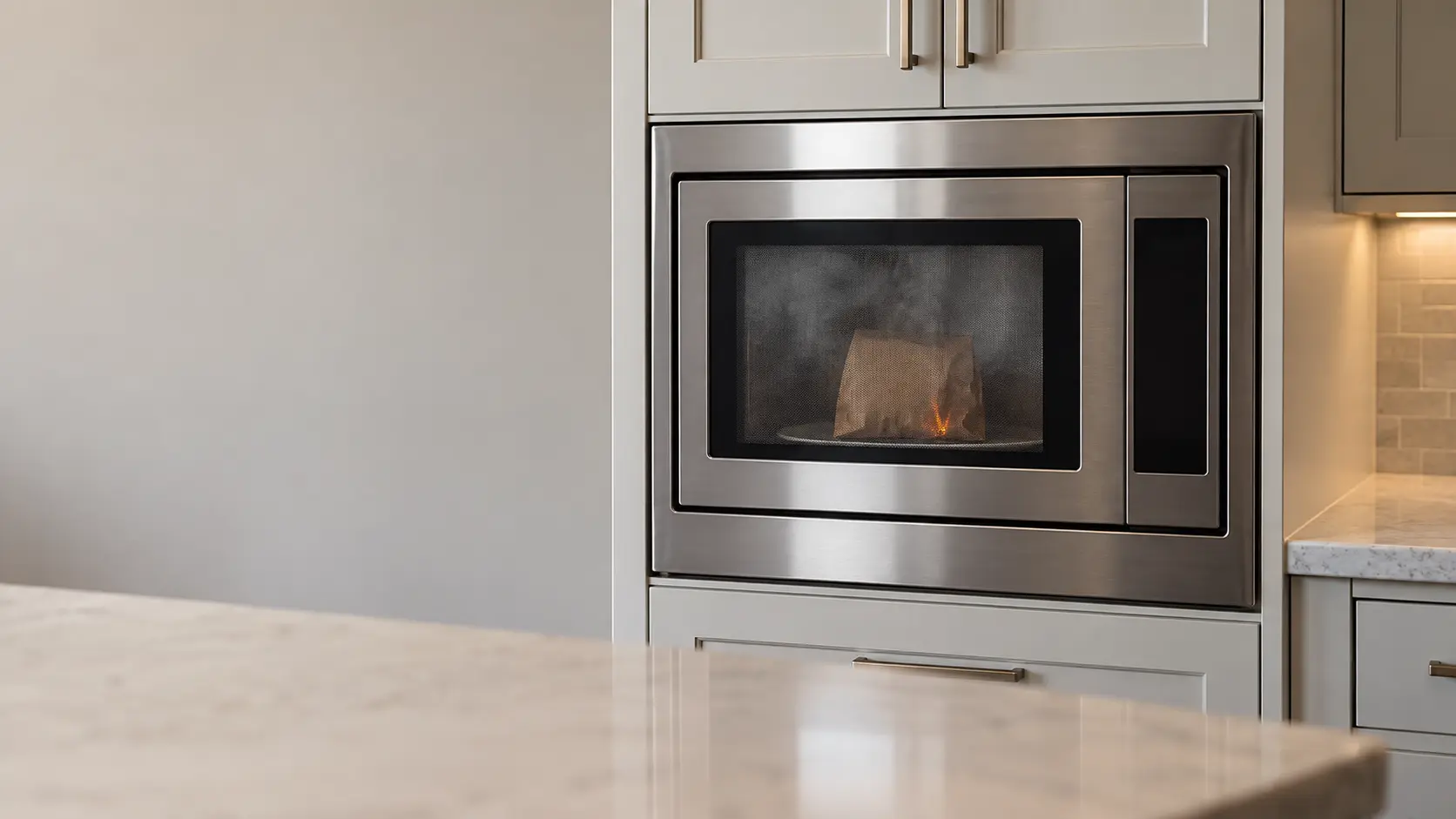
Fire: Smoke or Flames Behind the Door
A microwave fire starts as smoke curling past the door edges or an orange glow behind the mesh window, sometimes a flame on a popcorn bag or a paper plate, and the first instinct, to open the door and look, is the one to resist.
Mon–Sat, 8am–8pm
- Stop using it
- 5 questions that narrow it
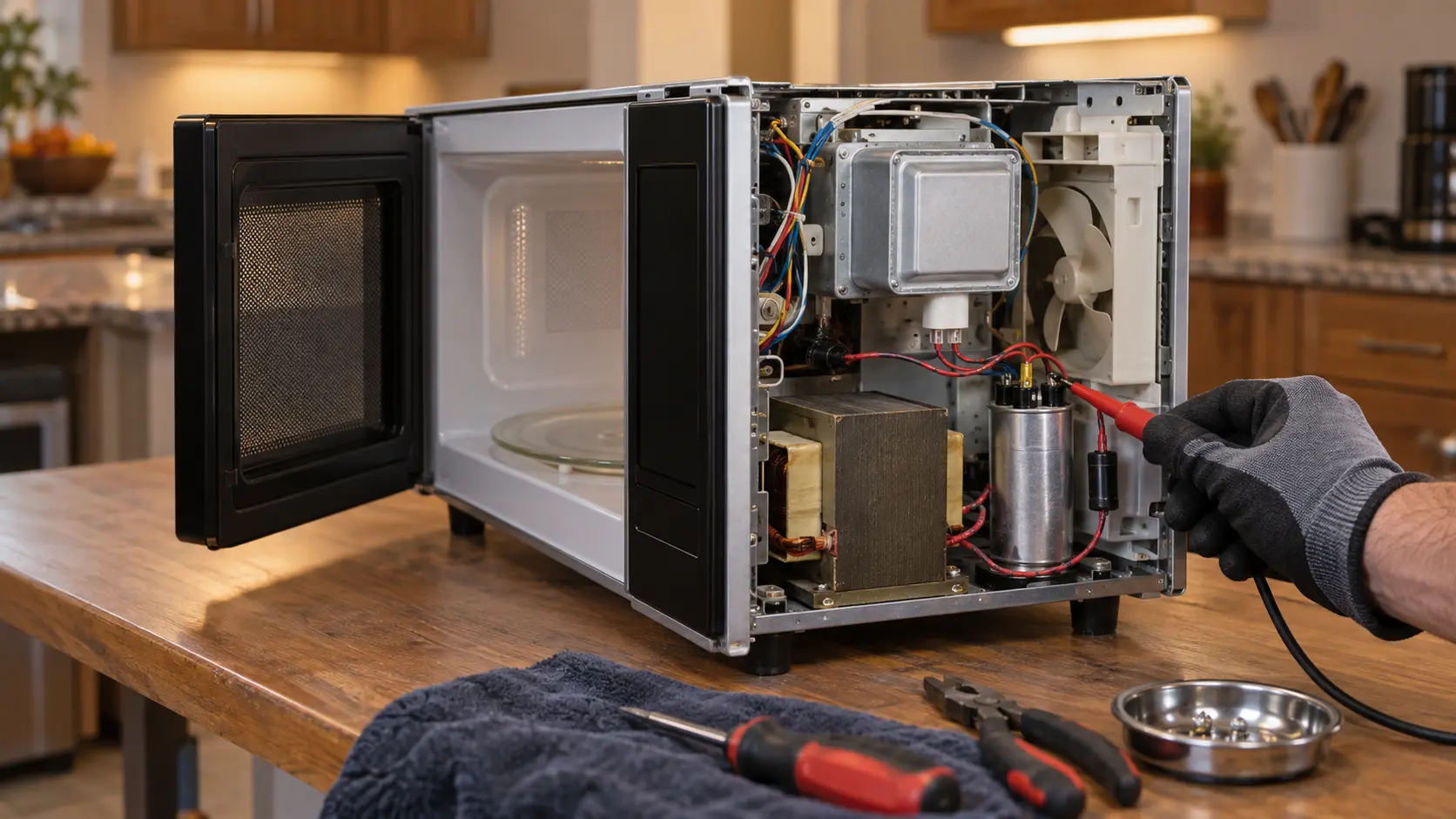
- 6 causes, cheapest first
Book a visit
Three short steps, about a minute.
or call (844) 393-5858
Loading appointment form…
The appointment form couldn’t load. Please try again.
Door shut, stop pressed, power off at the breaker
Keep the door closed, stop the cycle and switch the breaker off; the fire starves on its own. Call 911 if flame shows outside the microwave or the smoke keeps building. Do not run it again until it has been inspected: heat can crack the waveguide cover, soften wiring and warp the door so it no longer seals.
What it
usually means.
Food in a microwave heats from within, so it can go from cooked to charred without the cavity walls getting hot enough to warn anyone. Popcorn left for the full time printed on the bag, a potato or a roll heated far too long, a paper towel, a takeout box with a wire handle, or grease gathered on the waveguide cover can all smolder and then catch. Inside a closed metal box a flame uses up its oxygen quickly, which is why the door stays shut: opening it feeds the fire fresh air and lets smoke and flame roll out toward a face and the cabinets. Stopping the cycle ends the energy that keeps the food burning, and cutting power at the breaker makes sure the fan and the magnetron cannot restart. A hood combination adds one detail: its plug sits in the wall cabinet right above the fire, so the breaker panel is the place to cut it, not that cabinet. After any fire the microwave needs an inspection before it runs again, because heat can crack the waveguide cover, soften wiring and warp the door seal.
 The 6 causes, cheapest first
Answer these first
Is smoke still coming, or has it thinned and stopped since the cycle was stopped?
Could you see a flame through the window, and on what: a bag, a paper plate, the food, or the side wall?
What was inside, for how long, and were the time and power level entered as intended?
Is there soot on the door glass, on the grille above the door, or under the wall cabinet?
Is the microwave built in, mounted above the cooking surface or on a counter, and where is the breaker that feeds it?
Check these
before you book.
Microwave fire: 5 checks, and none of them costs anything.
Keep the door shut and press stop or cancel; a flame inside a closed microwave runs out of air within a minute or two.
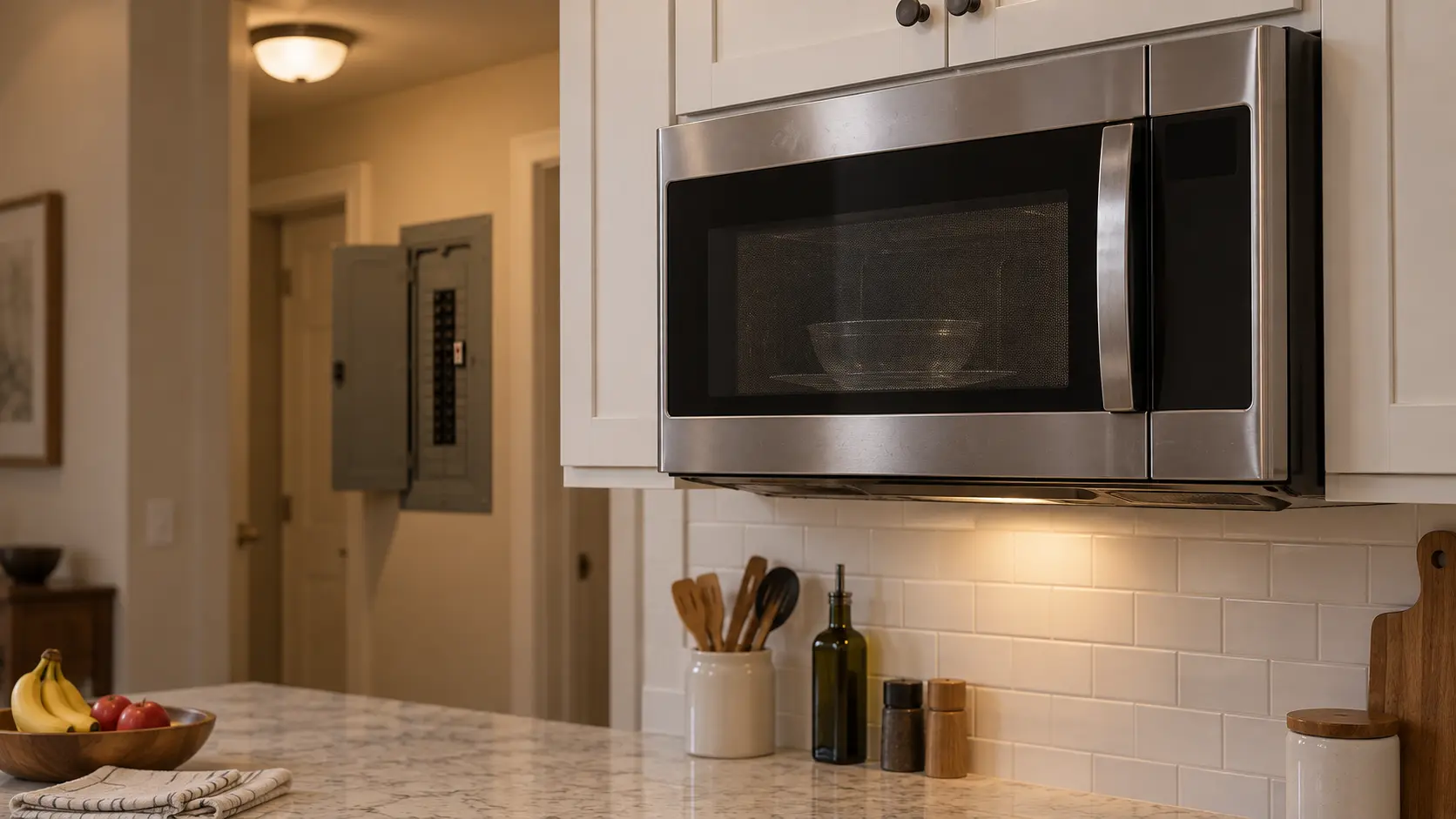
Cut the power at the breaker; on a hood combination the plug is in the wall cabinet right above the fire, so do not reach into that cabinet.
If flame shows outside the microwave or smoke keeps building with the door closed, get everyone out and call 911 from outside.
Also worth checking
- Once the smoke has stopped and the unit has cooled, open the door, air the room and look for soot, a burned cover sheet or melted plastic.
- Leave the microwave off and unused until it has been inspected, and keep the burned bag or container for us to see.
The causes,
cheapest first.
6 things microwave fire: smoke or flames behind the door turns out to be, from food or packaging heated far too long to wiring or a part burning inside the case.
The cost guide-
01 no repair
Food or packaging heated far too long
Popcorn run past its popping, a paper bag or towel, a dried-out roll: the food itself is the fuel. The appliance did what it was told, and once the cavity is cool and cleaned, an inspection shows whether the heat harmed anything.
-
02 no repair
Metal that arced and lit what was around it
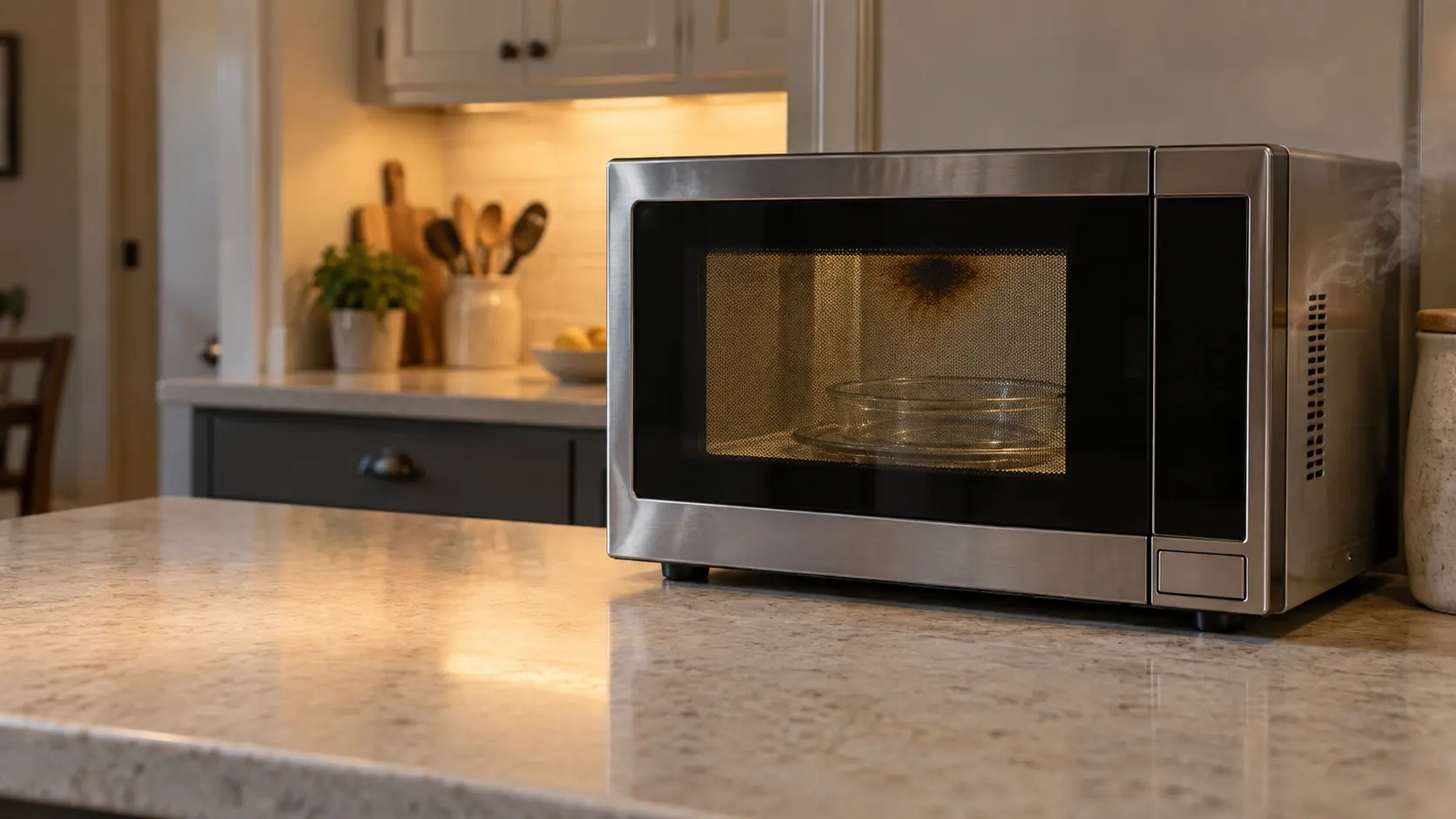
A twist tie on a bread bag or a foil tray can spark long enough to light the paper or the food touching it.
-
03 low
Grease on the waveguide cover that caught
Years of splatter on the cover sheet turn to carbon, arc and can ignite. The cover is replaced and the waveguide opening behind it inspected before the microwave works again.
-
04 low
Packed grease filters under a hood combination
Flame from a pan on the burners below can reach grease packed into the filters under the microwave. That fire sits outside the cavity, underneath it; once it is out, the filters, the fan and the underside are checked.
-
05 moderate
A key or relay that kept the cycle going
When a key sticks or a relay on the board welds shut, the magnetron keeps going after the time runs out, or starts with nobody pressing anything. A microwave that ran on by itself stays off until the board is checked.
-
06 moderate to highest
Wiring or a part burning inside the case
Smoke that keeps coming from the vents or the back after the cycle is stopped, with nothing burning in the cavity, points to wiring, a fan motor or a high-voltage part. The breaker stays off and the outer case stays closed.
What else
it could be.
Most often confused with sparks flashing inside a microwave, then burning smell from a microwave.
All problems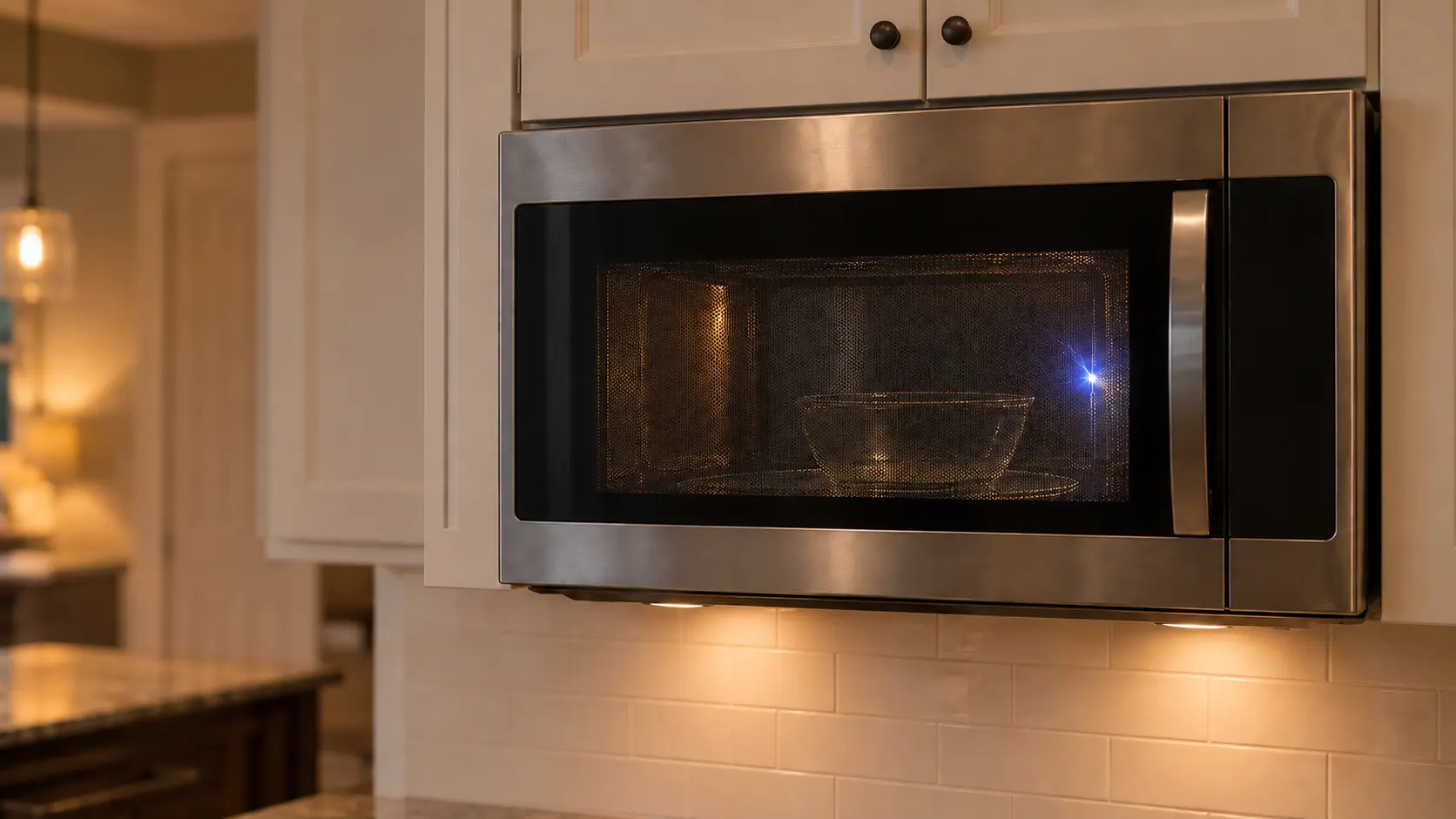

The makes
it happens on.
18 makes on this site; microwave fire: smoke or flames behind the door can show up on any of them. Each mark opens that make's own page.
All 18 brandsMicrowave Fire: Smoke or Flames Behind the Door,
where we come out.
9 metros, each with its own page.
All service areasTampa BayFL · 31 areas
Miami / South FloridaFL · 47 areas
New York MetroNY · 75 areas
HoustonTX · 36 areas
ChicagoIL · 50 areas
Los AngelesCA · 95 areas
San DiegoCA · 31 areas

Questions about
microwave fire: smoke or flames behind the door.
Should I throw water on a fire inside a microwave?
The flame went out by itself. Can I keep using the microwave?
Why does the burnt popcorn smell hang on for days?
Is a microwave that had a fire worth repairing?
Back to your everyday
Still seeing microwave fire: smoke or flames behind the door?
Book with what you checked above — 5 answers save the technician the first part of the visit.