


Countertop
Microwave Repair
A microwave that stands on the counter or a shelf and plugs into an outlet beside it, from a compact model for a dorm to a large inverter or convection unit in a busy family kitchen.
Mon–Sat, 8am–8pm
- 4 things that fail on it
- 13 makes build it
- 6 problems it shows
Book a visit
Three short steps, about a minute.
or call (844) 393-5858
Loading appointment form…
The appointment form couldn’t load. Please try again.
Is yours
a countertop?
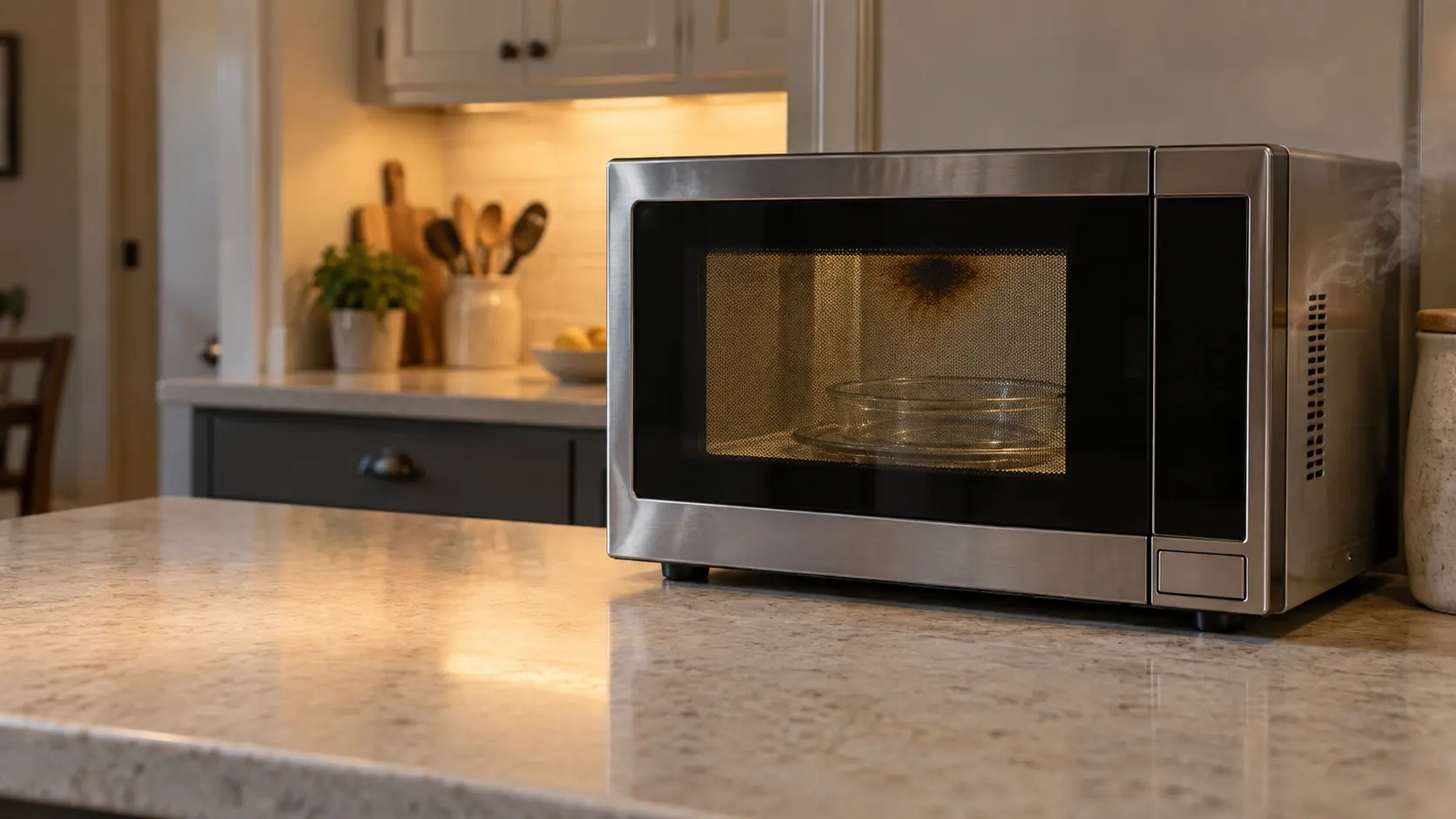
A countertop microwave is the most common microwave in American homes and the easiest to live with: it plugs into an ordinary outlet, sits on the counter or a cart, and needs only a few inches of clear air at the back and the top to stay cool. Inside it is built like every other microwave, with a magnetron that makes the heat, a high-voltage transformer, a diode and a capacitor that feed it, three door switches that stop it the instant the latch lifts, and a glass turntable spun by a small motor under the floor. Better models add an inverter board in place of the heavy transformer, a humidity sensor that stops cooking when steam rises from the food, or a convection element for roasting. Because it moves, gets bumped, pushed against a wall or shares an outlet with a kettle, many of its problems start outside it: a tripped breaker, a door that was slammed and now sits a little crooked, a vent pushed flush against tile. The repair question on a countertop unit is sharper than on any built-in model, since nothing about the kitchen has to change to replace it, and the visit is honest about that.
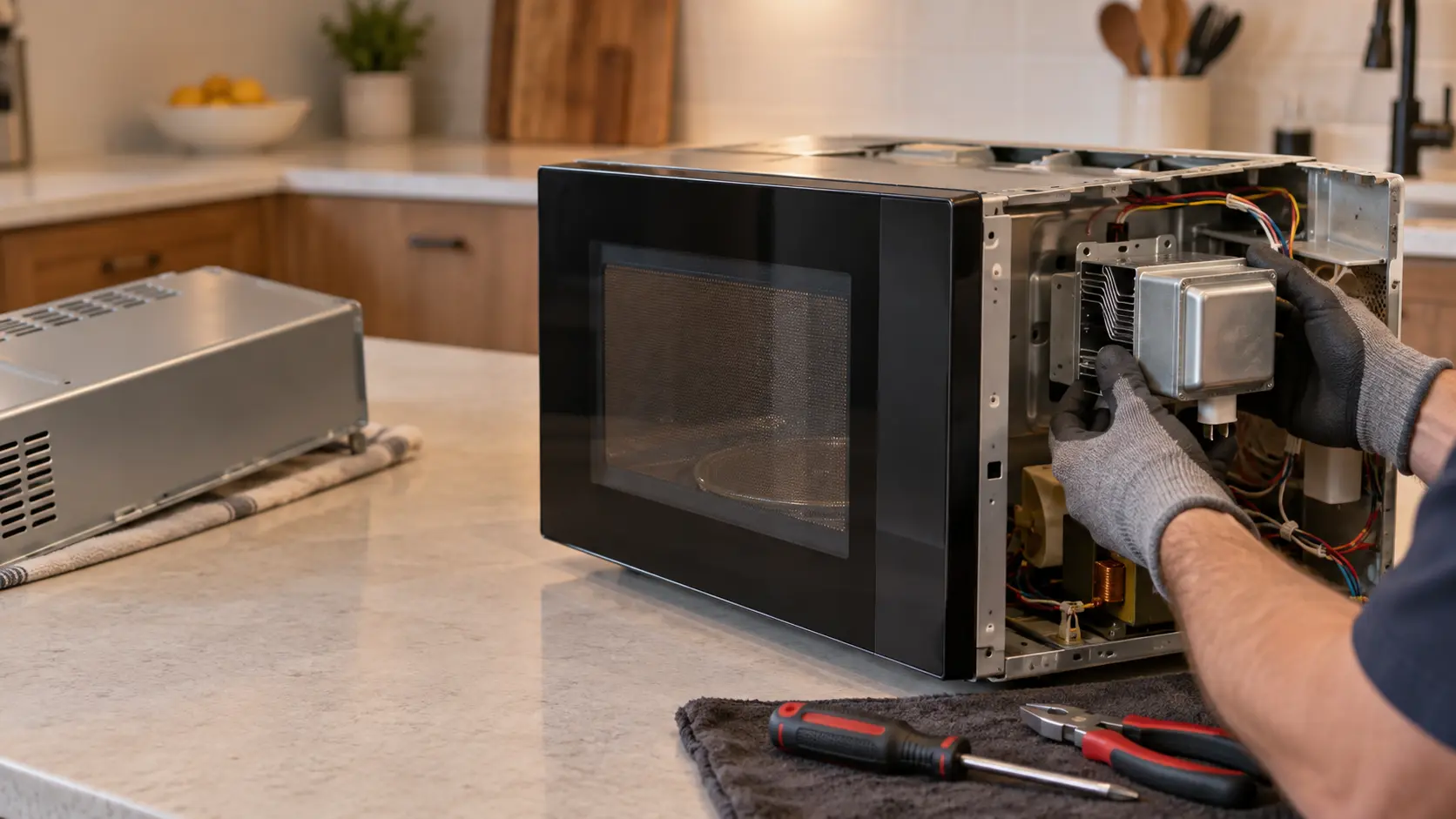 What fails on a countertop microwave
How to tell
It stands on its own feet on a counter, a cart or a shelf, with a cord running to an outlet behind it or beside it.
Slots or grilles are visible on its sides, top or back, and the manual asks for open space around them.
You can lift it or slide it forward without removing a screw, trim or bracket.
The door swings open on a left-side hinge from a push button or a pull handle, and a glass tray turns on a roller ring inside.
Not yours?Microwave hood combinationBuilt-in microwaveMicrowave drawer
What fails
on this design.
On a countertop microwave: door switches that take every slam, a burned waveguide cover, the magnetron and its supply, turntable motor and roller ring.
The problems it showsDoor switches that take every slam
Each time the door closes, its latch hooks press three switches in a set order. Slammed doors wear them or knock the latch out of line, and the result ranges from a unit that will not start to one that blows its internal fuse the moment the door moves.
A burned waveguide cover
The small panel on the cavity wall covers the opening where the energy enters. Splatter soaks into it, carbonizes and starts to spark, and a spark left alone pits the metal behind it until the arcing moves into the magnetron's path.
The magnetron and its supply
When the light, the fan and the turntable all run but a cup of water stays cold, the heat source or the parts feeding it have quit. On a small, older unit that is the point where replacement often beats repair; on a large convection or inverter model it may still be worth fitting.
Turntable motor and roller ring
A cracked coupler, a roller ring clogged with baked-on spill, or a motor under the floor that has gone quiet leaves the plate still, and food comes out hot at one edge and cold in the middle.
Getting at it,
and whether to.
Most checks start with the unit where it stands: the outlet, the door and its latch, the cavity wall and the turntable parts.
What repairs costOn the visit
- Internal work means the outer cabinet comes off on a clear table or counter, with the capacitor discharged by the technician before anything is touched.
- Leave the outer cabinet screws alone yourself; many countertop models use security screws exactly because the capacitor inside stays charged after unplugging.
- If the unit sparks or smells of burning, unplug it once it has stopped and leave it unplugged until the visit, with the door shut.
Repair or replace
This is the microwave where replacement comes up most often, because a new countertop unit needs no cabinetry, no trim and no installer. A glass tray, a roller ring, a turntable motor, a door switch, a latch or a fuse is still a sensible repair on a well-built or larger model. A magnetron, a transformer or a main board on a small, inexpensive unit usually is not, and the technician says so before any part is ordered. Convection and inverter countertop models sit between the two and are judged on age and parts.
Book a visit for a countertop microwaveThe problems
it shows.
On a countertop microwave, most often sparks flashing inside a microwave.
All problems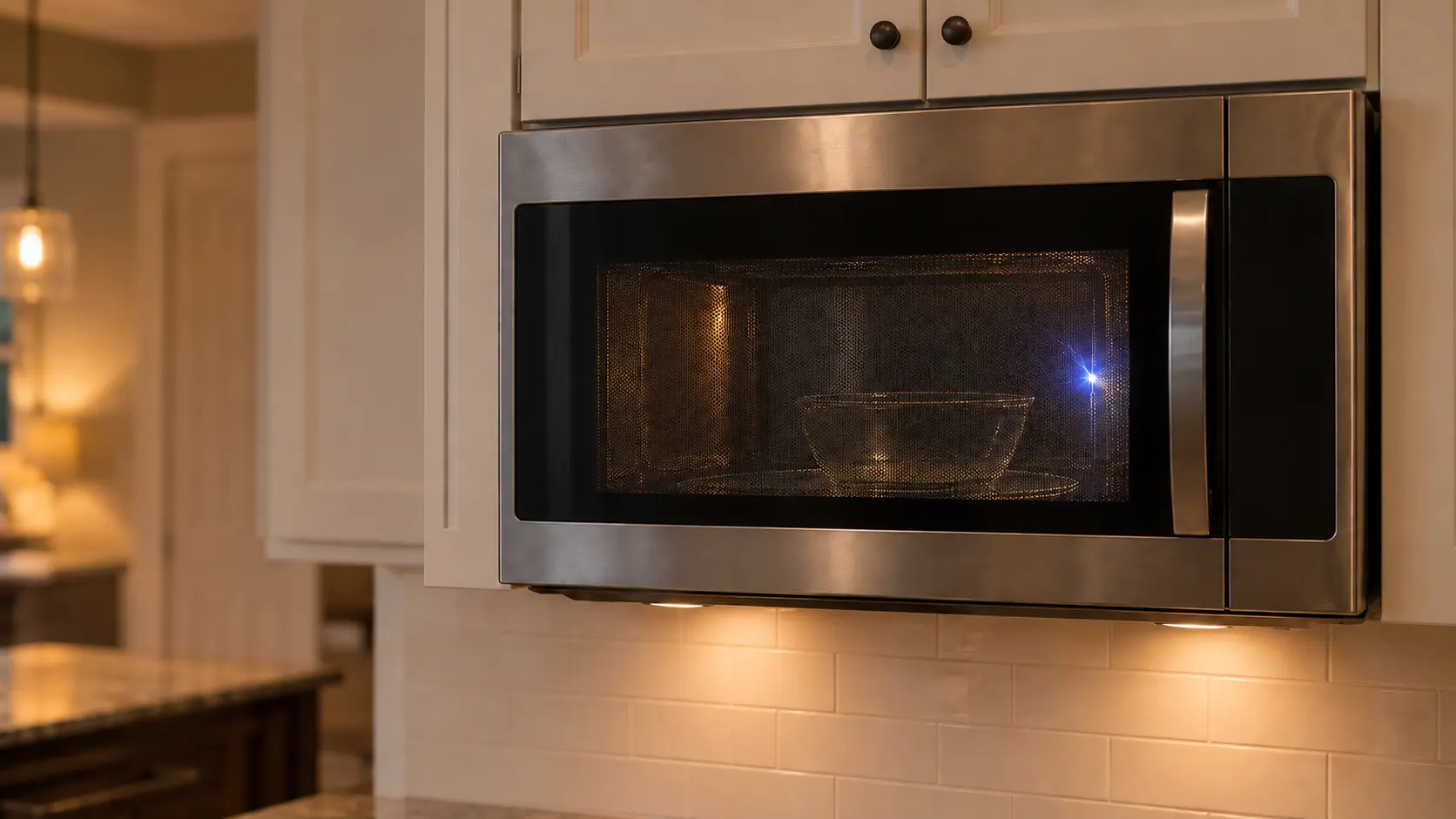
Sparks Flashing Inside a Microwave
6 causes, cheapest first

Microwave Runs but Food Stays Cold
7 causes, cheapest first
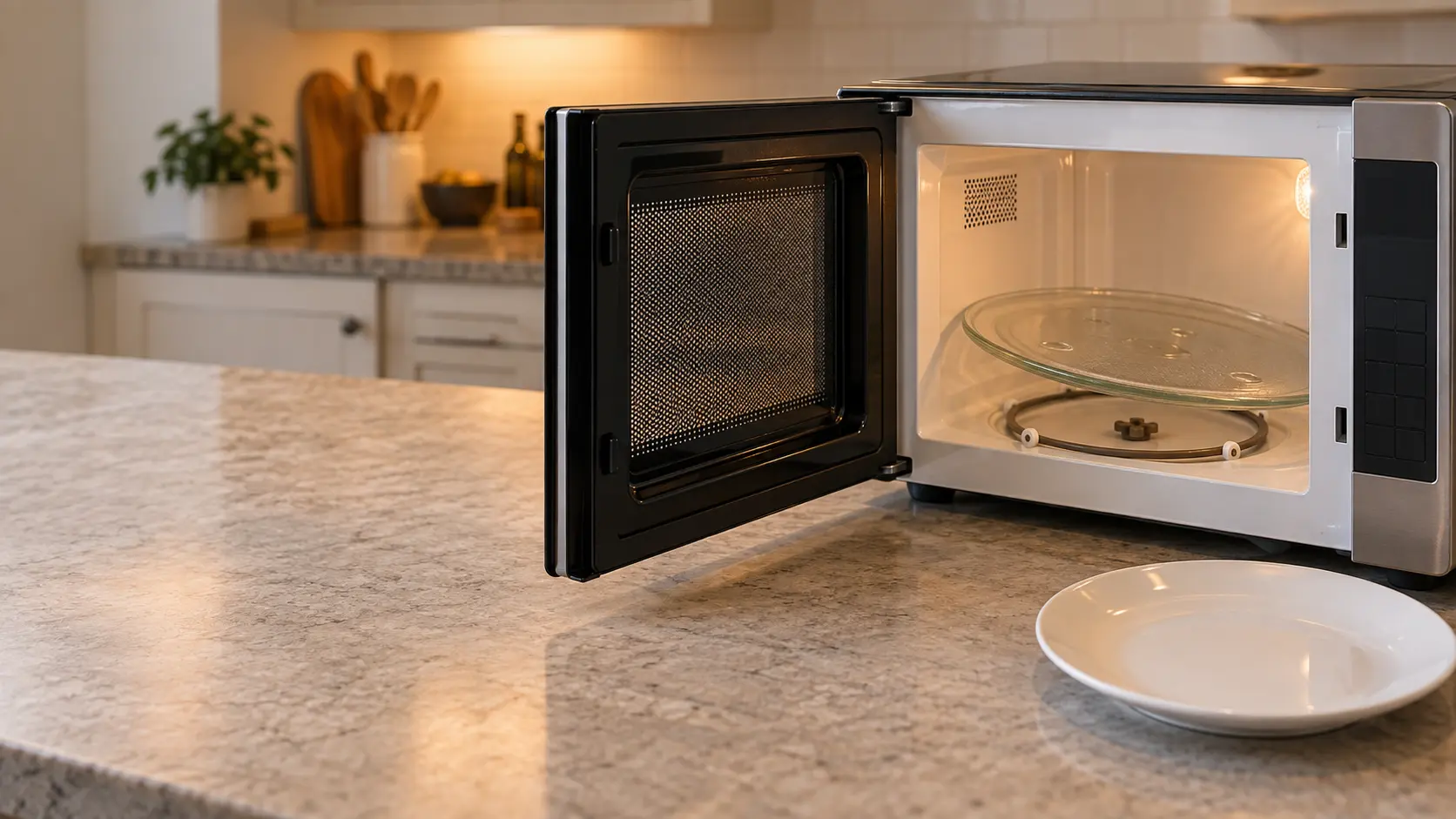
Glass Tray Not Turning in a Microwave
6 causes, cheapest first
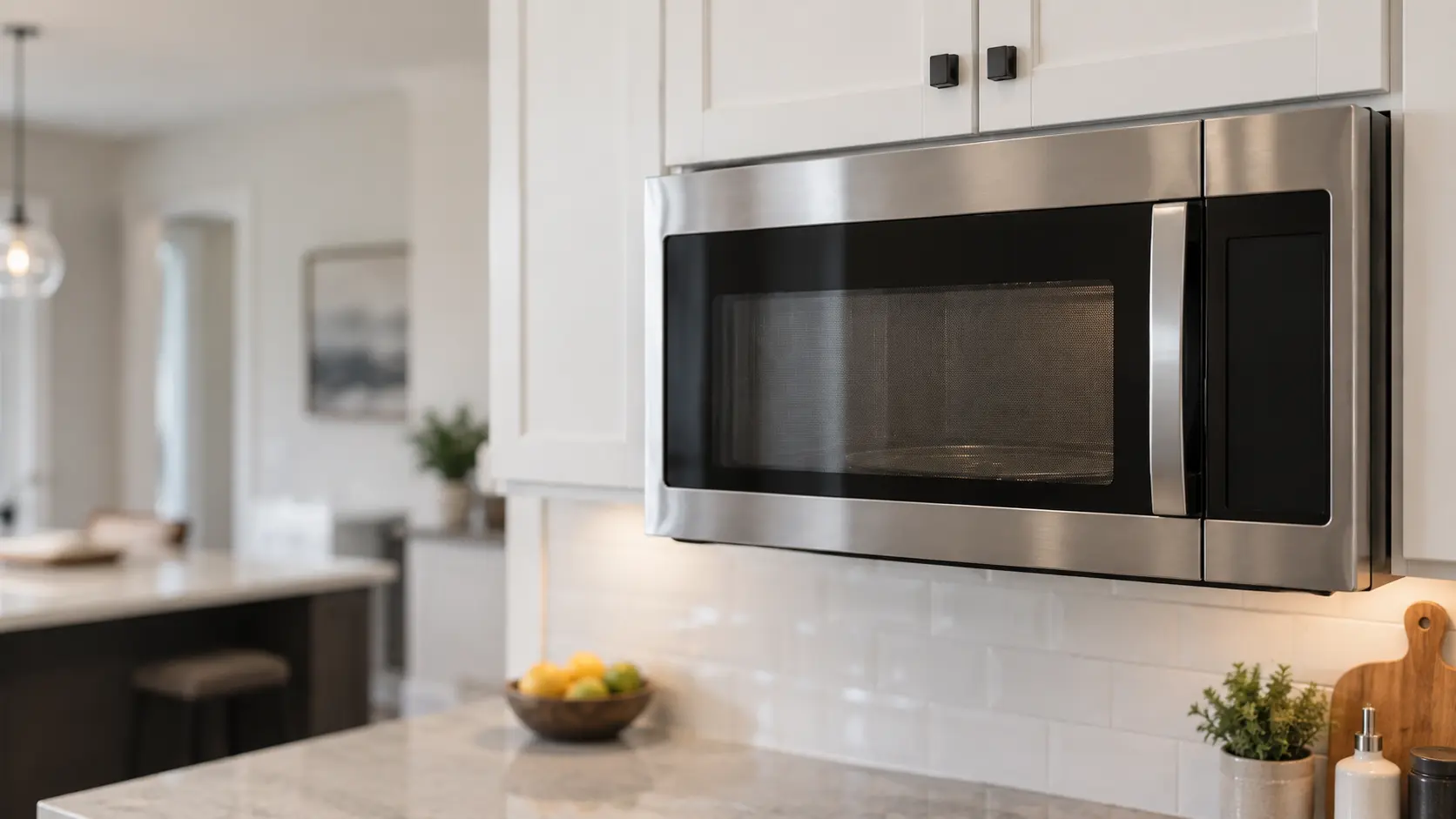
Microwave Won't Turn On at All
6 causes, cheapest first
Burning Smell From a Microwave
6 causes, cheapest first

Microwave Runs With the Door Open
5 causes, cheapest first
Who builds
a countertop.
13 of the makes on this site build a countertop microwave. Each mark opens that make's own page.
All 18 brandsCountertop microwave repair,
where we come out.
9 metros, each with its own page.
All service areasTampa BayFL · 31 areas
Miami / South FloridaFL · 47 areas
New York MetroNY · 75 areas
HoustonTX · 36 areas
ChicagoIL · 50 areas
Los AngelesCA · 95 areas
San DiegoCA · 31 areas

Questions about
countertop microwaves.
Is it worth repairing a countertop microwave?
My countertop microwave went completely dead after I closed the door hard. What happened?
How much space does a countertop microwave need around it?
Why does my microwave spark with nothing metal inside?
Back to your everyday
Is it a countertop microwave?
Say so when you book — it changes what the technician brings and how the visit is planned.