

What does microwave size in cubic feet really tell you?
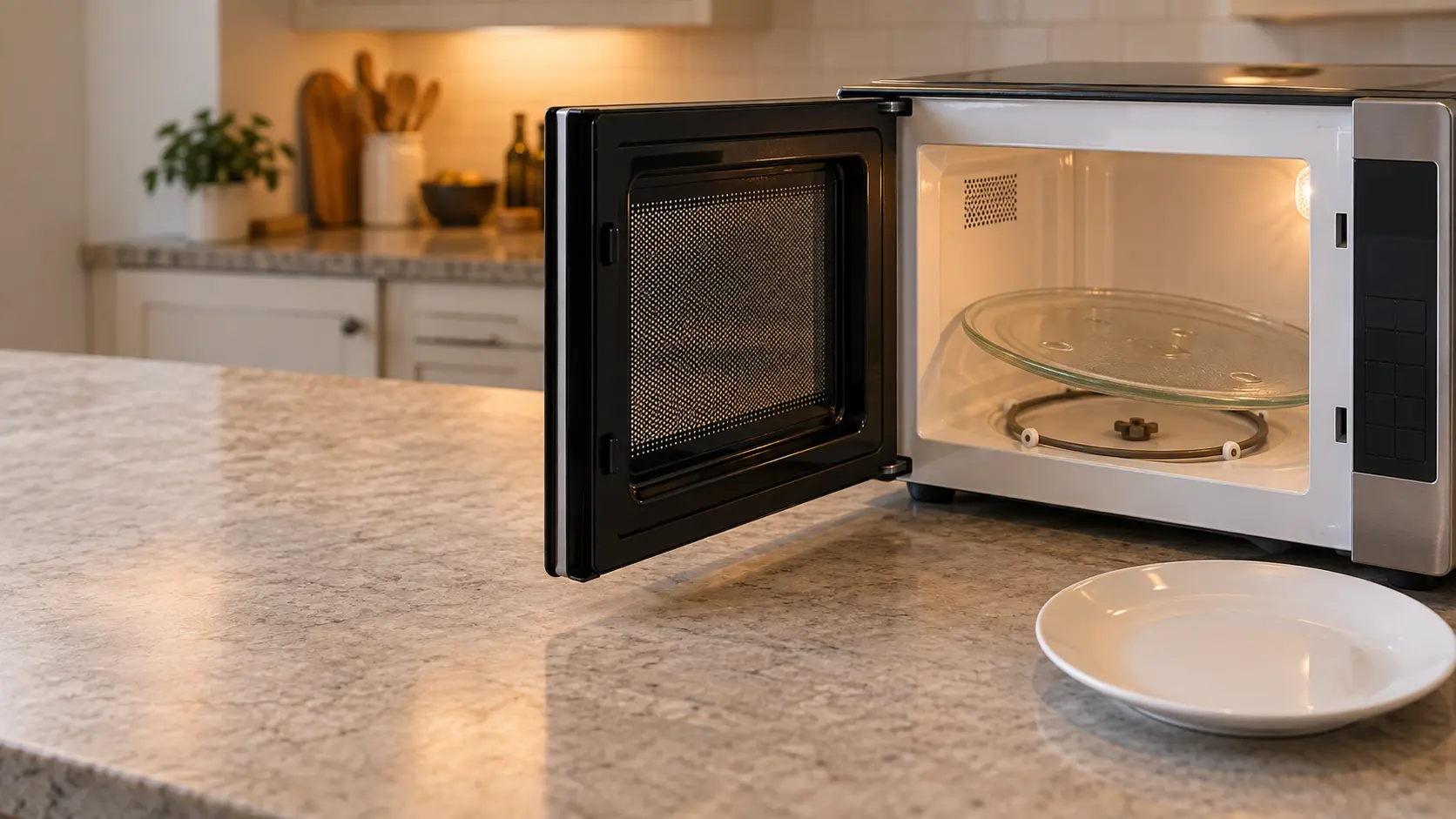
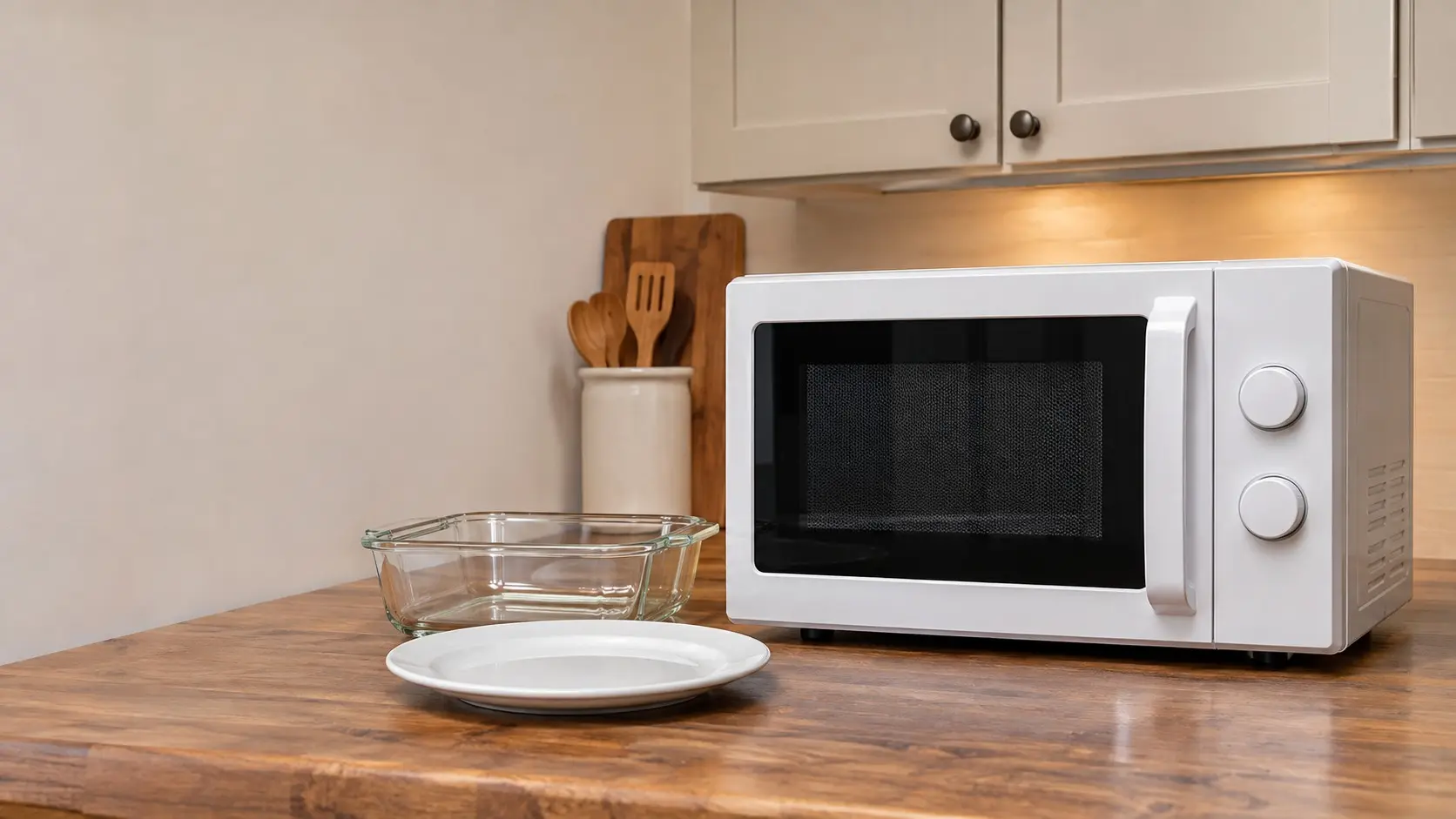
It tells you the volume of the cooking cavity, and little else. Home microwaves run from about 0.7 cubic feet for a compact unit to about 2.2 for a large family model, and the number behind that is a box of air, not a measure of what fits.
A cavity that is deep but narrow takes a tall bowl and rejects a wide platter. A wide, shallow one does the opposite. So treat cubic feet as a first filter, then judge the shape by the turntable and the door opening.
A rough guide by capacity
- Compact, around 0.7 to 0.9 cubic feet: mugs, a bowl of soup, a small plate, a frozen entree. Fine for one or two people.
- Mid-size, around 1.1 to 1.6: a full dinner plate, most casserole dishes of the 8-inch square kind, a popcorn bag.
- Large, around 1.7 to 2.2: a 9 by 13 inch dish only if the turntable allows it, tall pots, platters and family-sized leftovers.
Table: Capacity bands and what usually fits
| Band | Cubic feet | Typically fits | Often a problem |
|---|---|---|---|
| Compact | 0.7–0.9 | Mugs, soup bowls, small plates | Dinner plates touch the walls |
| Mid-size | 1.1–1.6 | Dinner plates, square dishes | Long baking dishes |
| Large | 1.7–2.2 | Tall pots, wide platters | Counter and cabinet space |
How wide a turntable do you need?
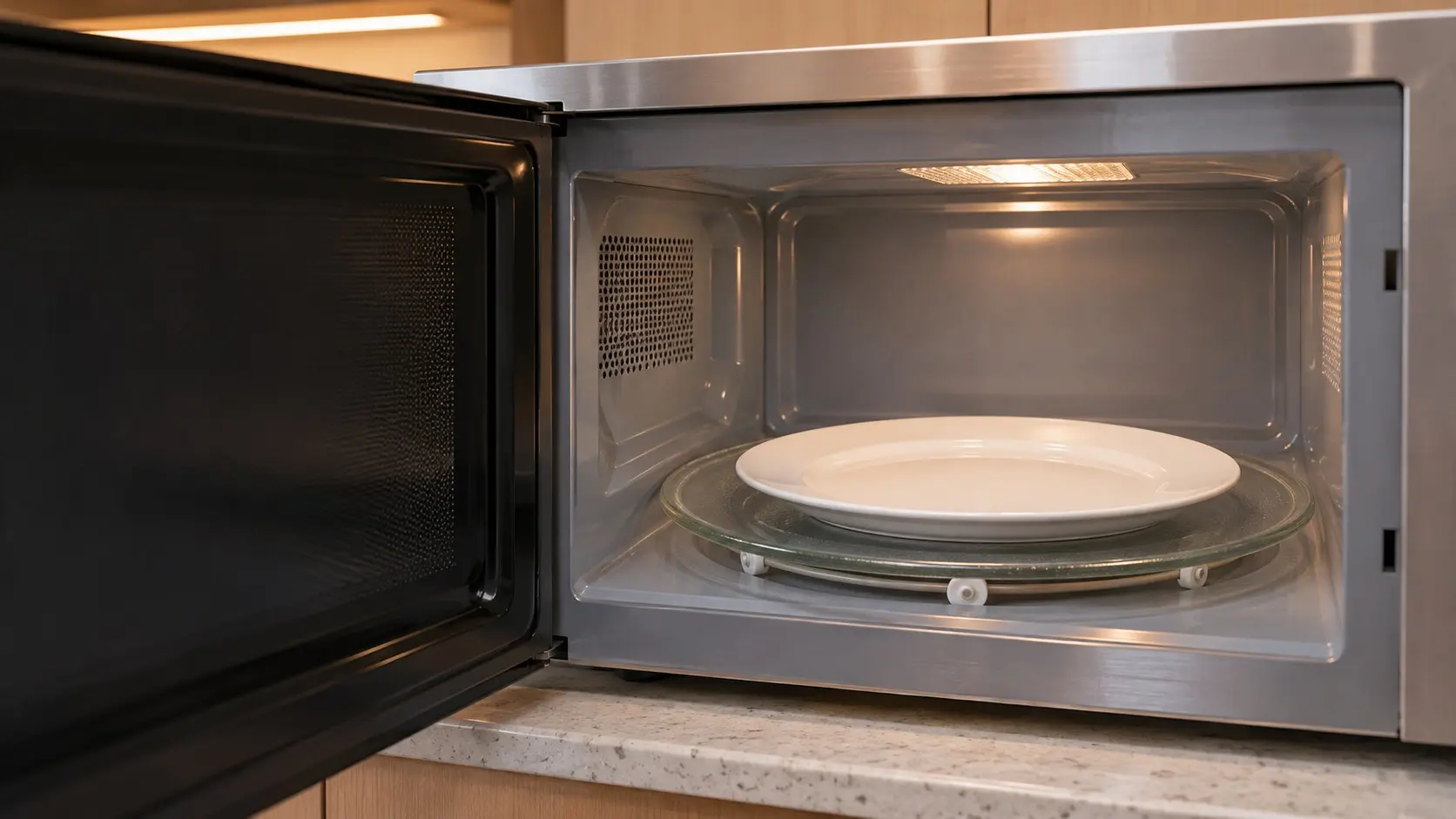
Wide enough that the biggest plate or dish you heat spins without touching the walls. A dish that catches on the cavity wall stalls the turntable, and a stalled turntable heats unevenly and strains its motor.
Measure your own dishes
Take the widest plate you use for leftovers and a casserole dish you reheat in, and measure across the widest point, handles included. Dinner plates commonly run from about 10 to 12 inches across, so measure yours. Then measure the turntable of the microwave you are considering, or its interior width and depth in the specification list, and leave a thumb of clearance all around.
- Widest plate you actually use, in inches
- Longest and tallest dish, with its lid
- Turntable diameter, or the interior width and depth
- Door opening height, which can be smaller than the cavity
Square dishes and corners
A round turntable carries a square or rectangular dish on its diagonal, so a dish that is smaller than the turntable's diameter in one direction may still catch a corner. Some larger models drop the turntable altogether and use a flat floor, which accepts a long dish but heats it by a different pattern. Read the listing to see which type you are buying.
What outside size does the space allow?
Check the outside width, depth and height first, since the inside is useless if the unit does not fit. A countertop model needs room for the door to swing, for air at the vents and for a cord that reaches an outlet; an over-the-range model, a built-in or a drawer unit each has its own cutout or mounting plan.
Countertop models
Leave open space at the vents and above the unit, as your manual describes, and check that the door can open fully without hitting a cabinet or a wall. Make sure the outlet is within reach of the cord without an extension cord.
Over-the-range, built-in and drawer models
These replace part of the kitchen, so the outside size and the position of the electrical connection matter more than the inside. The guide to mounting a microwave above the cooking surface covers the height and the cabinet side, and the hood combination, built-in or drawer guide compares the three. Wiring and mounting belong with a qualified installer or electrician.
Does a bigger microwave heat better?
No. How quickly a microwave heats depends mostly on its wattage, the amount of food and how it is placed and turned, not on cubic feet. A big cavity only helps if your dishes need the room, and a dish that barely fits or cannot turn tends to heat unevenly. If speed is your worry rather than space, read about speed ovens and plain microwaves before paying for a larger cavity you may not use.
When the turntable is the limit
If a dish that fits on paper makes the turntable stall or click, the roller ring may be misaligned or the motor weak. The turntable stopped guide explains the checks, and a turntable and motor repair visit replaces the drive coupling or motor if it has gone.
Should you pick a new size at all, or repair the one you have?
If the microwave does its job and only the size annoys you, buy for size. If the cavity is fine and a part has failed, the repair or replace a microwave guide helps with the decision, and a diagnostic visit tells you what the part is.
Before you shop, write down the plate, the dish, the available width, depth and height and the outlet position. Compare those five facts with each model's listing, and keep the model plate of the old one; the guide to finding the model plate shows where it is.