
Three kinds of heat sharing one cavity
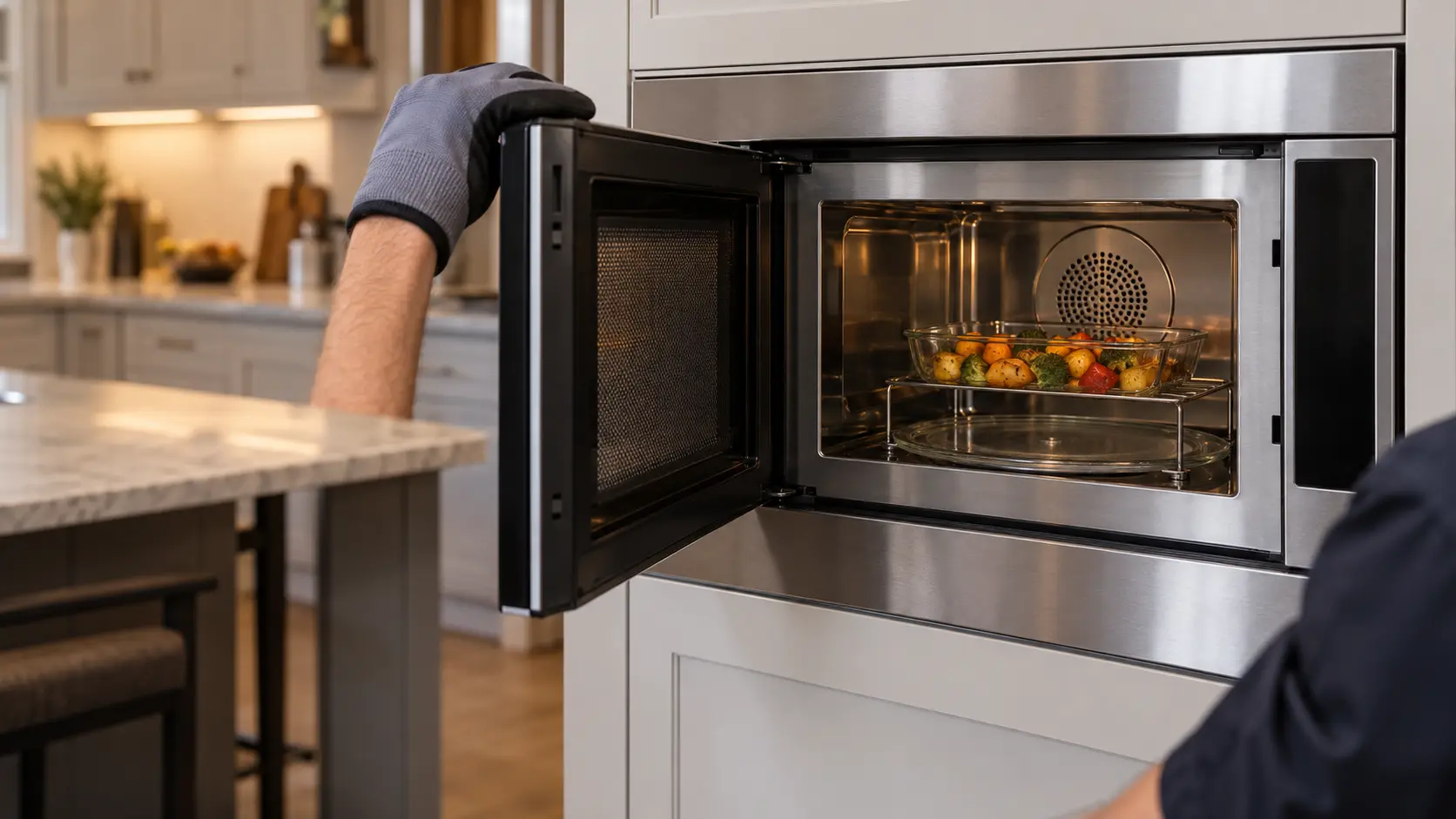
Every microwave, plain or fast, carries a magnetron that sends energy into the food through a waveguide. A speed oven adds two heat sources a plain one lacks: a ring element with a fan behind the back wall that circulates hot air, and a browning element in the ceiling that works like a small broiler.
The trick that earns the name, and the heart of the speed oven vs microwave decision, is running them together. Microwave energy heats the middle of a chicken breast while the hot air and the top element dry and color the outside, so a job that takes a long time with heat alone finishes far sooner.
Microwave-only mode
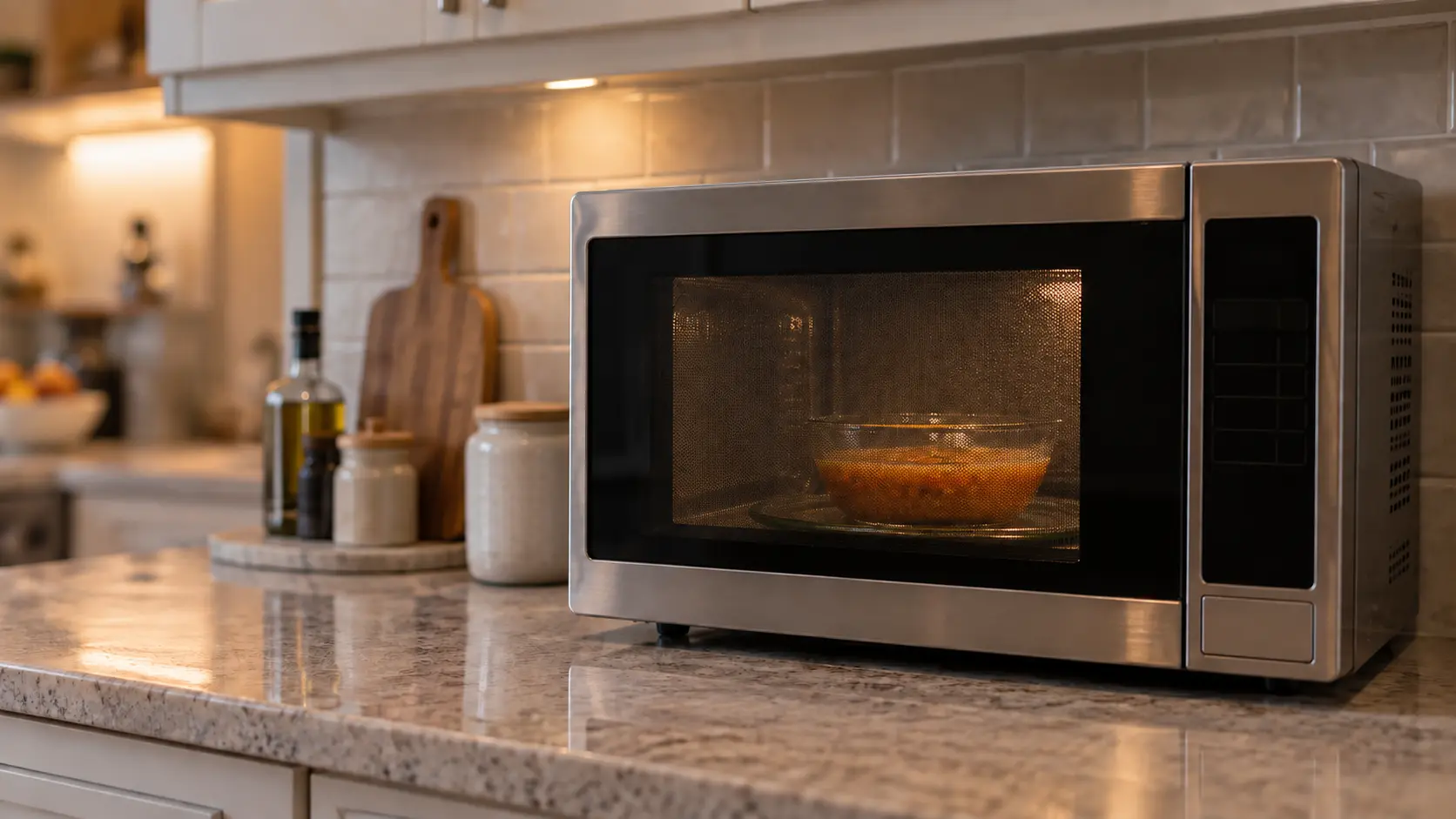
With the heating elements off, a speed oven behaves like any microwave: the turntable or a flat ceramic floor, glass and ceramic dishes, and no metal. Most owners use this mode more than any other.
Convection and broil on their own
With the magnetron off, the cavity works as a compact convection or broiling compartment. The manual names the racks, pans and trays allowed in these modes, and those lists are specific to each model.
Combination cooking
Blended modes pulse microwave energy between bursts of hot air or top heat. Because microwaves are part of the cycle, the rules on metal return, and the rack or tray the maker supplies for combination use is the only safe choice.
What changes in the everyday kitchen
For a household that reheats coffee, softens butter and steams vegetables, a speed oven adds nothing those tasks need. For one that roasts a small tray of potatoes most evenings, bakes a handful of cookies or wants leftover pizza crisp rather than soggy, it can take over from a larger oven on most weeknights.
The walls are the part people forget. Wolf's own care notes for its plain microwaves point out that little heat reaches their interior surfaces, which is why spills wipe away. A speed oven after a convection cycle is as hot inside as any oven, so mitts become part of the routine and children need the same caution they would near any hot oven door.
- Gains most from a speed oven: roast vegetables, small cuts of meat, gratins, reheated pastry and pizza, frozen foods meant to crisp.
- Gains nothing: drinks, oatmeal, steamed vegetables, defrosting, popcorn.
- Needs its own planning: a large roast or a full baking sheet, which will not fit a microwave-sized cavity.
Source: Wolf — Microwave cleaning (Sub-Zero Group) — Little heat is generated to the interior surfaces of a microwave, so spills and spatters do not bake on

Cleaning a cavity that gets hot
Grease that lands on a hot wall bakes on, so a speed oven asks for a wipe after roasting rather than once a week. Wolf's speed oven care recommendations call for a soft damp cloth, baking soda or mild soap for heavier soil, and a thorough rinse, with no abrasive pads and no chemical oven cleaners. The same page notes that the cavity turns gold over time and calls this normal.
The waveguide cover in these models sits on the ceiling of the cavity, where rising grease reaches it. Wolf asks owners to wipe it gently with a damp cloth and not to remove it.
Source: Wolf — Speed Oven care recommendations (Sub-Zero Group) — Clean the interior with a soft damp cloth, baking soda or mild soap, no abrasives or chemical oven cleaners; the cavity turns gold over time and this is normal; the waveguide cover on the top is wiped and not removed
Power, cutout and standby draw
A speed oven replacing a plain built-in is not always a swap. Its installation guide may ask for a different cutout depth, different clearance around the frame, and a different circuit or receptacle than the unit it replaces, so read it before the order is placed rather than on delivery day.
The federal standby-power rule sets its own limit for built-in and over-the-range convection microwaves, separate from the limit for microwave-only models. The display and the clock still draw a little power all day; the rule caps how much.
Source: eCFR — 10 CFR 430.32, energy conservation standards (microwave ovens) — Built-in and over-the-range convection microwave ovens have their own standby-power limit, separate from microwave-only models
More parts, more to diagnose
A speed oven shares its microwave half with any other model: magnetron, high-voltage capacitor and diode, door switches, control board. It then adds a second heating system with its own parts, and each can stop working on its own. A speed oven that still heats a mug but will not brown has a different problem from one that browns but leaves the center cold.
That split is useful to report when booking. Say which modes still work and which do not, and whether the fan behind the back wall runs during convection.
- Convection element and its fan motor behind the back wall.
- Top browning element and the relay on the board that switches it.
- Cavity temperature sensor and the thermal cutouts that protect the cabinet.
- The same magnetron, capacitor, diode and door switches as a plain microwave.
Choosing by household
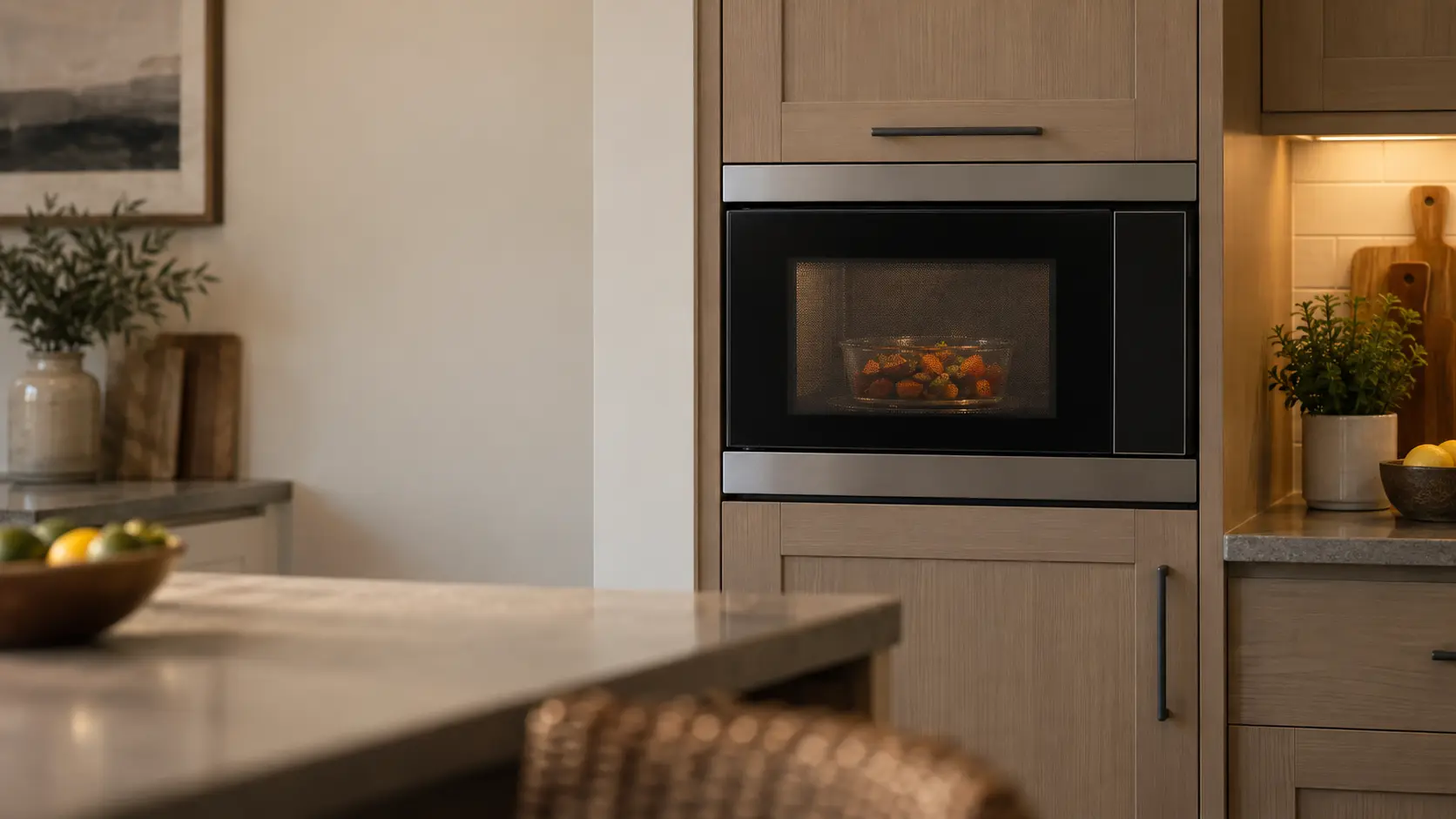
Pick a speed oven when it will replace a cooking job, not just add a button. Pick a plain microwave, built in or in a drawer, when the main oven already handles roasting and the microwave is for heating and defrosting.
When it stands in for a second oven
In a kitchen with one full-size oven, a speed oven can carry side dishes on a holiday while the roast stays in the big oven. Measure a favorite baking dish against the cavity before counting on it.