

Start with the door, not the price
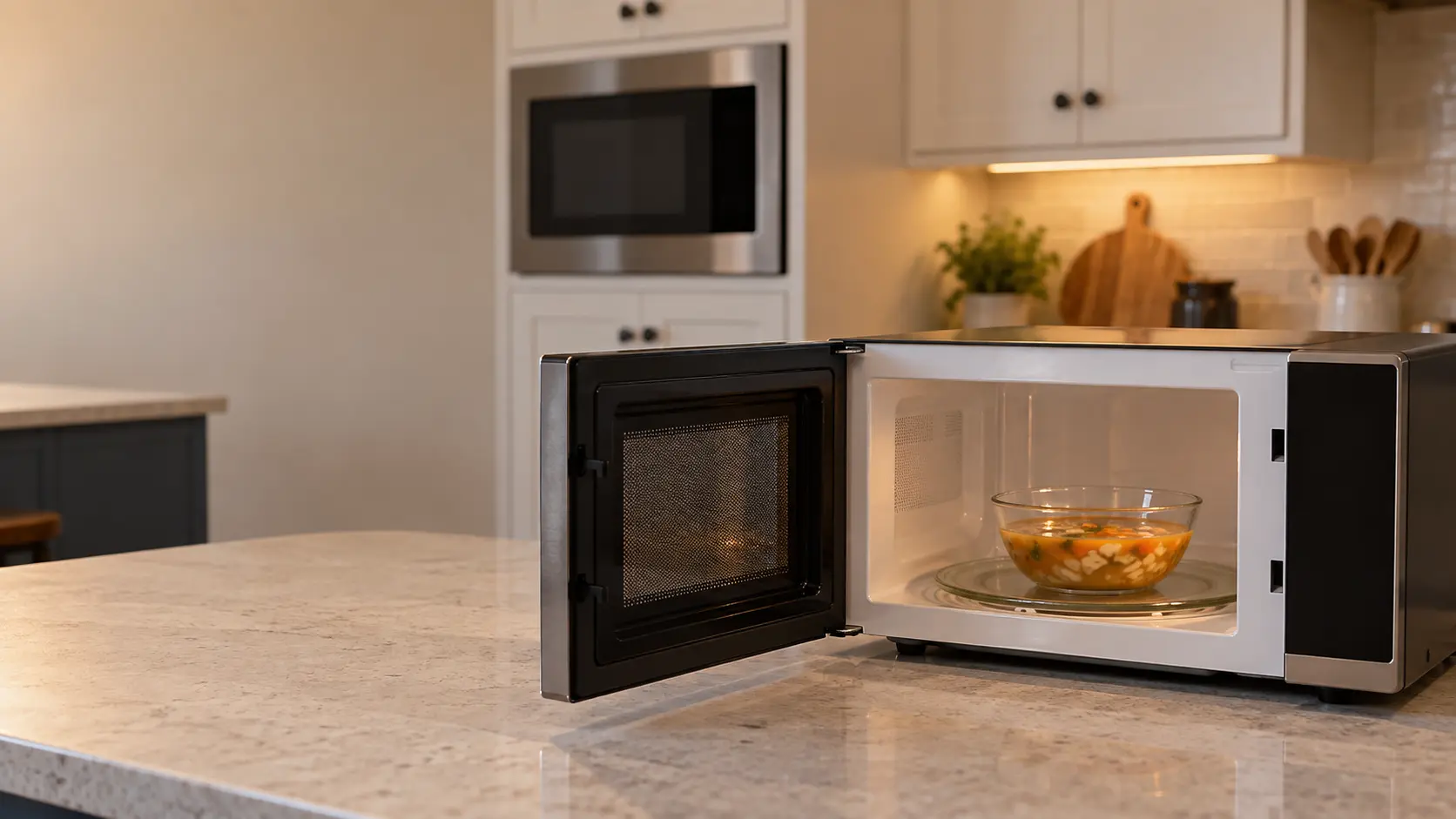
Before any talk of cost, look at the door. The FDA advises against operating a microwave whose door does not close firmly or is bent, warped or otherwise damaged, and asks owners to stop using one that keeps running with the door open. It also suggests contacting the maker when hinges, latches or seals are damaged.
That turns part of the decision into a safety question. A unit in that condition is unplugged and left unused until someone repairs the door or it is retired, whatever its age. Everything below assumes the door is sound or can be made sound.
Why the door carries so much weight
Federal rules require two independent interlock systems that stop microwave production the moment the latch releases or the door opens, plus a monitoring system that stops the oven if an interlock does not work. A sprung hinge or a cracked latch hook undermines exactly that arrangement, which is why a door repair is judged by whether it restores a firm close, not by how the door looks.
Source: FDA — Microwave Ovens (radiation safety) — Do not operate a microwave whose door does not close firmly or is bent, warped or damaged; stop using one that runs with the door open; the federal standard requires two independent interlocks and a monitoring system
From a blown fuse to a magnetron
The same complaint, a microwave that hums and turns but leaves the food cold, can come from a part near the bottom of the cost ladder or one at the very top. That is why a sensible answer to whether to repair or replace a microwave starts with a diagnosis rather than with the age on the model plate.
Age still counts for something, though less than people assume. A unit whose touchpad was replaced last spring and whose turntable now grinds is showing its parts wearing out in turn, and two moderate repairs in one year shift the balance even when neither was large on its own.
- Smaller jobs: line fuse, door switch, latch hook, interior light, turntable motor, roller ring, a sticking key.
- Middle: the touchpad membrane, the control board, the fan motor of a hood combination, the drive of a drawer.
- Largest: the magnetron, the high-voltage transformer, and on speed models a convection element and its fan together.
A fuse that blows a second time
The line fuse protects the microwave from something else going wrong. A new fuse that fails at the next start points to a door switch or a part in the high-voltage section, so the repair is that part, and the fuse is only the messenger.
The magnetron and the high-voltage section
The magnetron, the capacitor, the diode and the transformer work together, and a technician tests them as a set before naming one. On a small countertop model this group is where replacement usually wins; on a fitted model it often does not.

How the installed form tips the decision
A countertop microwave can be swapped in an afternoon, so once it needs a magnetron or a board it is rarely worth the visit. The fitted forms turn that around, because a replacement must fit what is already there.
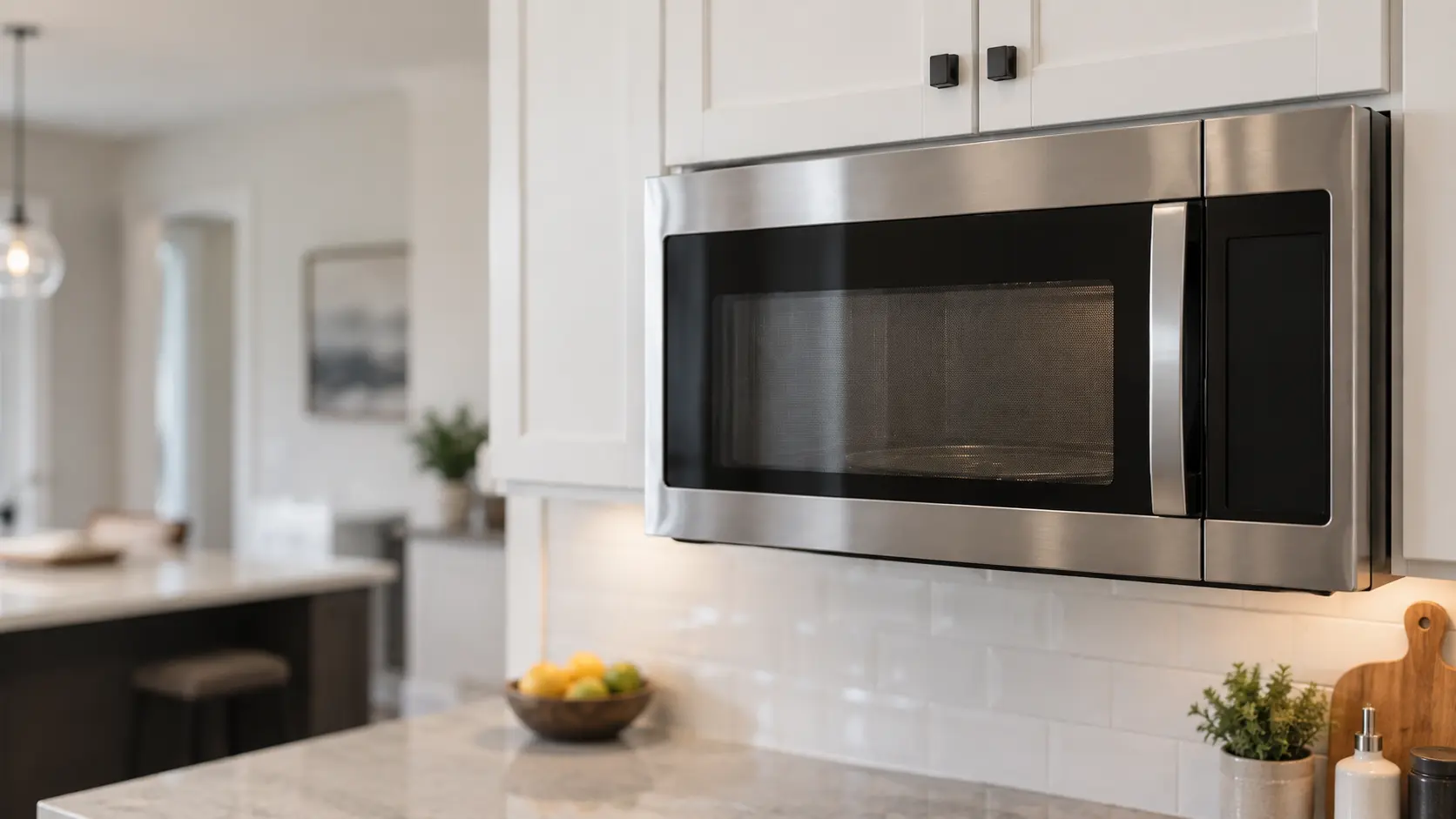
A hood combination hangs from a wall plate and bolts through the cabinet above; a new one from another maker may need a new plate, new holes and a duct transition. A built-in sits in a trim kit sized for one model, and a drawer fills a cabinet opening measured to the fraction of an inch. When the opening decides the replacement, repairing the unit that fits it is often the simpler path.
Speed and convection models sit at the top of both lists. Their heating elements and convection fan add repairs a plain microwave never needs, yet they are also the costliest to replace and the most tied to the cabinet around them, so one failed element or fan motor is nearly always worth fixing.
A unit that matches the rest of the kitchen
A built-in or drawer chosen to line up with the other cooking appliances loses that match if the model is discontinued. That alone is a fair reason to repair a fitted unit a few years longer than a countertop one.
Questions worth asking at the diagnosis
A clear diagnosis makes the decision short. These questions turn a quote into something you can weigh.
Write the answers down. If the choice ends up being replacement, the model number, the failed part and the technician's notes on the opening help whoever installs the new unit pick one that fits without cabinet work.
- Which part failed, and how was it tested?
- Is the part in stock, or on order, and for how long?
- Did anything else test weak, such as the door switches or the capacitor?
- Is the door firm and square after the repair?
- If replacing, will a new model fit the existing plate, trim or opening?
Recalls, and where a retired microwave goes
Before paying for any repair, search the Consumer Product Safety Commission's recall list for the make and model on the plate. A recalled unit may qualify for a remedy from its maker, and that changes the arithmetic entirely.
A microwave that is retired goes whole to an electronics recycler or a retailer haul-away. Nobody should take one apart to make it lighter or to salvage parts: the capacitor inside can hold a dangerous charge long after the cord is out of the wall.
Source: US Consumer Product Safety Commission — Recalls — Product recalls are published by CPSC and can be searched by product and brand