
Why does a microwave come on when door opens?
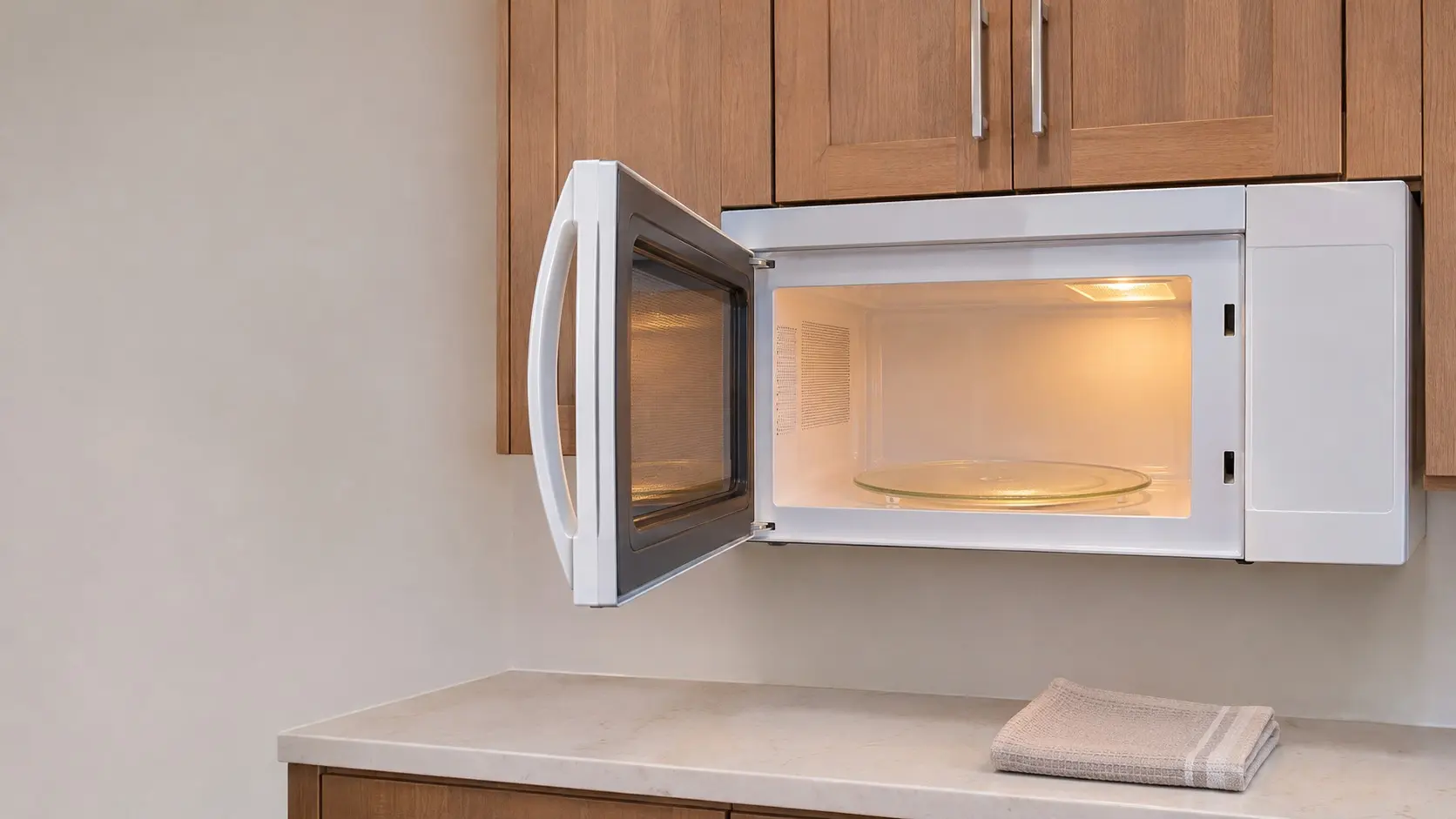
A microwave comes on when door opens in a few ways that are designed in, and most of them are lights and screens. The cavity lamp turns on so you can see the food. The display wakes, and a hood model may start its fan if a cooking light or vent cycle is set.
These count as normal:
- The interior light glows as soon as the door opens
- The display wakes or shows the clock
- The fan on an over-the-range model runs because you switched it on, not because the oven started
- A beep or reminder when the door opens during a cycle
What should happen next matters. When the door swings open mid-cycle, the heating hum stops at once, the turntable stops and the timer pauses. Pressing start again with the door still open should do nothing, because the oven starts only with the door shut and latched.
What is not normal?
A microwave that keeps heating after the door opens, or starts before the latch has caught, has lost its safety. This is the one failure here that is dangerous, because the door must hold the microwave energy inside.
The signs are plain:
- A humming or buzzing that continues after the door opens
- A turntable or fan on a countertop model that keeps going with the door open
- Starting a cycle with the door held a few inches open
- A door that bends, sags or no longer sits flat against the frame
Why the door matters
Federal rules require every microwave oven to have two independent interlock systems that stop the microwaves when the door opens, plus a monitoring system that shuts the oven down if they fail. The FDA also says not to use an oven whose door does not close firmly or is bent, warped or damaged, because a damaged oven may leak microwave energy. That is why a door that no longer closes against the frame is a defect.
Do not test it
There is no safe home test for a microwave that heats with the door open. Do not run it with something inside to see if it warms, and do not hold a hand near the gap. The FDA advises stopping use of an oven that runs with the door open, because you cannot be sure no energy is escaping. The only safe handling is to stop using it.
Source: FDA — Microwave ovens — ovens must have two independent interlocks and a monitoring system; do not use an oven with a damaged door or one that runs with the door open
What should I do if it runs with the door open?
Stop, unplug and do not use the microwave again until it has been repaired. Pull the plug if you can reach it without leaning in front of the oven. For a built-in or an over-the-range model, switch off the breaker that serves it.
- Press stop and open the door fully.
- Unplug the microwave or switch off its breaker.
- Do not use it again, even for short cycles.
- Tell everyone in the household that it is out of service, and put a note on it.
- Book a repair, and mention what you saw and heard.
Do not take off the outer cover. A microwave has a high-voltage capacitor that can hold a dangerous charge even when it is unplugged, and the parts near it cannot be judged by eye. The repair belongs to a technician with the right tools, and a diagnostic visit is the usual first step.
The door-open symptom page describes the same check in a short form. The service page for door switches and latches explains what the repair involves.
What if the door will not close, or a little light shows?
A door that does not close properly is a related issue and gets the same careful treatment. A door that will not latch, rattles in its frame or leaves a visible gap should be treated as unsafe for heating until the cause is found.
What to look at
Check these without taking anything apart, after the basics in the checks before booking:
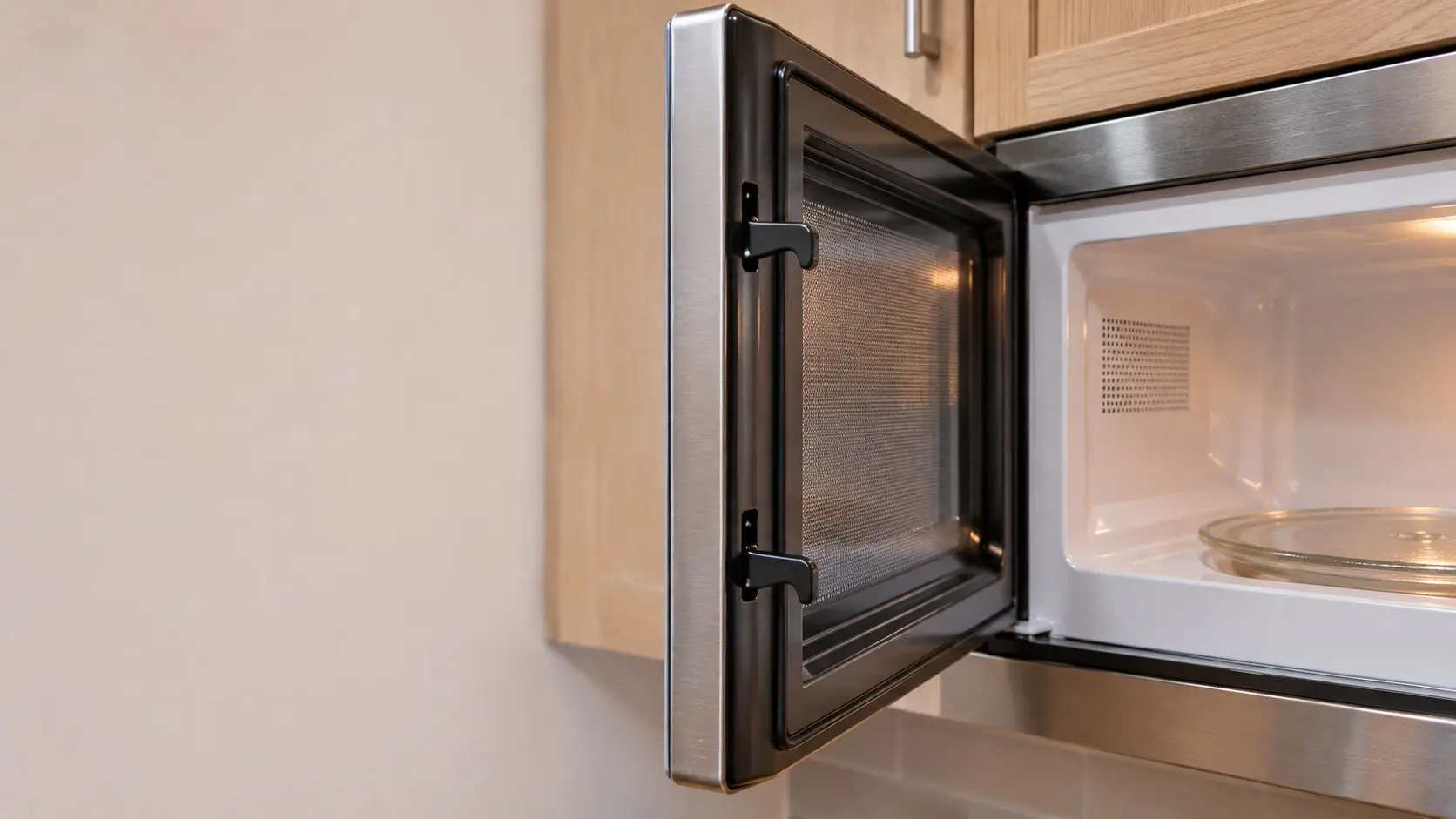
- Is the latch hook on the door cracked or broken?
- Is the door bent at a corner from a heavy load, a hanging towel or a child's weight?
- Is there food crust or grease on the seal surface that stops it closing?
- Does the window mesh show damage, or is the glass cracked?
A quick wipe
Wipe the seal surface with a damp cloth when the oven is cold and unplugged, and see whether the door now closes with a firm click. If it does, the crust was the cause. If the gap remains, stop using the microwave. A bright light shining through a gap with the oven off is just the room light and is not a concern. Mixed signs are worth a closer look in the door sealing guide.
How do I use a microwave safely in the meantime?
While you wait for the repair, use the stove, the oven or a replacement. Do not pair a failing door with workarounds such as taping the latch, holding the door shut with an object or standing a plate against it.
For daily use once repaired, keep the seal surface clean, never slam the door and never hang anything from the handle. A look at the door each month, along with the habits in the yearly microwave check, catches a bent latch early. For general safety around heating and metal, see what is safe to put in a microwave.


