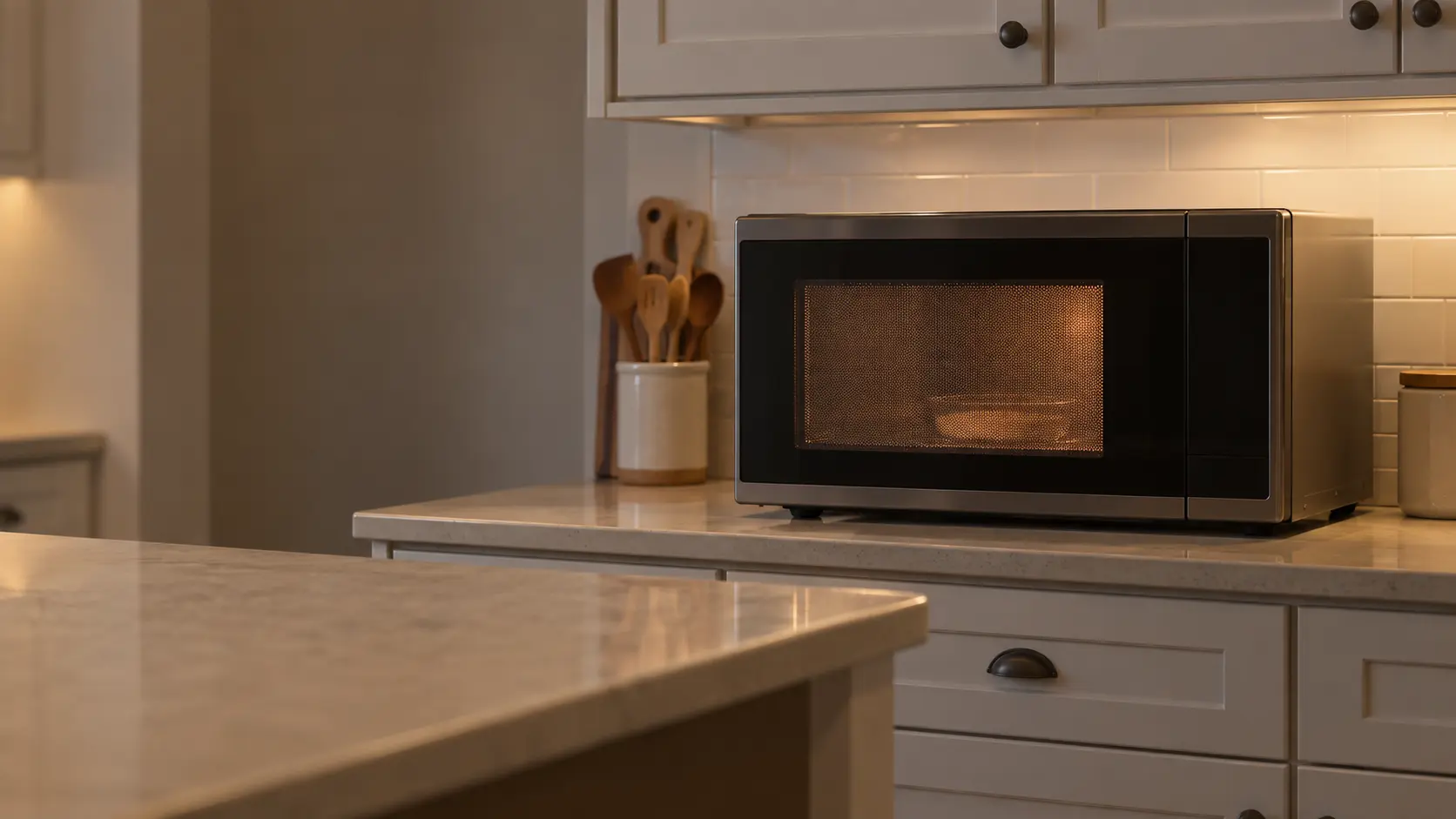


Keeping people and the kitchen safe
Sparks, fire and the door
guides.
What to do when a microwave sparks, when smoke or a flame shows behind the window, when the door is bent or will not seal, and what is safe to put inside in the first place.
Mon–Sat, 8am–8pm
- Three guides
- Read before you book
- Says where to stop
Book a visit
Three short steps, about a minute.
or call (844) 393-5858
Loading appointment form…
The appointment form couldn’t load. Please try again.
Sparks, fire and the door,
guide by guide.
Three things about a microwave can hurt someone quickly: a flame in the cavity, a door that no longer closes square, and the wrong container or a cup of water heated too long. This section covers sparks, fire and the door, and what goes into the cavity in the first place, written for the moment something has just gone wrong in the kitchen as well as for the calm afternoon before it does.
All 18 guides
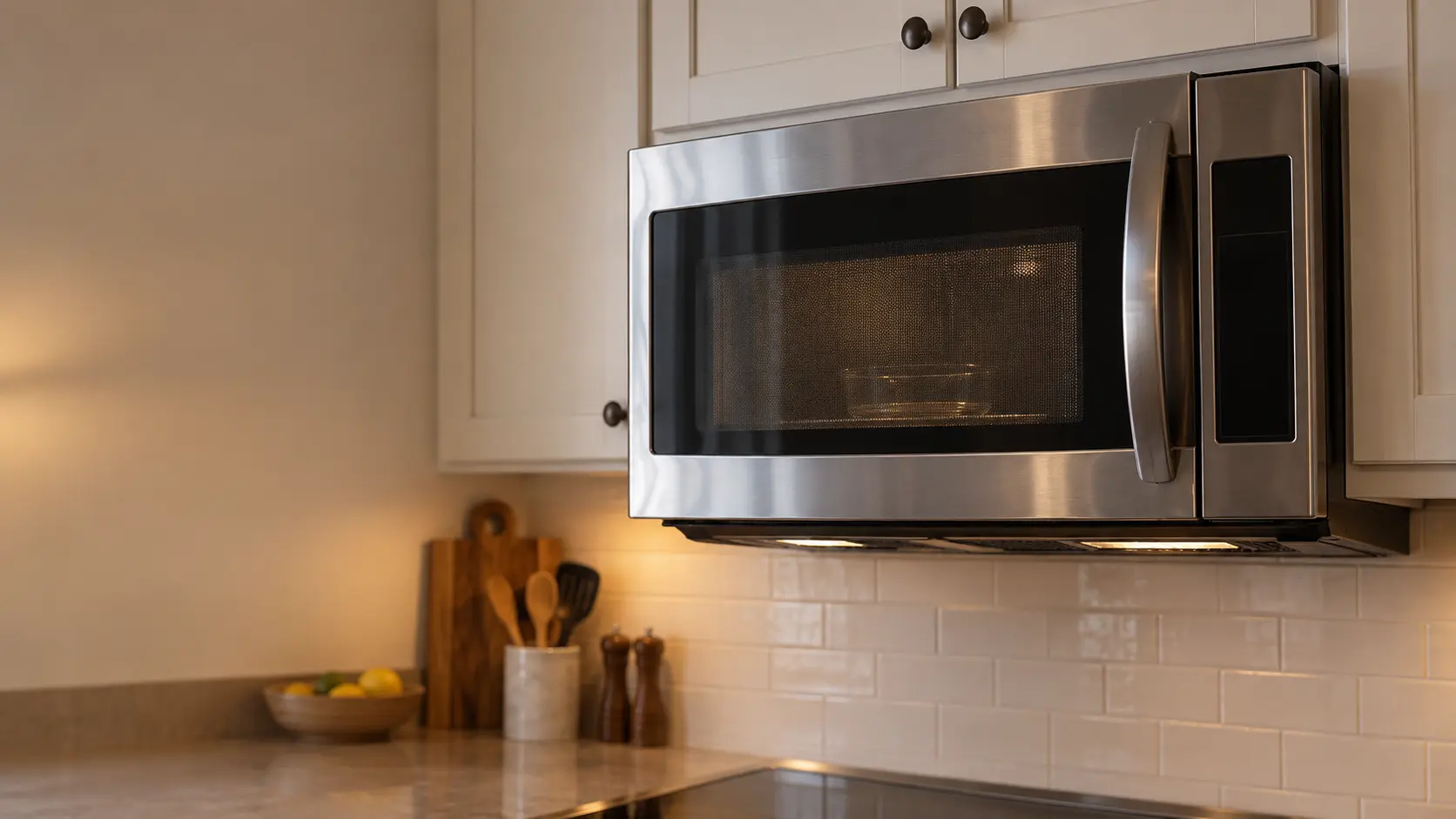
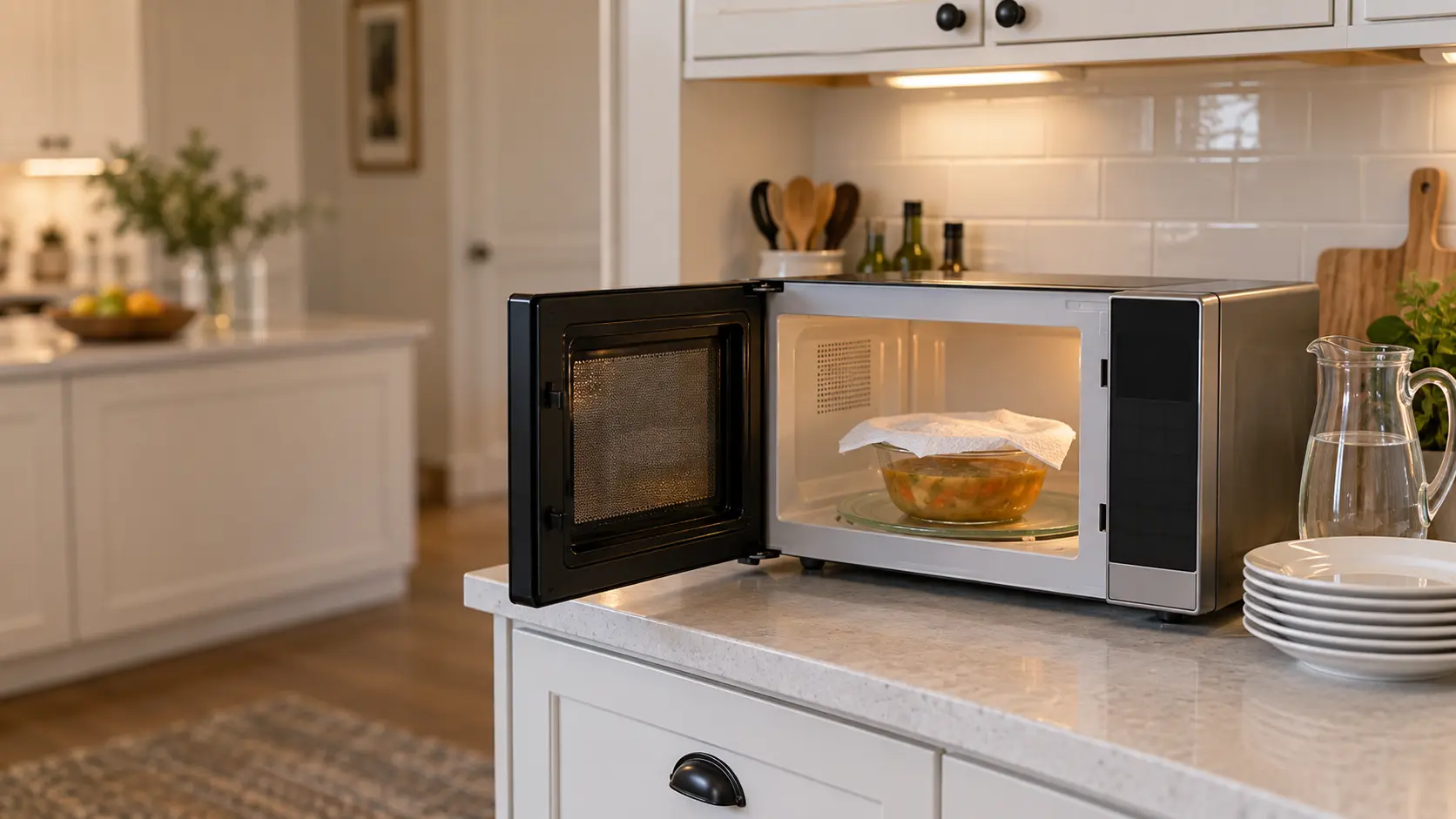
Keeping people and the kitchen safe.
The order in every guide here is the same: protect the people in the room, take the electricity away, and leave the diagnosis for later. Flames in the cavity are handled by keeping the door latched and switching the supply off at the plug or the panel. A door that sags, springs open or lets the microwave run while ajar means it is unplugged that day and stays that way until it is repaired. Sparks mean stop the cycle, find the metal and never run the cavity empty.
One rule runs through all of it: the outer cabinet of a microwave is never opened by an owner. Behind the cavity walls sit the magnetron, a high-voltage transformer and a capacitor whose stored charge can outlast the unplugging by a long way. Cleaning the cavity, the door faces and the waveguide cover is owner work; everything behind them is a visit from a technician.
Every figure and instruction in this section is tied to an official page, cited beneath the passage it backs: FDA on how the door and its interlocks keep the energy inside and which containers suit the cavity, USDA on cold spots and standing time, NFPA and the U.S. Fire Administration on kitchen fires, and the use-and-care or installation manual for anything that belongs to a single model.
Not sure where to start?The short answerA Fire Inside the Microwave: Door Shut, Power Off, Then Watch
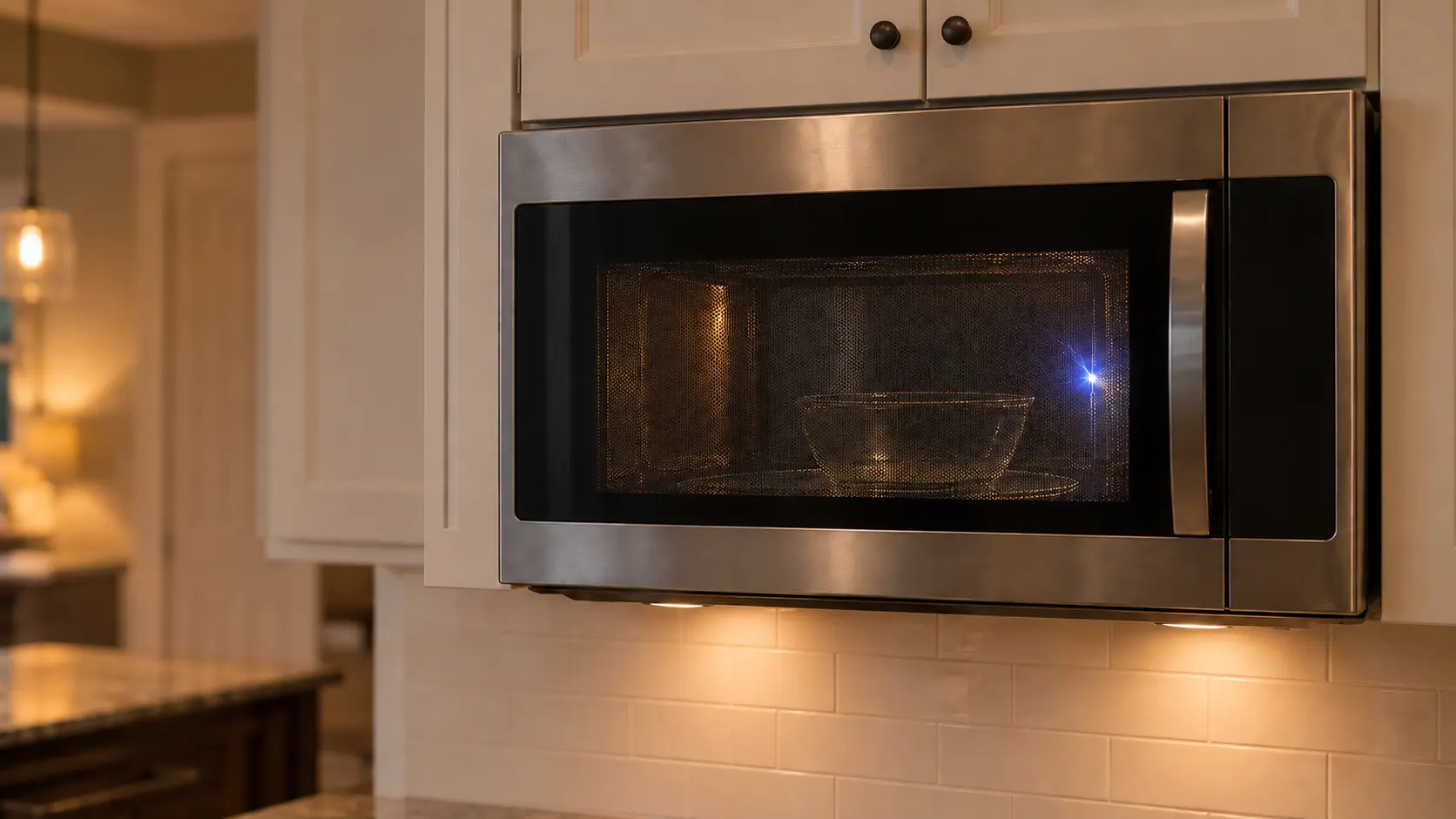
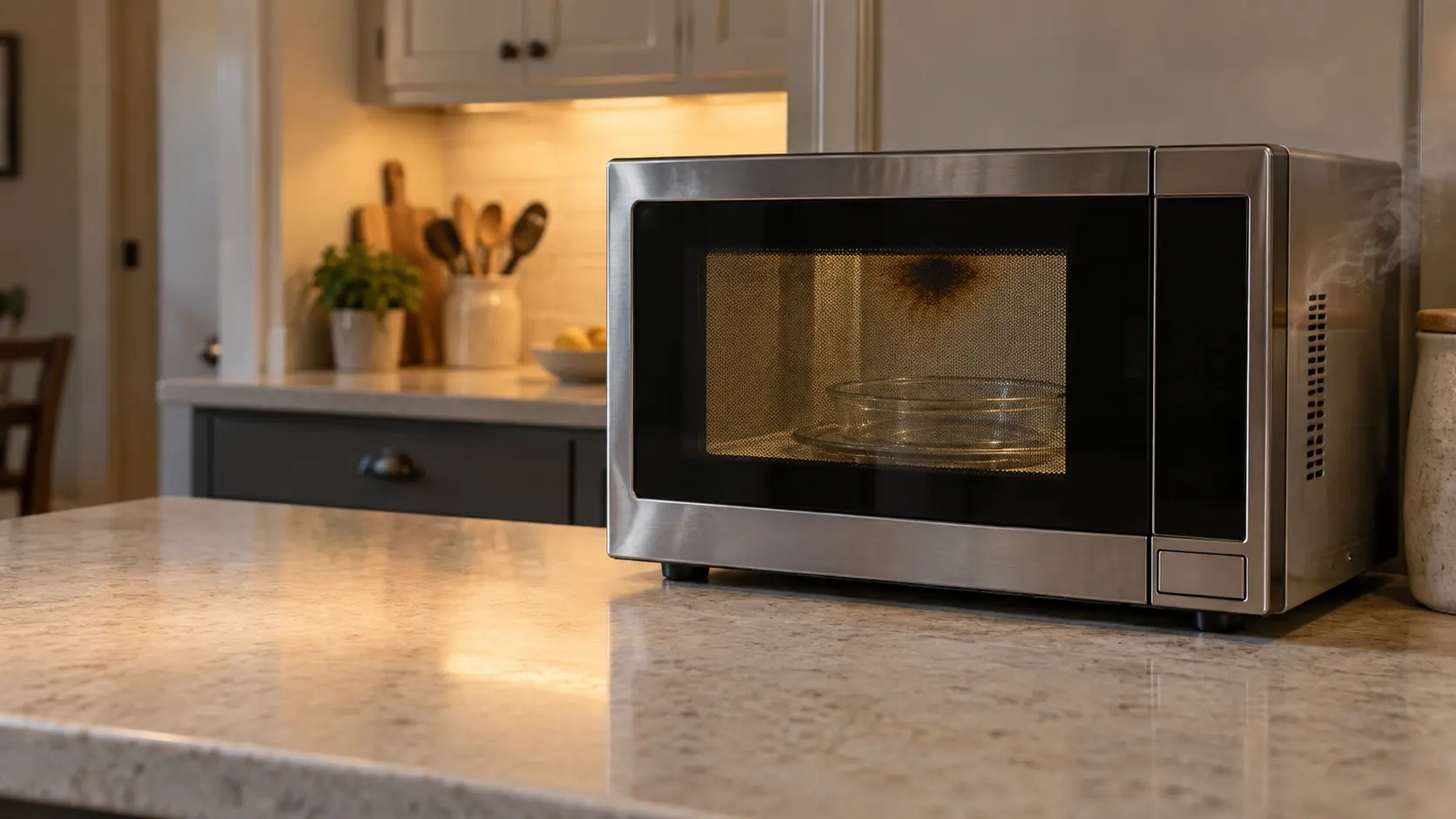
With a fire inside the microwave, keep the door closed, press stop or cancel, and cut the power: pull the plug if it is in reach, or switch off the breaker if the plug sits in the cabinet above.
The short answerA Microwave Door That Will Not Seal: Unplug It and Leave It Off
A microwave door not sealing means the unit is unplugged and left unused until it is repaired.
The short answerWhat Is Safe to Put in a Microwave: Dishes, Covers, Foil and Water
What is safe to put in a microwave: heat-resistant glass, glass ceramic, microwave-safe plastic, pottery, porcelain and microwave-safe paper, covered with a paper towel, wax paper or microwave plastic wrap.
When reading
is not enough.
If the checks in these guides did not settle it, the visit picks up from there, stop by stop.
What repairs cost- 01A cup of water, timed
- 02The price before the work
- 03Usual parts on board
- 04Heating again before we leave
The problems
these answer.
Each has a page of its own, with the causes in the order worth checking.
All 17 problems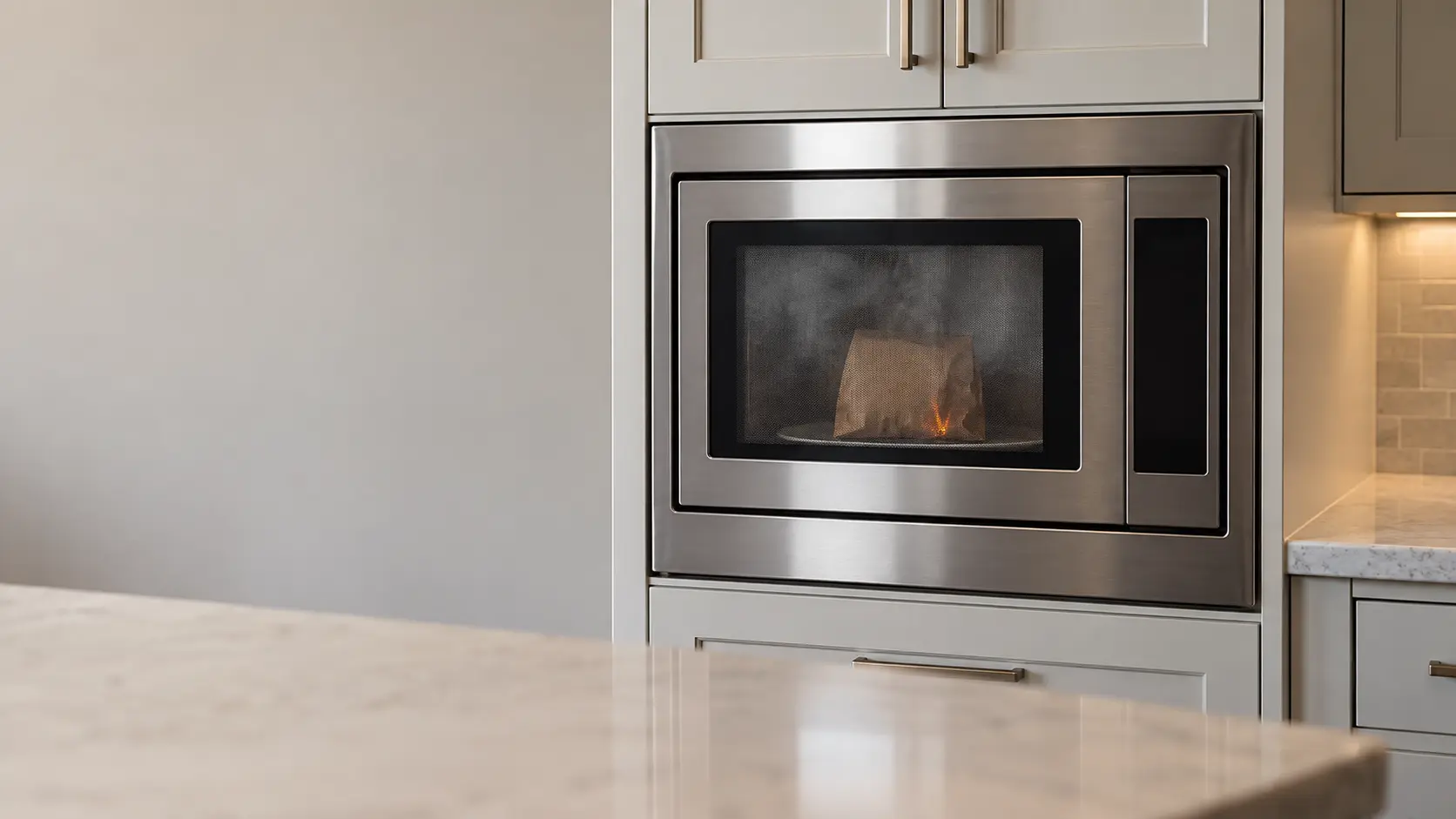


Questions about
sparks, fire and the door.
Something caught alight in the microwave. What now?
Is a microwave that runs with the door open dangerous?
Why does metal spark in a microwave but the cavity walls do not?
Can food be unsafe even if it came out steaming hot?
The other
sections.
Split by what you are trying to find out rather than by which part of the appliance it concerns.
All guides


Back to your everyday
Let’s get your microwave working again.
Three short steps online, or one call. Tell us what you are seeing and pick a window that works.