

Snaps, blue flashes and a crackle: what arcing looks like
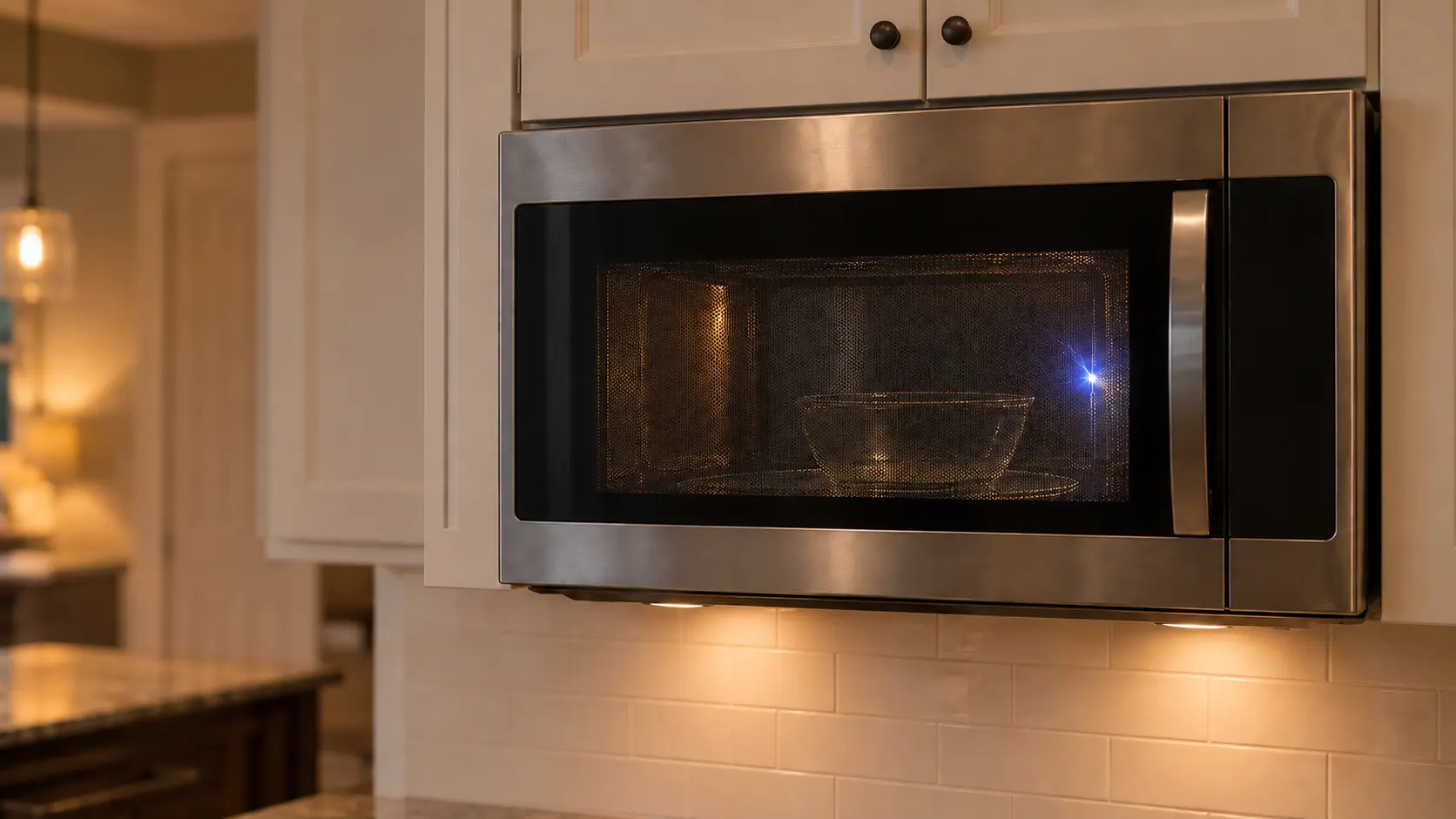
Arcing is electricity jumping through the air inside the cavity. You see it as a thin blue or white streak, a spot of orange light that dances along an edge, or a series of sharp snaps that sound nothing like the soft pop of a sauce bubbling. It tends to appear at a point: the tip of a fork, the corner of a foil tray, a dark speck on a side wall.
Not every noise is arcing. GE's help pages point out that fatty foods pop and sizzle, potatoes with unbroken skins burst, and old spills crackle as they heat. A cover over the dish quiets most of that. Light is the difference: food noises come without a flash, and arcing comes with one.
- Flash at one spot on the food or dish: look for metal first.
- Flash from a side wall or the ceiling panel with the cavity empty of metal: look at the waveguide cover and the paint.
- Flash or crackle from behind the walls or the control panel: stop, switch off at the breaker and book a visit.
Source: GE Appliances — Microwave: arcing or making sounds — Fatty foods, potato skins and spills pop; running the microwave empty can damage the interior; a probe not inserted can arc and be destroyed; a burn hole no larger than the door-screen holes with no further arcing can be tolerated
Metal that came in with the food
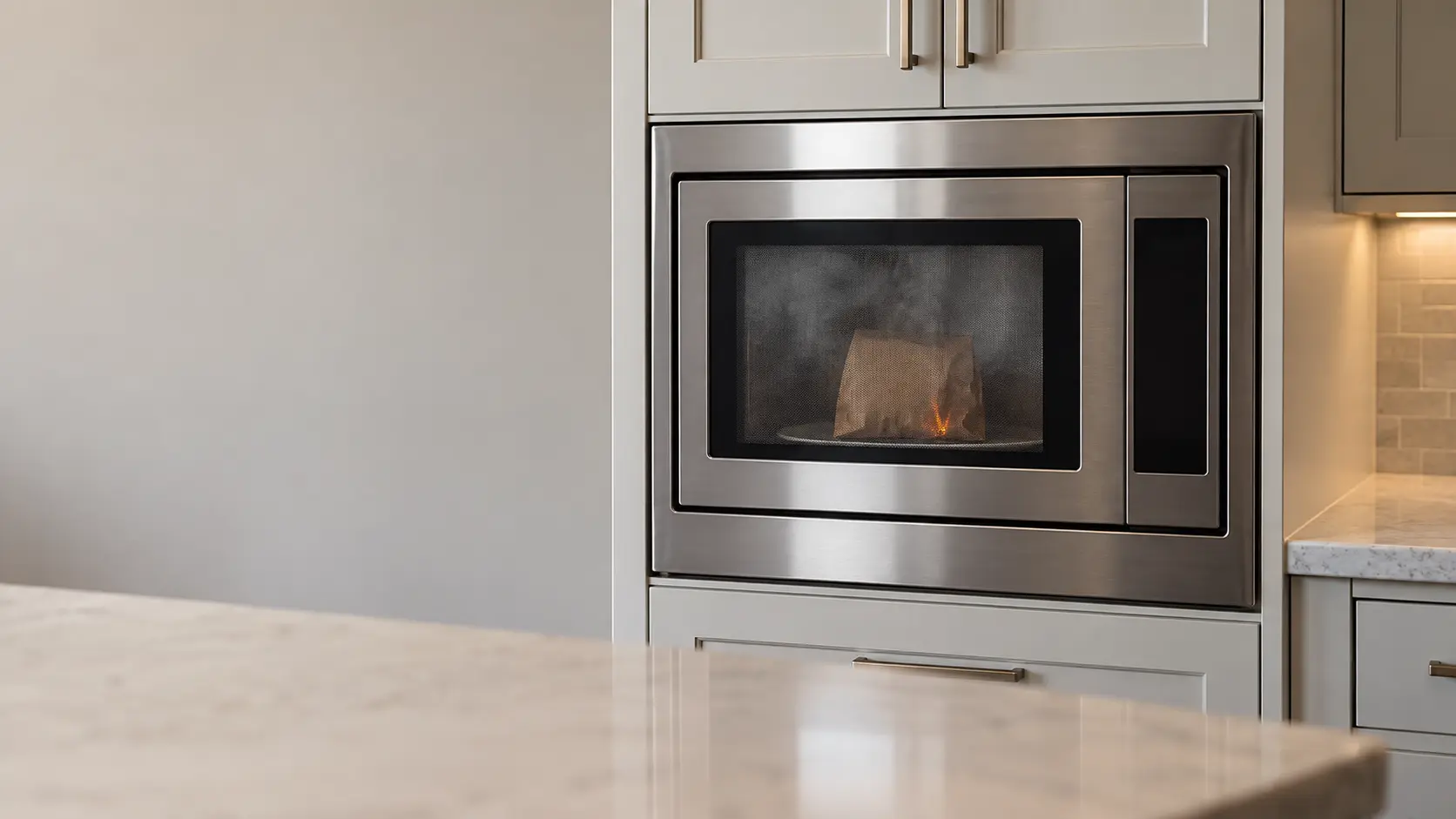
The ordinary causes are small and easy to miss. GE lists metal pans and utensils, gold or metal trim on a plate or mug, poultry pins, wire twist ties, and recycled paper towels, which can carry tiny flecks of metal from the paper they were made from. A gold rim on a good dinner plate will scorch after a few rounds of sparks and stay marked.
Take everything out and look at it under a bright light. Check bags and wrappers for a twist tie folded into a seam, and turn over any bowl with a metallic glaze. The FDA notes that metal reflects microwaves rather than absorbing them, which is why food on a metal plate also heats unevenly even when nothing sparks.
The rack that came with a convection or combination model
Many built-in convection microwaves and hood combinations ship with a metal rack, and it is safe only in the positions the manual shows. GE's guidance is that the rack must sit firmly on its supports, right side up, and be used for two-level cooking with food on it and below it. An empty rack left in during a plain microwave cycle is a common source of sparks.
A temperature probe left plugged in
Models with a cooking probe have a socket in the cavity wall. If the probe stays plugged into that socket but is not pushed into the food, its tip can arc, and GE warns the arcing can ruin the probe. Either insert it fully into the thickest part of the food or take it out of the cavity.
Foil the manual allows, used the way it says
Some manuals permit small pieces of foil to shield thin ends of a roast. GE's Advantium guidance says that foil must be molded to the food, because upturned edges act like antennas, and must never touch the cavity walls. If you are not sure your model allows foil at all, leave it out.
Source: GE Appliances — Microwave: arcing in cavity — Metal pans, metal-trimmed dishes, poultry pins, twist ties and recycled paper towels cause arcing; a probe left in the cavity uninserted arcs; the rack must be seated, right side up, and used with food on and below it; green beans and carrots can arc when uncovered or dry; FDA — Microwave ovens — Metal pans and foil reflect microwaves, which makes food cook unevenly

When the vegetables themselves spark
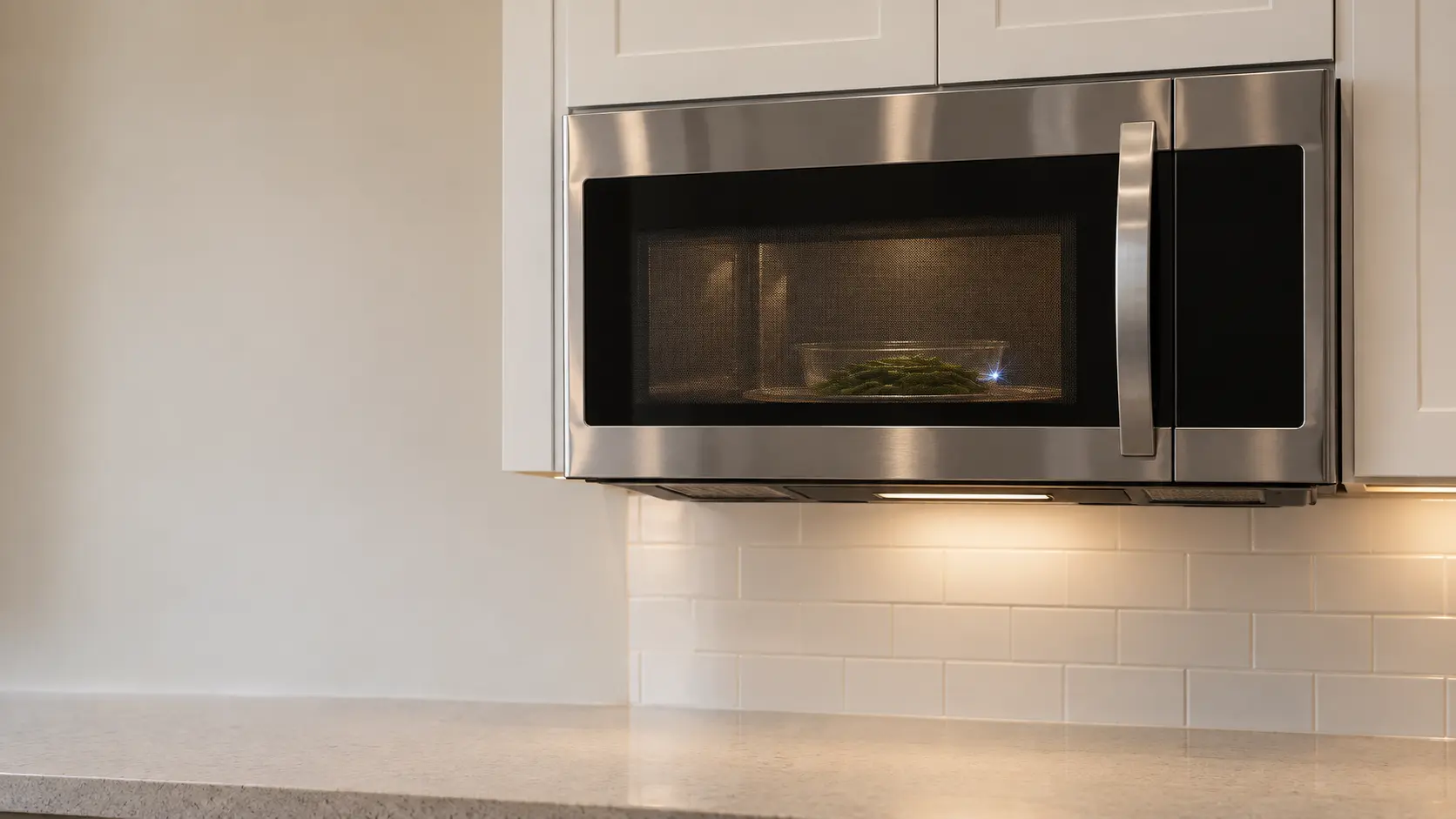
Green beans, carrots and a few other vegetables can spark on the plate with no metal anywhere near them. GE describes this as a food effect rather than a problem with the appliance, and it is more likely when the vegetables are uncovered, when they sit in little or no water, or when they are seasoned with bacon grease or onion.
The remedy is in the dish. Add a spoonful or two of water, cover the bowl with a microwave-safe lid, and try again. If the same bowl sparks with the same vegetables every time, while plain water heats quietly, the microwave is almost certainly fine.
Source: GE Appliances — Microwave: arcing in cavity — Metal pans, metal-trimmed dishes, poultry pins, twist ties and recycled paper towels cause arcing; a probe left in the cavity uninserted arcs; the rack must be seated, right side up, and used with food on and below it; green beans and carrots can arc when uncovered or dry; GE Appliances — Advantium oven: reasons for sparking and arcing — Foil not molded to the food acts like an antenna; foil touching the side of the oven arcs; covering vegetables or adding water stops food arcing
Spatter on the waveguide cover
The waveguide cover is a flat, pale panel on a side wall or the ceiling of the cavity, where the microwaves enter from the magnetron behind it. Sharp's drawer manual says it is made of mica, that food residue left on it can cause arcing or even a fire, and that it should be wiped with a soft damp cloth after spatters and never removed by the owner.
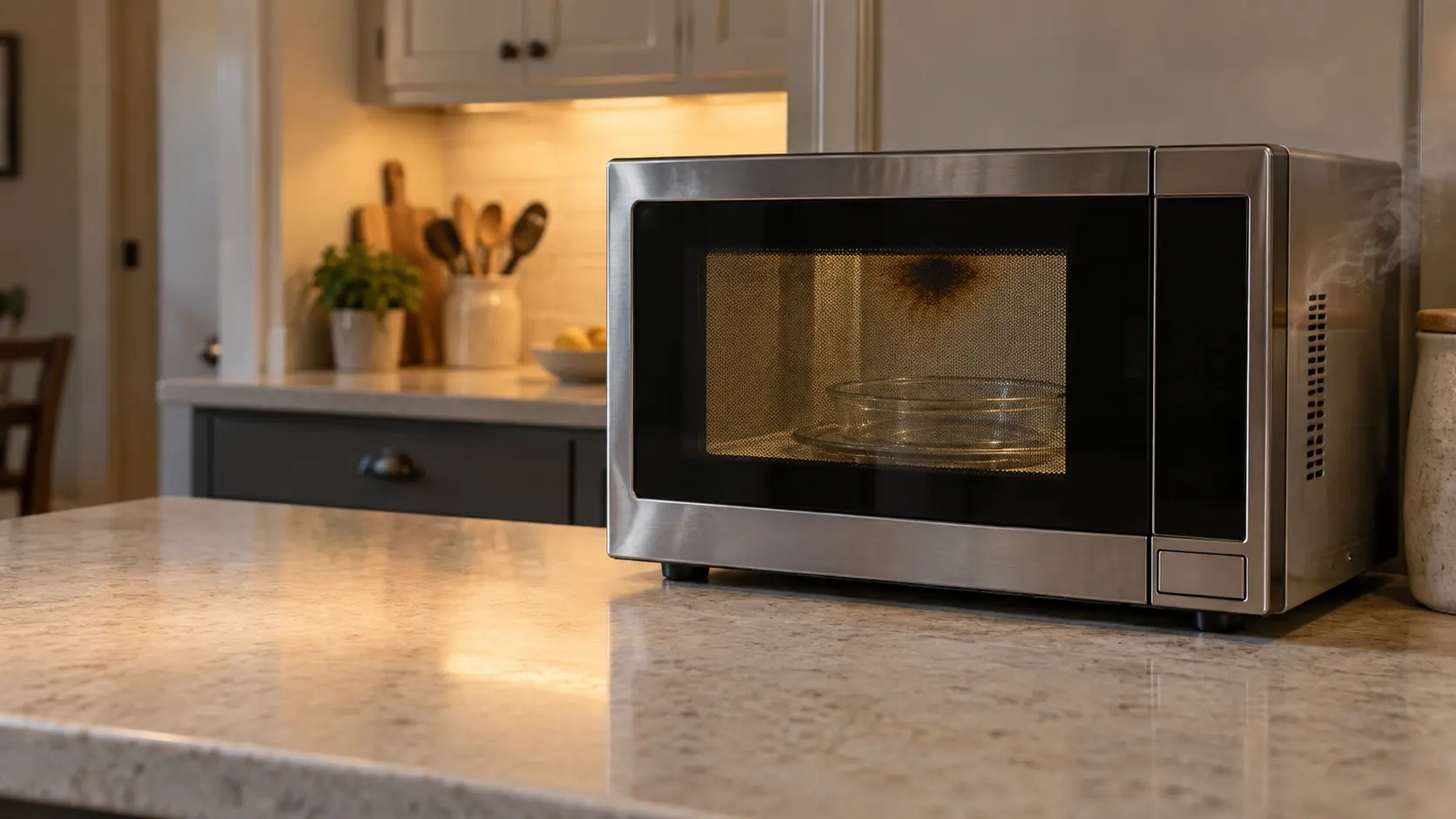
Spatter that has been heated many times carbonizes into a black spot, and a black spot conducts. Once a cover has a burned patch, cleaning rarely saves it; the scorched area keeps sparking. The cover is a part, and the cavity metal behind a burned cover is worth inspecting at the same visit, so that is a job to book rather than one to pry out yourself.
- Wipe fresh spatter off the cover with a soft damp cloth as soon as it cools.
- Never scrape it with a blade or a scouring pad; Sharp asks for special care and a soft damp cloth only.
- A dark, crusted or pitted patch that stays after wiping means a new cover and an inspection.
Source: Sharp — Microwave Drawer SMD2470AS / SMD3070AS operation manual — The waveguide cover is mica; food residue on it can cause arcing and fires; wipe spatters with a soft damp cloth and do not remove the cover; always have food in the unit when it is on
Scorch marks, chips and holes in the cavity
Arcing leaves marks. GE's position is that small chips in the cavity coating do not affect performance, but that coating which is actively flaking or peeling anywhere in the cavity, including under the turntable, means the microwave should be taken out of use and replaced. A hole burned through the cavity wall is also not repairable in GE's view.
GE adds one narrow exception: a burn hole no bigger than the holes in the door screen, with no further arcing during cooking, can be lived with. Anything larger, or any spot that keeps sparking, is the end of that cavity. Running the unit empty makes all of this worse, since with no food to absorb the energy it has nowhere to go; GE and Sharp both tell owners to keep something in the cavity whenever it runs.
Source: GE Appliances — Microwave: arcing or making sounds — Fatty foods, potato skins and spills pop; running the microwave empty can damage the interior; a probe not inserted can arc and be destroyed; a burn hole no larger than the door-screen holes with no further arcing can be tolerated; GE Appliances — Microwave: cavity repair needed due to arcing, chipping, peeling or scorching — A hole in the cavity wall is not repairable; minor chips do not affect performance; flaking or peeling coating, including under the turntable, means discontinuing use; no approved repair for chips, burns or scratches; Sharp — Microwave Drawer SMD2470AS / SMD3070AS operation manual — The waveguide cover is mica; food residue on it can cause arcing and fires; wipe spatters with a soft damp cloth and do not remove the cover; always have food in the unit when it is on