


What the microwave is telling you
Common problems
guides.
What a microwave means when the food comes out cold, blue flashes crackle in the cavity, the glass plate stops turning, or it quits halfway through a cycle.
Mon–Sat, 8am–8pm
- Three guides
- Read before you book
- Says where to stop
Book a visit
Three short steps, about a minute.
or call (844) 393-5858
Loading appointment form…
The appointment form couldn’t load. Please try again.
Common problems,
guide by guide.
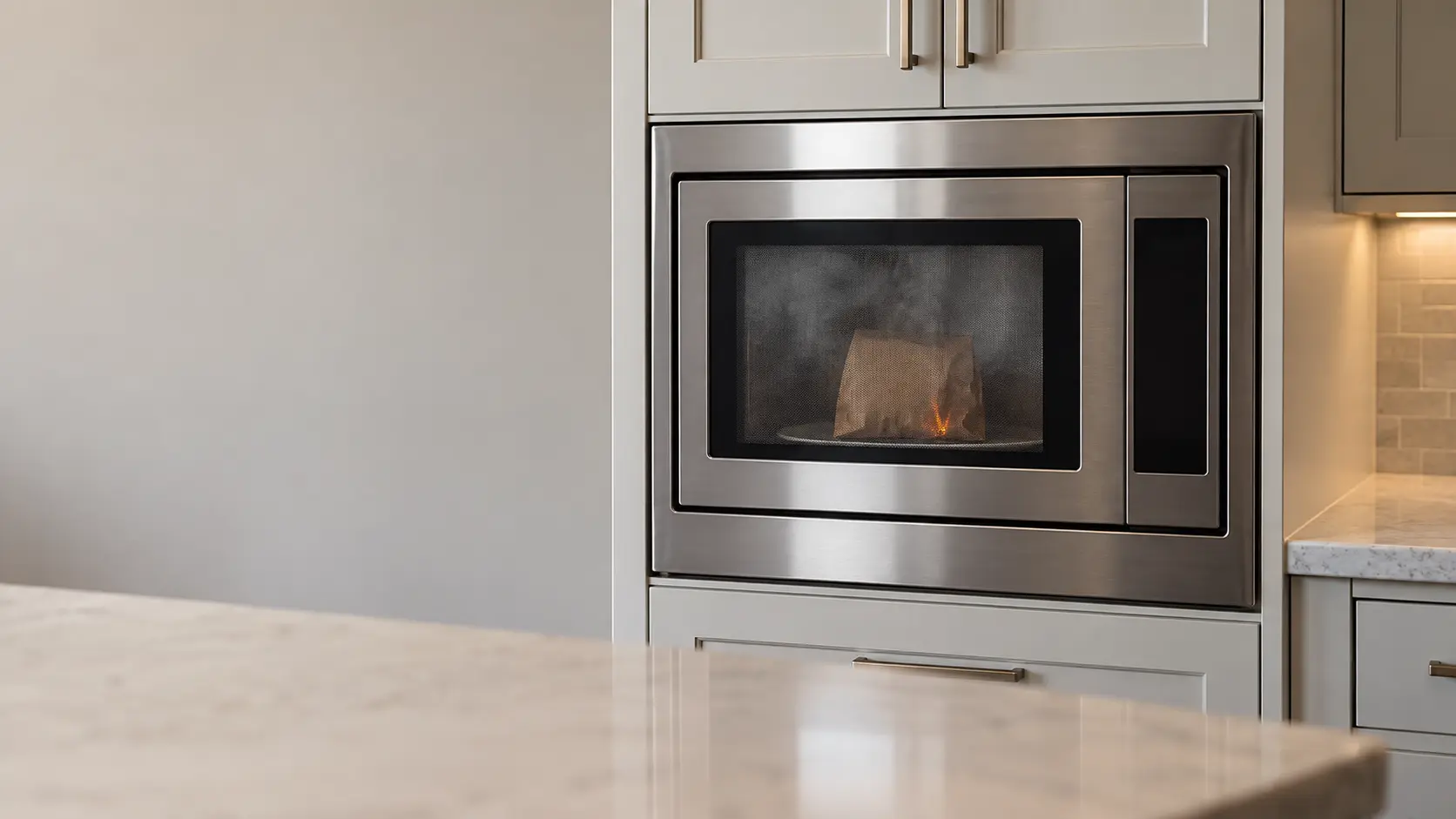
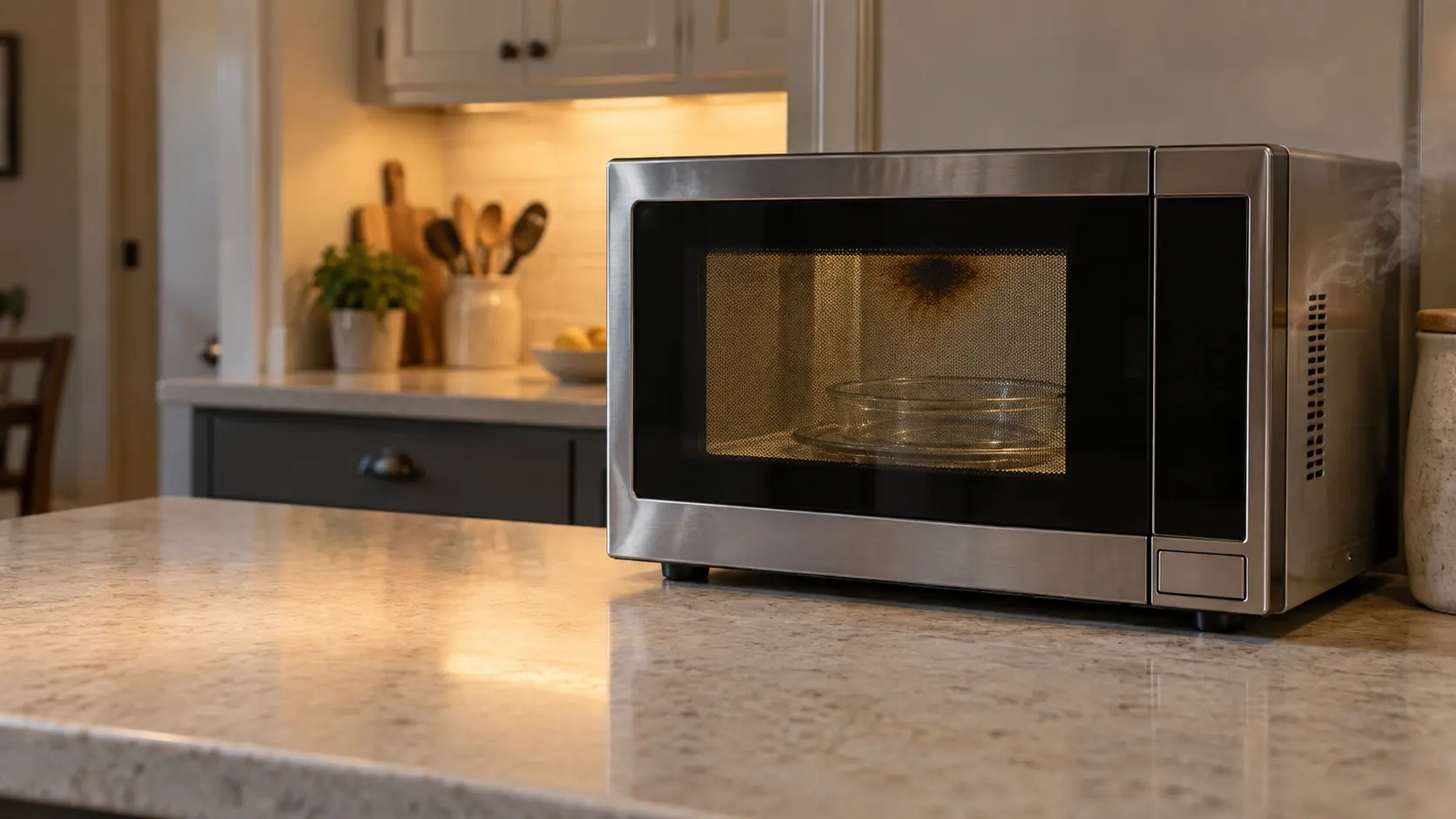
A microwave tends to announce its problems plainly: a snap and a blue flash, a bowl that comes out as cold as it went in, a glass tray that sits still while the timer runs down. The guides in this section each take one of those and trace the symptom back to its likely cause, across the four ways a microwave is installed: the hood combination above the cooking surface, the built-in in a cabinet or trim kit, the drawer under a counter, and the countertop model.
All 18 guides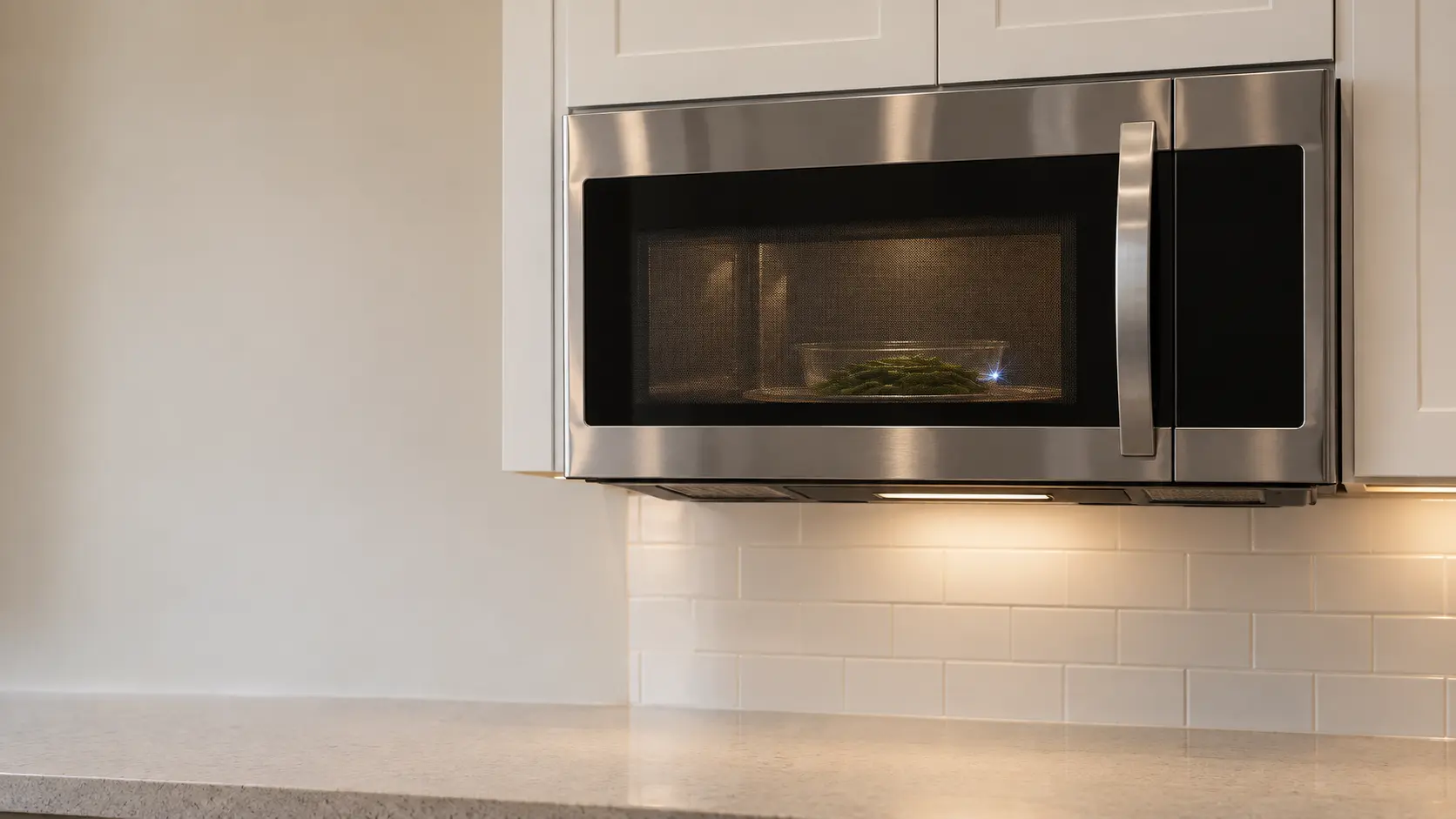


What the microwave is telling you.
Many of the answers cost nothing. A twist tie, a rack left in for the wrong mode, a kitchen timer pressed instead of a cook time, a tray washed and put back upside down: not one of these needs a new part, yet each produces a symptom that looks alarming. The guides deal with those first, in the order they turn up in real kitchens.
Each guide also marks the point where checking stops. A microwave's heating circuit runs at high voltage, and the capacitor that feeds the magnetron can keep a dangerous charge after the plug is out, so nothing here asks you to take off the outer cabinet or a control panel. Where the answer is inside, the guide says so and explains what a technician will look at.
Where a maker publishes guidance, we cite it next to the claim it backs: GE Appliances, Sharp, Wolf and the FDA's pages on microwave ovens among them. When makers disagree or say nothing, the guides describe what to look for rather than inventing a rule.
Not sure where to start?The short answerWhy a microwave sparks: stray metal, a spattered waveguide cover and a scarred cavity
Microwave sparking, which makers call arcing, usually comes from metal in the cavity (twist ties, gold-trimmed dishes, foil edges, a rack or probe used the wrong way), from food residue on the waveguide cover, or from dry vegetables.
The short answerMicrowave runs but food stays cold: settings, the door latch and the high-voltage side
When a microwave runs but does not heat, first confirm it was set to cook rather than to run a kitchen timer, that demo mode and a low power level are off, and that the door was closed firmly.
The short answerWhy the turntable stopped: the coupler, the roller ring and the motor beneath
A microwave turntable not turning is most often a tray that is off its coupler, upside down or riding on a dirty roller ring, a dish too wide to clear the walls, or a turntable switched off on the control.
When reading
is not enough.
If the checks in these guides did not settle it, the visit picks up from there, stop by stop.
What repairs cost- 01A cup of water, timed
- 02The price before the work
- 03Usual parts on board
- 04Heating again before we leave
The problems
these answer.
Each has a page of its own, with the causes in the order worth checking.
All 17 problems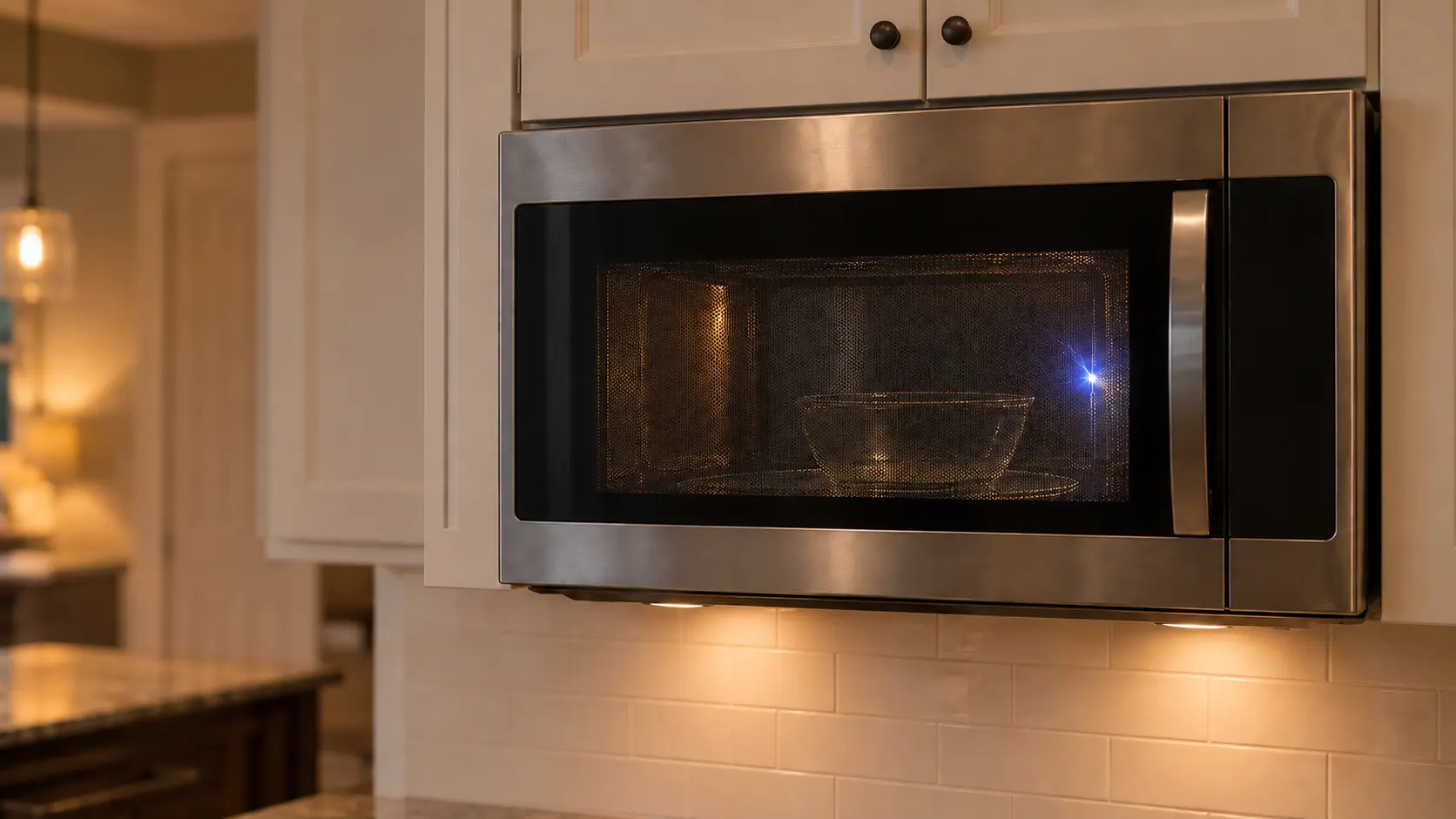


Questions about
common problems.
Which microwave problems mean I should stop using it today?
Is a microwave drawer covered here as well as a door model?
Why do the guides keep mentioning a cup of water?
Is a hood combination harder to repair than a countertop model?
The other
sections.
Split by what you are trying to find out rather than by which part of the appliance it concerns.
All guides


Back to your everyday
Let’s get your microwave working again.
Three short steps online, or one call. Tell us what you are seeing and pick a window that works.