
What does a cabinet need before a drawer microwave goes in?
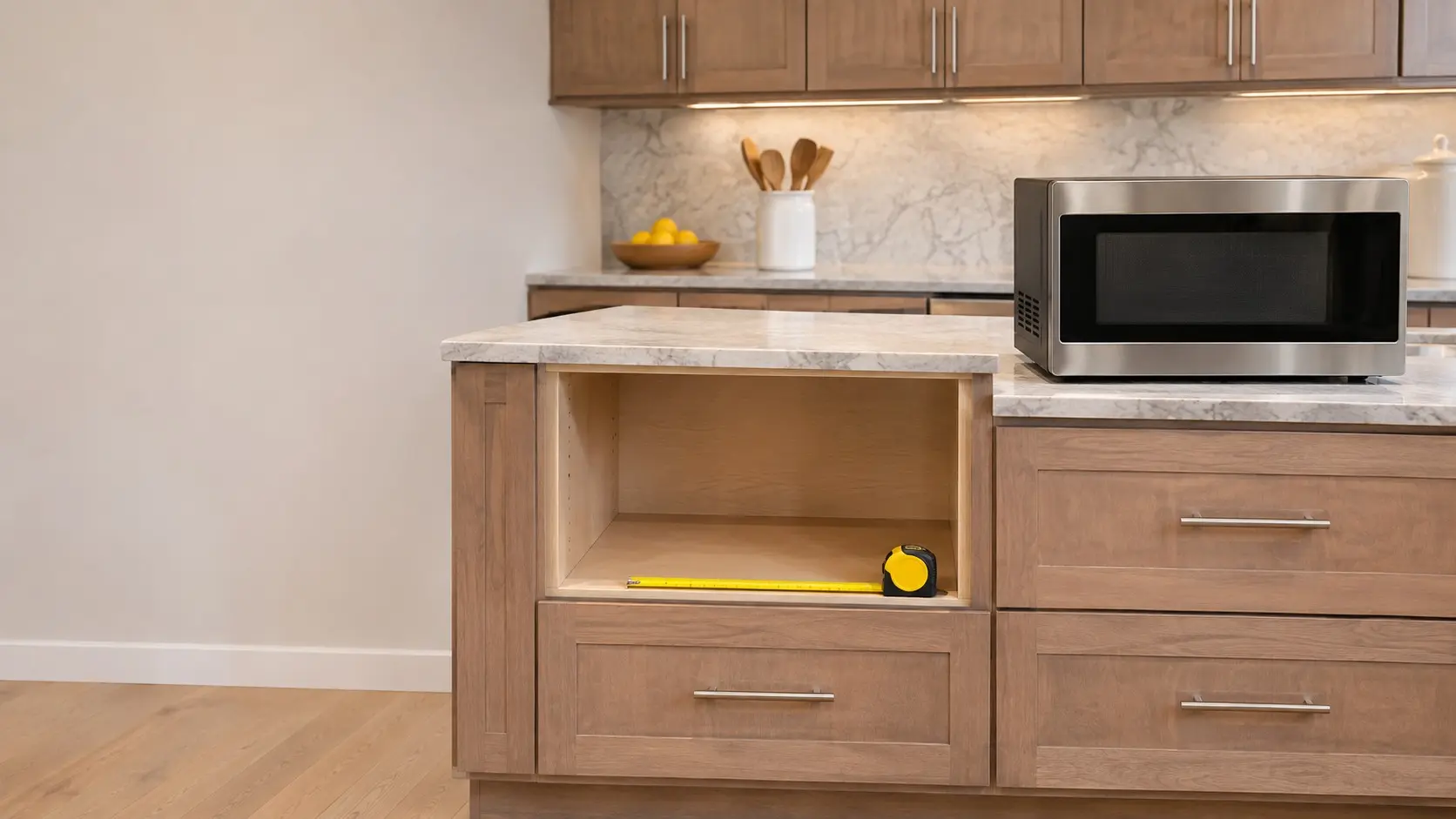
A clean, square opening of the exact size on the installation sheet, a solid floor and a place for the cord. Every drawer model has its own cutout width, height and depth, and the sheet for your model is the only source worth trusting for them; the numbers on a retail page can be rounded.
Read the installation sheet first
Before any cut, download or read the installation sheet for your exact model and keep it open. It lists the opening width, height and depth, how much space is needed behind and beside the unit, where the cord and outlet may be, and which supports and blocks are required. The model number is on the rating plate, and the guide to finding the microwave model plate shows where.
- Opening width, height and depth, measured at the front, middle and back
- Space needed behind the unit for the cord and airflow
- Where the outlet may sit and whether the opening needs a hole for the cord
- The mounting or trim parts the unit needs, and any that ship separately
Which cabinets work
A base cabinet or an island with a sturdy face frame suits a drawer unit. A cabinet with a drawer box, a shelf or a toe-kick space cut into the opening usually needs some of that removed, and a cabinetmaker should do it so the cabinet face does not lose its strength.
How strong must the cabinet floor be?
Strong enough to carry the unit and what is placed on it, without flexing when the drawer is pulled out with a heavy dish. The empty weight of a drawer microwave is substantial and much of it hangs forward when the drawer opens.
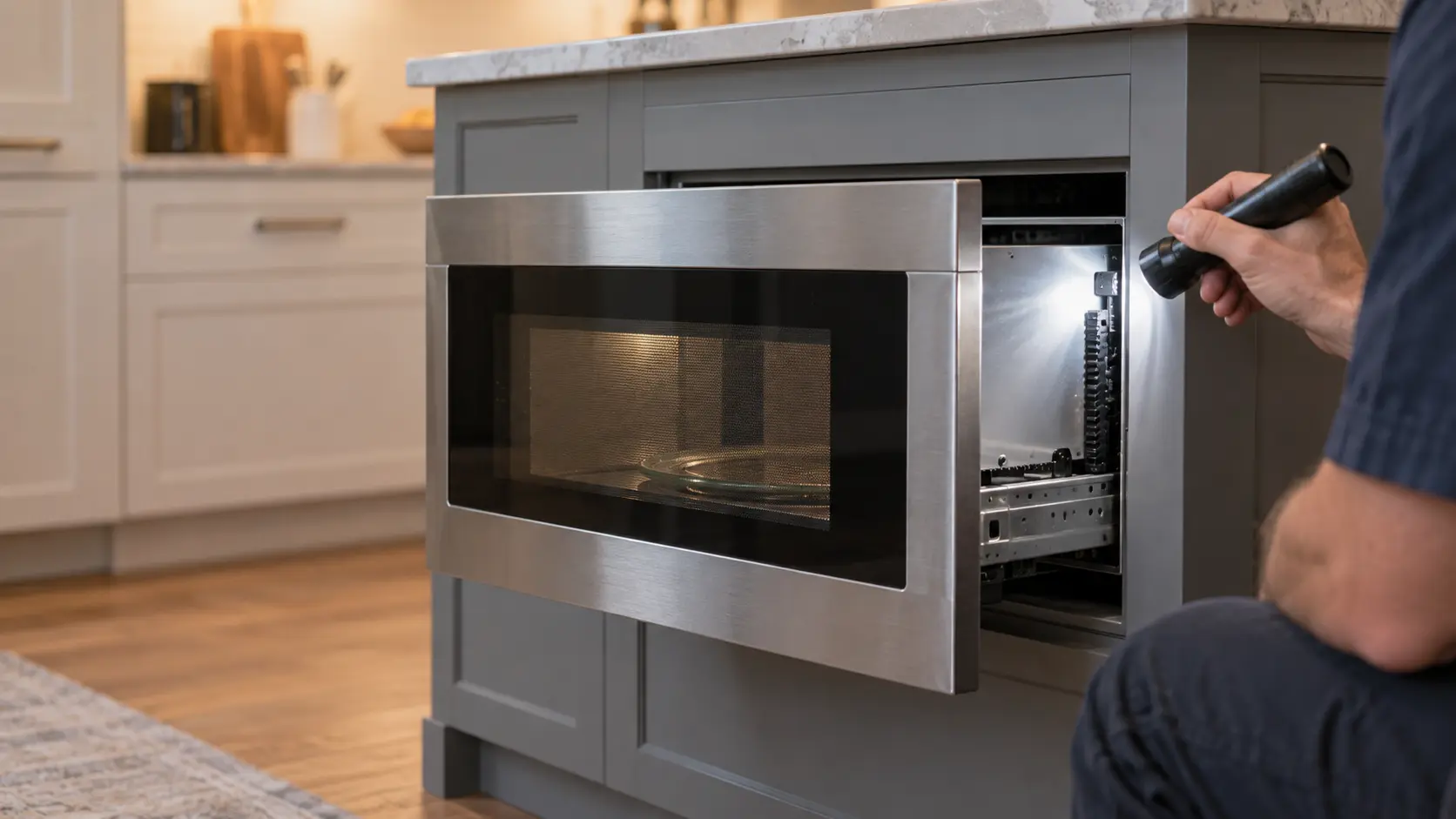
Many installation sheets call for a flat, level floor of plywood or similar solid board, screwed to the cabinet, and not a thin laminate shelf. Check the sheet for the minimum thickness and any support rails. If the cabinet floor sags, the drawer slides will bind later, and the drawer mechanism is where that shows up as a drawer that sticks or will not open.
Level and square
Place a level on the floor of the opening, front to back and side to side. A floor that is out by a small amount can be shimmed; one that is clearly twisted needs fixing before the unit goes in.
Where should the outlet be?
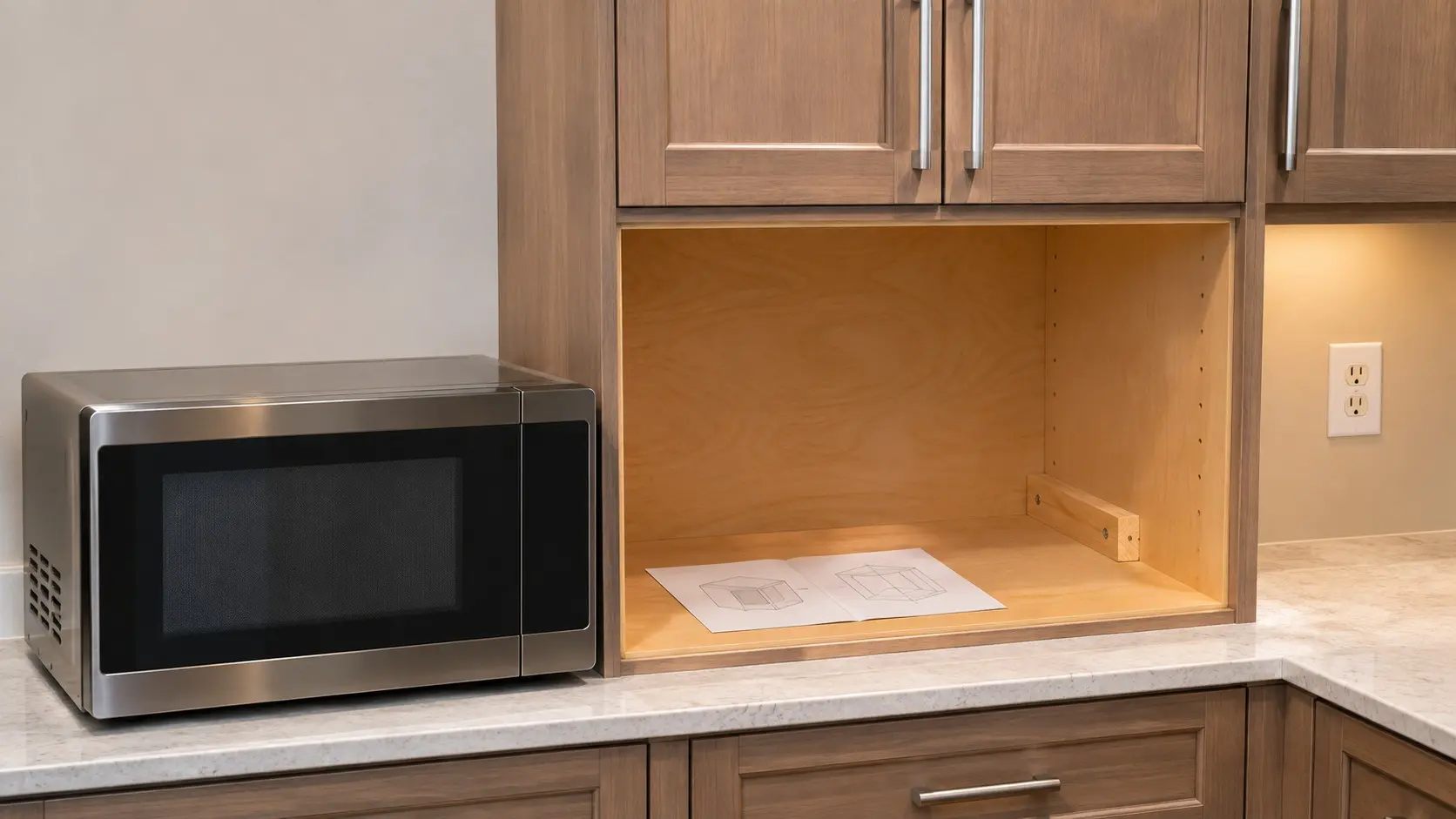
Where the installation sheet allows it, often in an adjacent cabinet or a spot the sheet marks, so the plug stays reachable. A cord pinched against the back wall can overheat, and a plug that cannot be reached is a headache whenever the unit must be pulled out.
A dedicated circuit
A microwave draws a lot of power, and many installation sheets ask for its own dedicated circuit of a stated size. The guide to a dedicated circuit for the microwave explains why. Adding or moving an outlet and a circuit is electrician's work, not a weekend project, and an extension cord is never the answer.
Island outlets
If the cabinet is in an island, the outlet may have to come from the floor or the cabinet side, and local rules about island and counter outlets can apply. Ask an electrician before cutting anything.
What is the anti-tip block for, and where does it go?
It keeps the unit from tipping forward when the drawer is open and loaded. A drawer microwave has a heavy drawer that sticks out and the weight of a full dish pulls the unit down at the front.
The installation sheet for many models calls for an anti-tip block, bracket or screws that hold the unit to the cabinet. Fit exactly what your sheet describes, in the position it shows. A missing block does not show on day one, and it can fail the day a heavy pot is placed on the open drawer.
Table: Where things usually sit around a drawer microwave
| Part | Where it goes | Why |
|---|---|---|
| Cutout | Cabinet front, to the sheet's size | The unit must fit without force |
| Floor support | Under the unit, solid and level | Carries the unit and the open drawer |
| Outlet | Where the sheet allows | Keeps the cord clear and reachable |
| Anti-tip block | Where the sheet shows | Stops tipping with a loaded drawer |
How much clearance does the drawer need at the counter edge?
Enough for it to open fully and for the user to reach in without hitting the counter overhang or a neighboring drawer. A deep countertop overhang can block the drawer front or force the user to lean.
Check before you finish the install
- Open the drawer all the way and measure the gap to the counter edge
- Check that the drawer front does not clip an adjacent door or handle
- Check that neighboring doors open without hitting the unit
- Test the drawer with a full dish on it before the work is closed in
If anything catches, the opening or the neighbors need adjusting before the unit is fixed in place. For other kinds of microwave, the hood combination, built-in or drawer guide compares what each needs, and the microwave drawer repair page covers what goes wrong later. If the drawer sticks or will not open after the install, a diagnostic visit finds whether it is the slide, the latch or the cabinet.