What the makers ask for, kind by kind
The electrical requirement is printed in the installation instructions and on the rating label, and it is the one to follow. The published requirements from two of the makers on our list show how the asks differ by installed type.
| Kind | What the maker asks | Where the outlet goes |
|---|---|---|
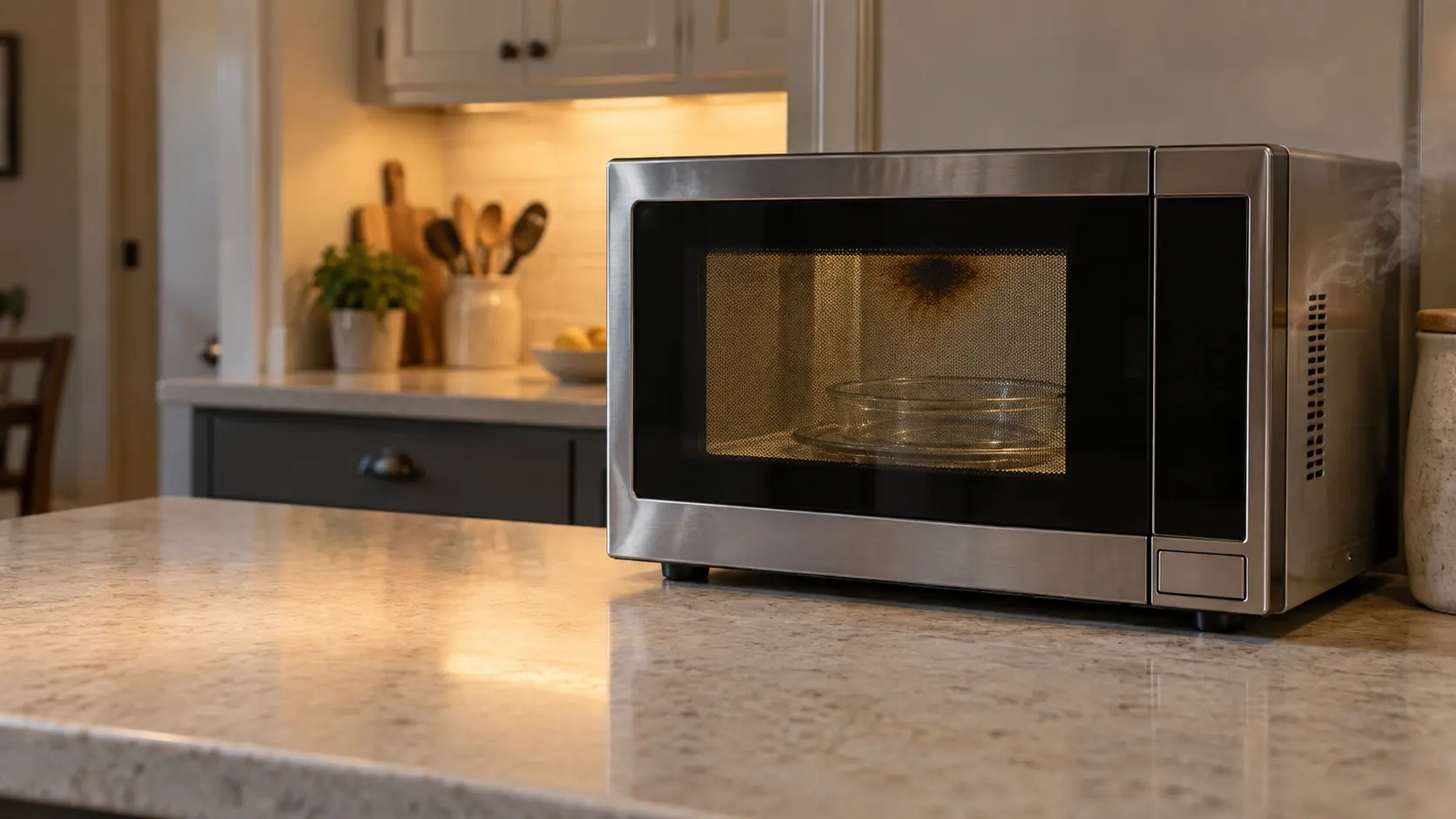
| Countertop (GE) | 120-volt individual, grounded branch circuit on a 15- or 20-amp breaker or time-delay fuse | A grounded three-prong wall outlet within reach of the cord |
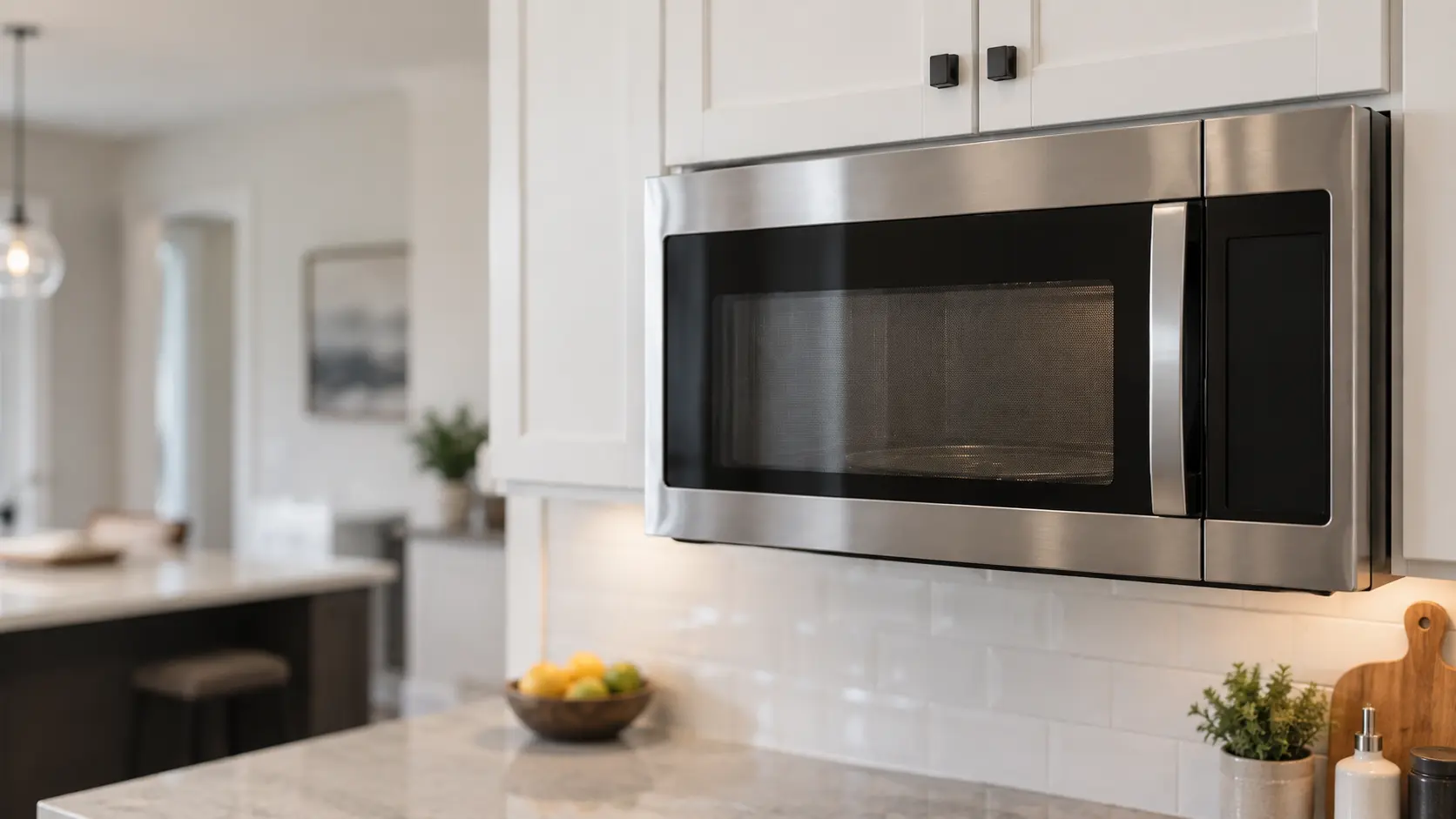
| Microwave hood combination (GE) | The same supply, and always a dedicated circuit | Per the installation instructions |
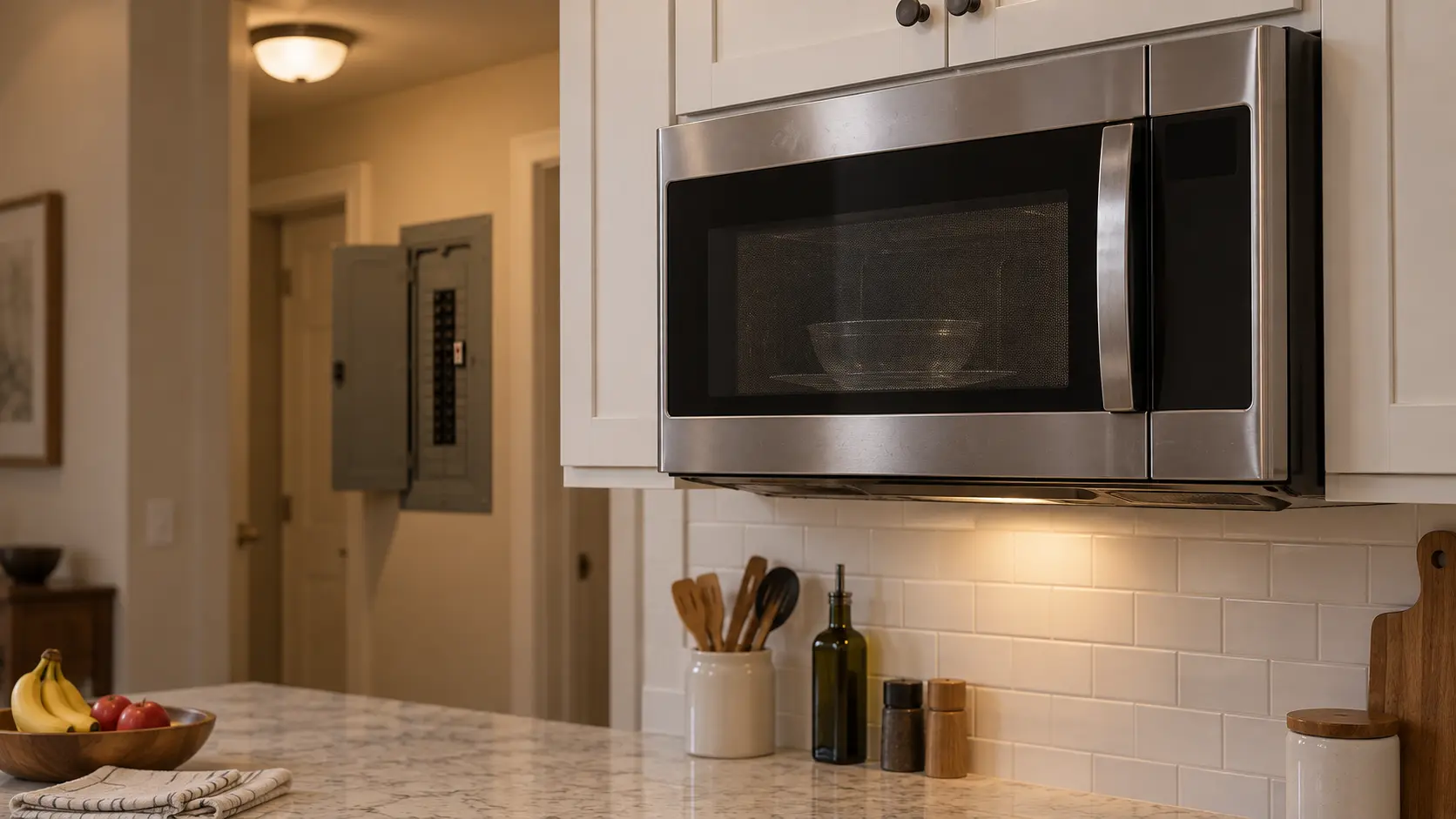
| Microwave hood combination (Sharp) | A separate 120-volt, 15-amp or larger branch circuit with a single grounded receptacle | Inside the cabinet directly above the microwave |
| Microwave drawer (Sharp) | 120 volts, 15 amps or more; a separate circuit serving only the drawer is recommended | In the upper corner of the cutout, or in an adjacent cabinet |
Built-in and speed models
Built-in microwaves and speed models with a browning element vary more than any other kind, because some combine microwave power with a convection element and a fan. Their installation sheets and rating labels give the supply they need, and the circuit is planned from that sheet before the cabinet is built, not after the unit arrives. Where a speed model sits above a separate baking cavity, each appliance gets the supply its own sheet asks for.
Source: GE Appliances — Microwave: Electrical Requirements and Breaker Size — Countertop and over-the-range microwaves need a 120-volt individual, grounded branch circuit with a three-prong receptacle on a 15- or 20-amp breaker or time-delay fuse; over-the-range models should always be on a dedicated circuit; Sharp — Over the Range Microwave Oven Installation Instructions (R-1881LSY and related models) — Separate 120-volt, 15-amp or larger branch circuit with a single grounded receptacle inside the cabinet above; never cut or remove the grounding pin; grounding provides an escape wire in a short circuit; new outlet by a qualified electrician before installation; keep instructions for the electrical inspector; Sharp — Microwave Drawer SMD2470AS, SMD3070AS Installation Manual — 120 volts, 60 Hz, 15 amps or more, a separate circuit serving only the drawer recommended; outlet in the cutout corner or an adjacent cabinet; with only a two-prong outlet, have an electrician install a correct receptacle
Why a microwave wants a circuit of its own
The wattage printed on the box is the cooking power delivered to the food. What the microwave draws from the wall is higher, because the magnetron, the transformer, the fan, the light and the turntable motor all take their share, and the rating label shows that input figure separately. Share a 20-amp kitchen circuit between a microwave at full power and a toaster, a kettle or a coffee grinder, and the breaker does exactly what it is there to do.
A dedicated circuit for a microwave removes that argument. It also makes a breaker trip mean something: when nothing else is on the circuit, a trip points at the microwave or its cord and outlet rather than at the combination of things plugged in that morning.
Reading the rating label
The rating label is usually on the frame inside the door, on the side of the cavity opening, or on the back of a countertop model. It lists the voltage, the frequency and the input power, alongside the model and serial number. Compare the input figure, not the cooking power, with what else shares the circuit.

The ground pin, adapters and extension cords
Every microwave in this guide has a three-prong plug, and Sharp's instructions put it in capitals: do not under any circumstances cut or remove the grounding pin. Grounding gives current an escape route in the event of a short circuit, which is what protects the person touching the case. If the outlet only takes two prongs, Sharp's advice is to have an electrician install a correct grounded receptacle, not to use an adapter.
Sharp's drawer manual and NFPA's tip sheet both say not to use an extension cord. If the cord does not reach, the fix is an outlet where the microwave is, put in by a qualified electrician.
Power strips and switched outlets
- A power strip or surge strip is an extension cord with extra outlets, and the same advice applies.
- An outlet controlled by a wall switch can be turned off by accident mid-cycle and leaves the clock blinking.
- An outlet on the far side of a counter invites a cord draped across a work surface or near the sink.
- An outlet behind a built-in or drawer should be where the instructions show, so the cord is not pinched or stretched.
Source: Sharp — Over the Range Microwave Oven Installation Instructions (R-1881LSY and related models) — Separate 120-volt, 15-amp or larger branch circuit with a single grounded receptacle inside the cabinet above; never cut or remove the grounding pin; grounding provides an escape wire in a short circuit; new outlet by a qualified electrician before installation; keep instructions for the electrical inspector; Sharp — Microwave Drawer SMD2470AS, SMD3070AS Installation Manual — 120 volts, 60 Hz, 15 amps or more, a separate circuit serving only the drawer recommended; outlet in the cutout corner or an adjacent cabinet; with only a two-prong outlet, have an electrician install a correct receptacle; Sharp — Microwave Drawer SMD2470AS, SMD2470AH, SMD3070AS Operation Manual — Do not use an extension cord; if the cord is too short, have a qualified electrician install an outlet near the appliance; NFPA — Microwave Oven Safety tip sheet — Plug the microwave directly into the wall outlet; never use an extension cord
When the breaker trips with the microwave running
Start with what else is on the circuit. If the microwave shares it with countertop appliances, try it with everything else unplugged. If it trips again on its own, reset the breaker once; a second trip means the microwave stays off until it has been checked. Many kitchen outlets are GFCI-protected, either at the outlet or at the breaker, and a GFCI that trips points to leakage somewhere between the outlet and the microwave, which is a job for a technician or an electrician, not another reset.
The moment of the trip is a clue. A trip the instant the door is closed or opened points at the door switches: the federal standard requires a monitoring system that stops the microwave if its interlocks fail, so a door problem can show up as a trip or as a unit that goes dead. A trip a few seconds into heating points more toward the high-voltage section. Neither is something to investigate with the outer cabinet off.
An internal fuse that blows is a symptom
When a microwave goes completely dead with the breaker still on, a fuse inside the cabinet has often blown. Replacing that fuse without finding why it blew usually ends with the new one blowing too, and reaching it means opening the case next to a capacitor that can hold a lethal charge after unplugging. The fuse is part of our diagnosis, not a home repair.
Source: FDA — Microwave Oven Radiation — A monitoring system stops oven operation if one or both interlock systems fail
Planning the circuit for a new installation
The circuit comes first. Sharp says a new outlet should be installed by a qualified electrician before the microwave is, and asks installers to keep the installation instructions for the local electrical inspector. Plan it from the model's sheet, not from the old microwave's outlet.
- Choose the model and download its installation instructions before the electrician visits.
- Mark the outlet position the sheet shows: in the cabinet above, in the cutout corner or in the next cabinet.
- Ask for a circuit serving only the microwave for a hood combination, a drawer or a built-in.
- Keep the sheet with the house papers for the inspector and for the next repair.
Source: Sharp — Over the Range Microwave Oven Installation Instructions (R-1881LSY and related models) — Separate 120-volt, 15-amp or larger branch circuit with a single grounded receptacle inside the cabinet above; never cut or remove the grounding pin; grounding provides an escape wire in a short circuit; new outlet by a qualified electrician before installation; keep instructions for the electrical inspector