Why some materials heat and others let the energy pass
FDA describes the three things microwaves do that make cooking possible: they are reflected by metal, they pass through glass, paper, plastic and similar materials, and they are absorbed by food. The water in the food turns that energy into heat. Deciding what is safe to put in a microwave comes down to that: a good container is one the energy passes through on its way to the food.
Passing through does not mean staying cool. FDA points out that a glass or plastic dish can become hot from the food inside it, and that some plastics can be melted by that heat. That is why a container can be microwave-safe for a cup of soup and still warp under a dish of fatty meat or sugary sauce, which run far hotter.
What a microwave-safe mark tells you
A microwave-safe mark on plastic or pottery means the maker has tested it for that use. A container with no mark is not necessarily dangerous, but it has not been tested, and FDA's advice is to use cookware made for the microwave and to follow the container guidance in your own manual.
Source: FDA — Microwave Oven Radiation — Microwaves are reflected by metal, pass through glass, paper and plastic and are absorbed by food; containers get hot from the food and some plastics melt; metal pans and foil should generally not be used; use microwave-safe cookware; superheated water can erupt and adding coffee or sugar first reduces the risk; some ovens should not be operated empty
Dishes and covers that belong inside
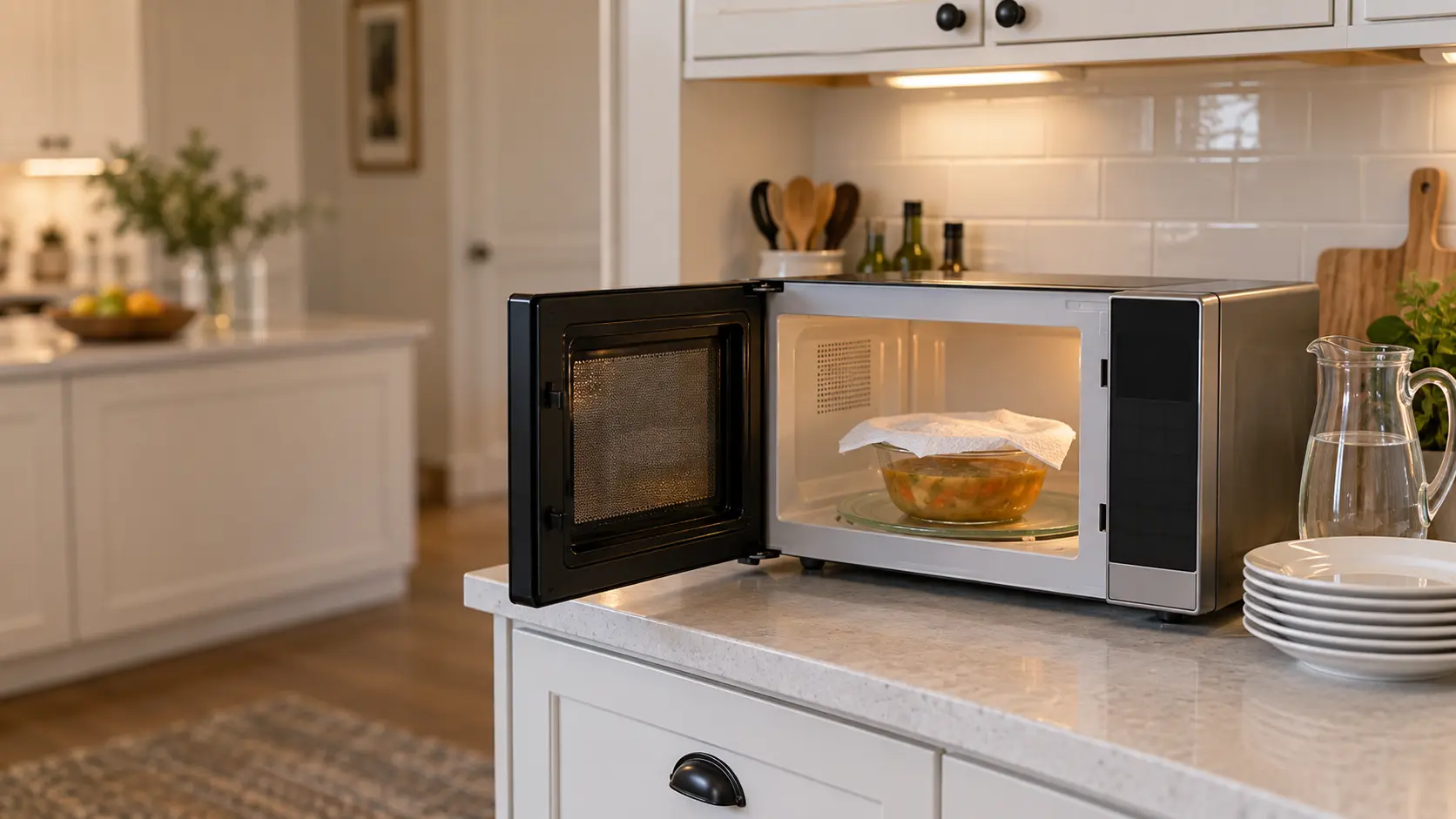
Sharp's drawer manual gives a clear list of utensils for cooking and reheating, and it matches what most makers print. It also reminds owners that a dish should not touch the cavity walls while it cooks, which matters in a compact drawer or a speed model with a small cavity.
- Glass ceramic cookware.
- Heat-resistant glass bakeware and bowls.
- Plastics labeled microwave-safe.
- Microwave-safe paper plates.
- Microwave-safe pottery, stoneware and porcelain.
- A browning dish, preheated only as long as its maker says.
- As covers: paper towels, wax paper, microwave plastic wrap or a vented lid.
Baskets and wood for a quick warm-up only
Wood, straw and wicker appear on Sharp's list only for short reheating of foods with little fat or sugar, such as warming rolls. Left in longer, they dry out, char and can catch.
Source: Sharp — Microwave Drawer SMD2470AS, SMD2470AH, SMD3070AS Operation Manual — Lists of utensils to use and not to use; wood, straw and wicker for short reheats only; foil in small flat pieces at least one inch from any surface; eggs in shell and sealed jars can explode; stir liquids, use wide-mouthed containers and let stand 20 seconds; dish test 30 seconds on high; USDA temperatures 145°F, 160°F and 165°F

What stays out, and what each one does
USDA's food safety service is blunt about one group: plastic storage containers such as margarine tubs, takeout containers, whipped topping bowls and other one-time-use containers should not be used in microwave ovens. Sharp's list adds the rest.
- Metal pans and bakeware, which reflect the energy and can arc at their edges.
- Dishes with gold or silver trim, where the thin metal band sparks and blackens.
- Glass that is not heat-resistant, which can crack as the food heats.
- Margarine tubs and other plastics not made for the microwave, which can warp or melt.
- Recycled paper products and brown paper bags, which can scorch or catch.
- Food storage bags, which are not made for cooking heat.
- Metal twist-ties, which arc and can set the bag alight.
Foil: a narrow exception, and makers disagree
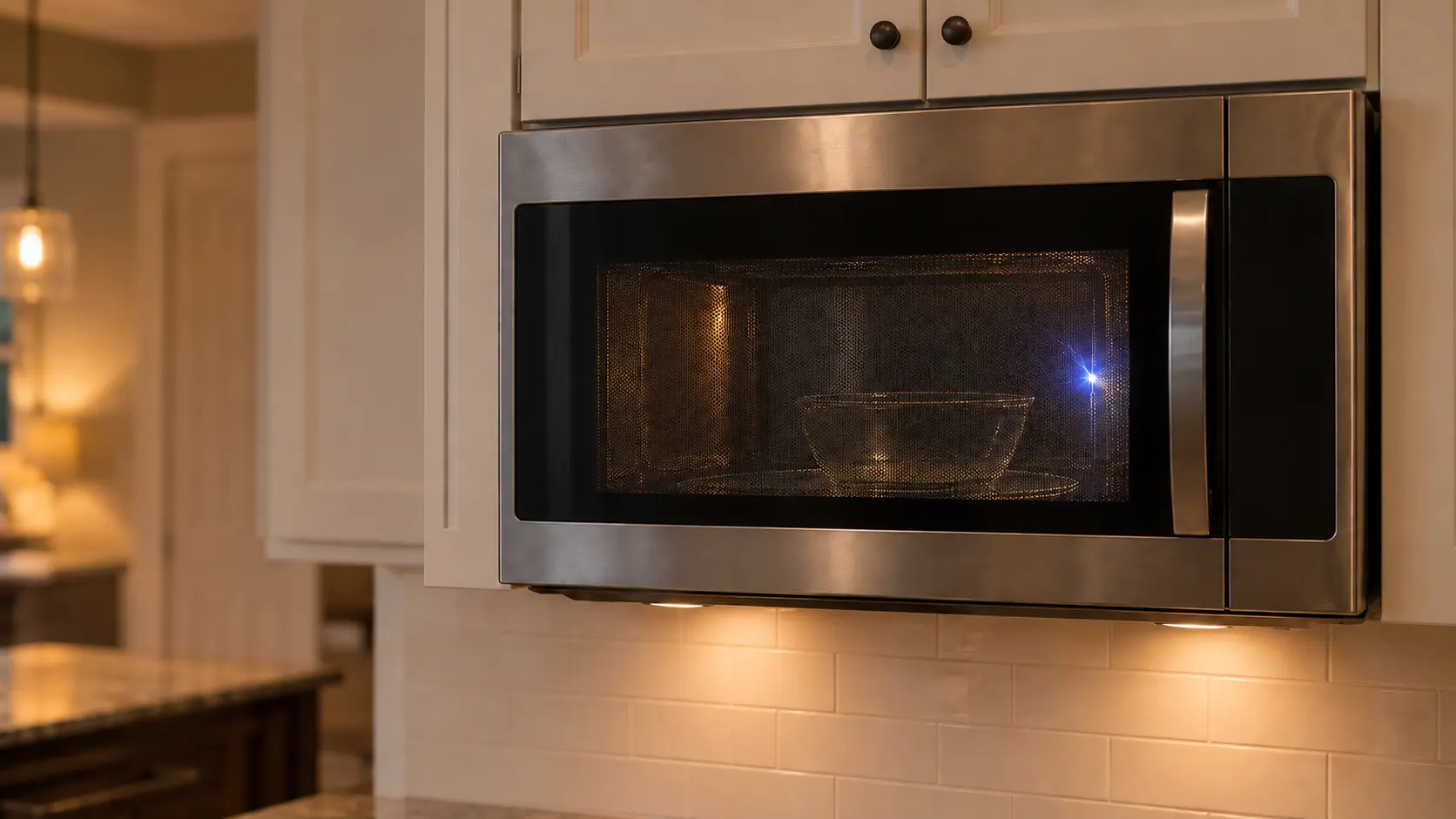
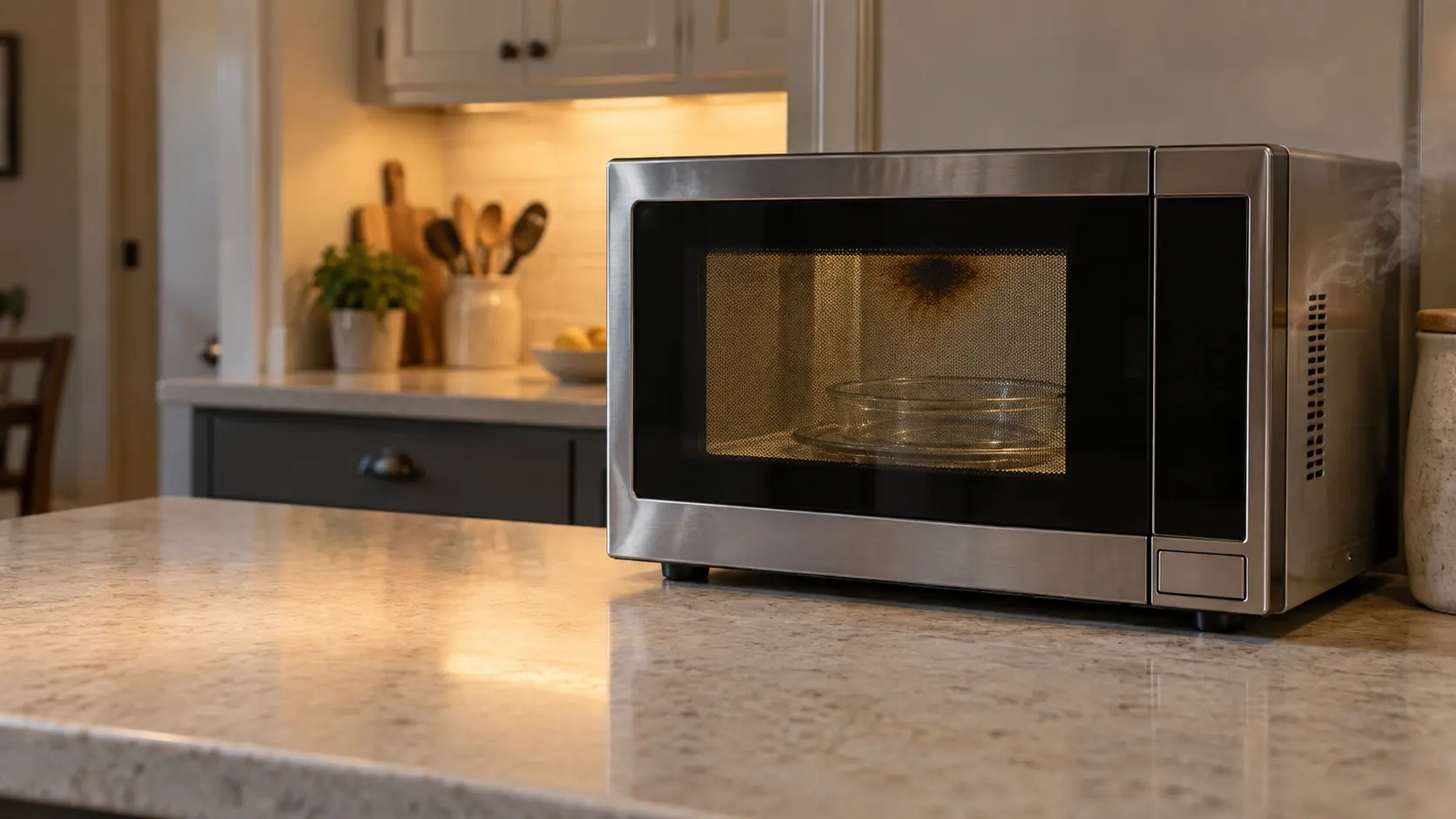
FDA's general advice is that metal pans and aluminum foil should not be used, and NFPA says never. Some manufacturers do allow a small, carefully placed piece: Sharp permits small flat pieces smoothed onto the food to shield thin areas, kept at least one inch from every surface of the cavity. If your manual does not mention foil, leave it out. Crumpled foil, foil touching a wall and foil-lined takeout boxes are the classic cause of sparks.
Eggs in the shell and closed jars
Sharp's safety instructions warn that whole eggs in their shells and sealed containers such as closed glass jars can explode. Steam builds inside with nowhere to go. Pierce potatoes and sausages, slit cooking bags, and take lids off jars before heating what is inside.
Source: USDA FSIS — Cooking Safely in the Microwave Oven — Margarine tubs, takeout containers, whipped topping bowls and other one-time-use containers should not be used; microwaves can leave cold spots, so stir or rotate midway and allow standing time before checking with a food thermometer; Sharp — Microwave Drawer SMD2470AS, SMD2470AH, SMD3070AS Operation Manual — Lists of utensils to use and not to use; wood, straw and wicker for short reheats only; foil in small flat pieces at least one inch from any surface; eggs in shell and sealed jars can explode; stir liquids, use wide-mouthed containers and let stand 20 seconds; dish test 30 seconds on high; USDA temperatures 145°F, 160°F and 165°F
Water, coffee and tea heated on their own
Plain water in a clean cup can heat past its boiling point without bubbling. FDA calls this superheating and has received reports of serious scalds when the cup was moved or a spoonful of instant coffee was dropped in and the water erupted. Adding the coffee or sugar before heating greatly reduces the risk, and FDA's advice is not to heat liquids longer than the manual recommends.
Sharp adds practical steps: stir the liquid before and halfway through heating, use a wide-mouthed container rather than a narrow-necked one, and let it stand in the microwave for at least 20 seconds before lifting it out. NFPA's tip sheet notes that scald burns are the leading cause of injury from microwave ovens.
Source: FDA — Microwave Oven Radiation — Microwaves are reflected by metal, pass through glass, paper and plastic and are absorbed by food; containers get hot from the food and some plastics melt; metal pans and foil should generally not be used; use microwave-safe cookware; superheated water can erupt and adding coffee or sugar first reduces the risk; some ovens should not be operated empty; Sharp — Microwave Drawer SMD2470AS, SMD2470AH, SMD3070AS Operation Manual — Lists of utensils to use and not to use; wood, straw and wicker for short reheats only; foil in small flat pieces at least one inch from any surface; eggs in shell and sealed jars can explode; stir liquids, use wide-mouthed containers and let stand 20 seconds; dish test 30 seconds on high; USDA temperatures 145°F, 160°F and 165°F; NFPA — Microwave Oven Safety tip sheet — Never use foil or metal; scald burns are the leading cause of microwave injury; stir and test food before giving it to children; never heat a baby bottle in the microwave
Cold spots in the food itself
A container can be perfect and the food still unsafe. USDA warns that microwaves can cook unevenly and leave cold spots where harmful bacteria survive, and advises stirring or rotating food midway through and allowing standing time, which completes the cooking, before checking the temperature with a food thermometer.
Sharp's manual prints the USDA temperatures to check against: 145°F for fish, 160°F for pork, ground beef, veal, lamb and egg dishes, and 165°F for leftovers, deli and carry-out food and all poultry. Use a thermometer approved for the microwave if it stays in during cooking; otherwise take the reading after the food comes out.
Food for children and baby bottles
NFPA advises stirring and testing food before giving it to a child, and never heating a baby bottle in the microwave: uneven heating leaves hot pockets in milk that feels lukewarm on the outside. Warm a bottle in a bowl of warm water or under the tap instead.
Source: USDA FSIS — Cooking Safely in the Microwave Oven — Margarine tubs, takeout containers, whipped topping bowls and other one-time-use containers should not be used; microwaves can leave cold spots, so stir or rotate midway and allow standing time before checking with a food thermometer; Sharp — Microwave Drawer SMD2470AS, SMD2470AH, SMD3070AS Operation Manual — Lists of utensils to use and not to use; wood, straw and wicker for short reheats only; foil in small flat pieces at least one inch from any surface; eggs in shell and sealed jars can explode; stir liquids, use wide-mouthed containers and let stand 20 seconds; dish test 30 seconds on high; USDA temperatures 145°F, 160°F and 165°F